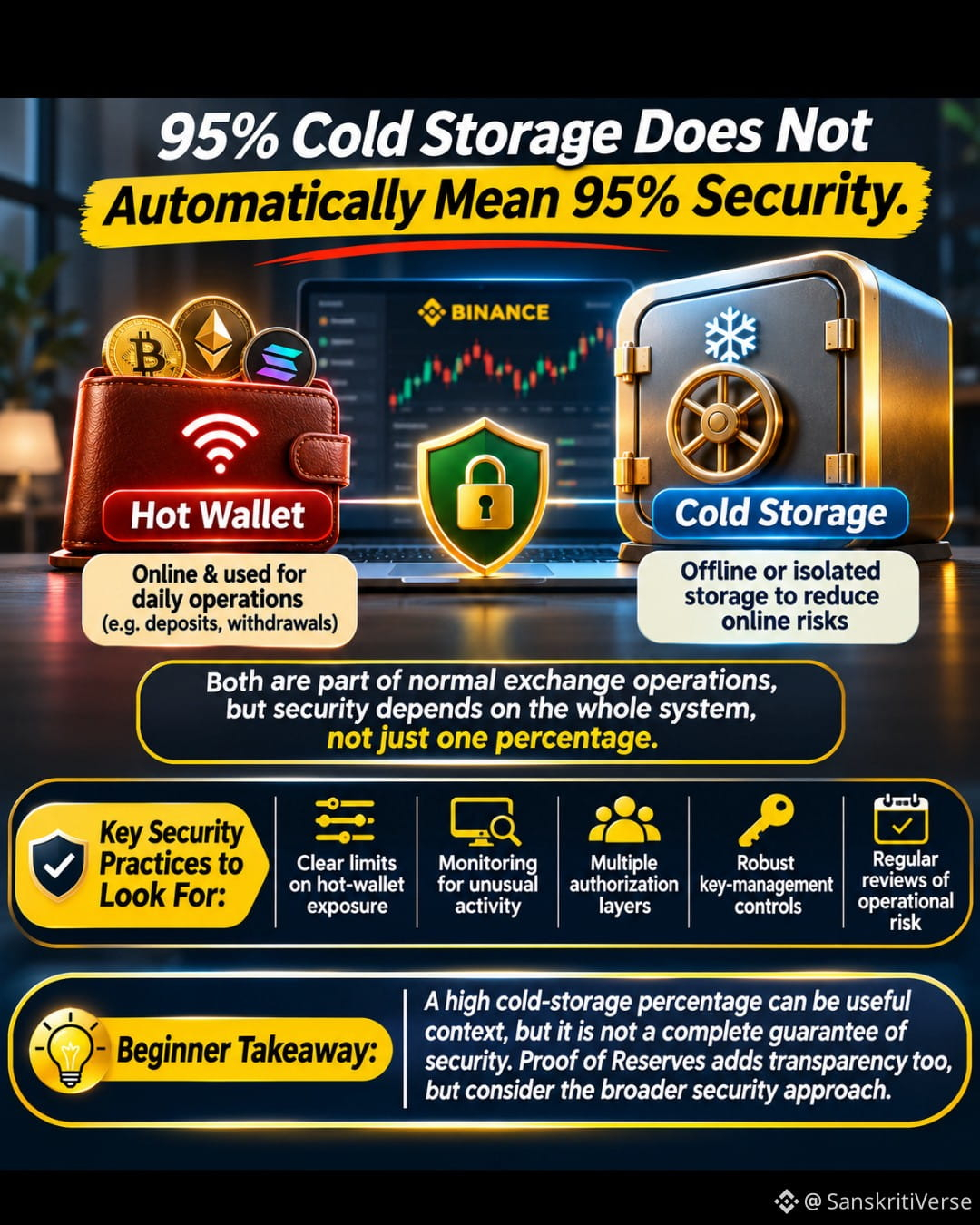
95% Cold Storage Doesn't Automatically Mean 95% Security.
When choosing a crypto exchange, many users look at one number:
How much of its crypto is stored in Cold Wallets?
But there's another important question:
How much crypto is exposed through Hot Wallets?
Let's understand the difference.
🔹 Hot Wallet Connected to the internet and commonly used to process deposits, withdrawals, and transactions.
🔹 Cold Wallet Keeps private keys offline, reducing exposure to online attacks.
Both serve different purposes in an exchange's operations.
Recently, cybersecurity firm CertiK recommended that exchanges should not rely only on Cold Storage percentages. They should also establish clear limits on the funds held in Hot Wallets.
Why does this matter?
Hot Wallets need enough funds to process legitimate transactions. But keeping excessive amounts online can increase potential exposure if security controls fail.
What should a responsible exchange consider?
Set clear Hot Wallet balance limits.
Monitor unusual withdrawal activity.
Use multi-layer approval for sensitive transactions.
Maintain secure private-key management.
Regularly review wallet exposure and security controls.
Beginner Takeaway:
A high Cold Storage percentage is useful information, but it is not a complete security guarantee.
Exchange security depends on the entire system—not just one percentage.
Question: When evaluating a crypto exchange, do you check its wallet security practices or only its Proof of Reserves?
Source: CertiK security recommendations, reported by Cointelegraph.
#CryptoSecurity #ColdWallet #HotWallet #CryptoEducation #BinanceSquare