🚨 💥🚨 Ethereum's $38.4 Billion Liquidity Drain: What the KelpDAO Exploit Reveals About DeFi’s Infrastructure Risk
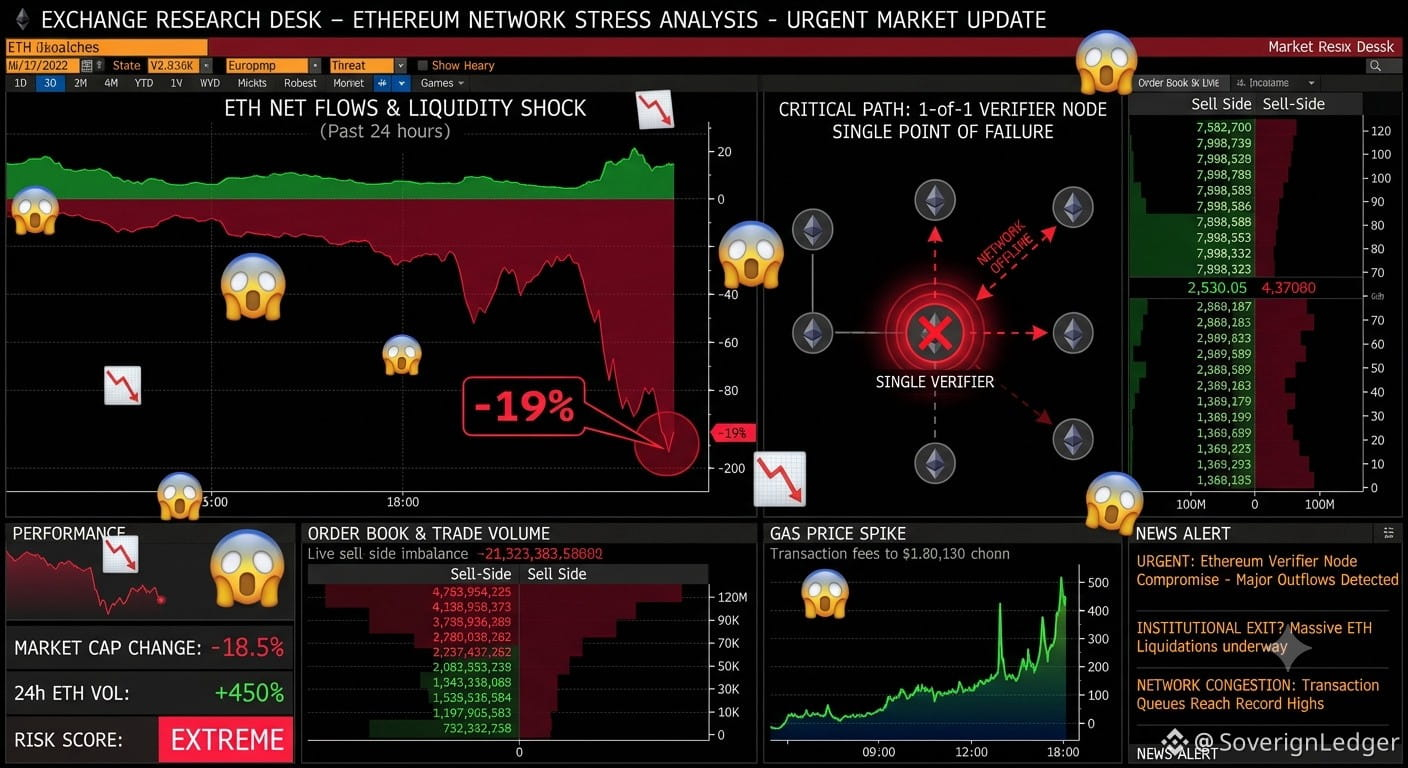
For traders and market analysts, the KelpDAO exploit on April 18, 2026, serves as a stark reminder that smart contract security is only half the battle. While the initial exploit drained roughly $292 million, the true macroeconomic fallout is measured by a staggering $38.4 billion contraction in Ethereum's stablecoin and tokenized-fund market cap between April and November 2026.
Key Takeaways from the Exchange Desk:
👉The 1-of-1 DVN Vulnerability: The exploit bypassed traditional smart-contract bugs entirely. Attackers compromised internal RPC nodes and executed a DDoS attack, forcing a LayerZero Decentralized Verifier Network (DVN) configured in a vulnerable 1-of-1 setup to accept forged state data and mint 116,500 unbacked rsETH.
👉Aave’s Liquidity Crunch: The forged assets were deposited into Aave as collateral to borrow real ETH before oracles updated. This triggered an intense bank run, causing Aave's TVL to plunge 33% within 72 hours and leaving liquidity so depleted that USDT pool availability dropped to a critical $2,540.
👉Macro Capital Flight: Ethereum's stablecoin and tokenized-fund market cap fell from $206.7 billion to $168.3 billion (a 19% drop). Rather than a localized incident, capital fled Ethereum entirely or rotated toward alternative networks like Tron (+24.07% 30-day TVL change) to escape shared infrastructure risks.
👉Permanent Risk Repricing: Although the "DeFi United" coalition and protocol teams successfully closed the financial shortfall and recovered assets, liquidity has not returned. Aave's TVL remains heavily depressed, signaling that market risk appetite has permanently repriced structural infrastructure vulnerabilities.
#Ethereum #Binance #bnb #HackerAlert #CPITestsDecemberRateOutlook
$ETH $USDC $BNB