🚨 Nearly 11,300 Transactions in ONE Bitcoin Block—Yet Miner Fees Were Just $180! Here’s Why. 📉
Bitcoin just witnessed history on-chain, but it highlights a massive long-term question mark for miners.
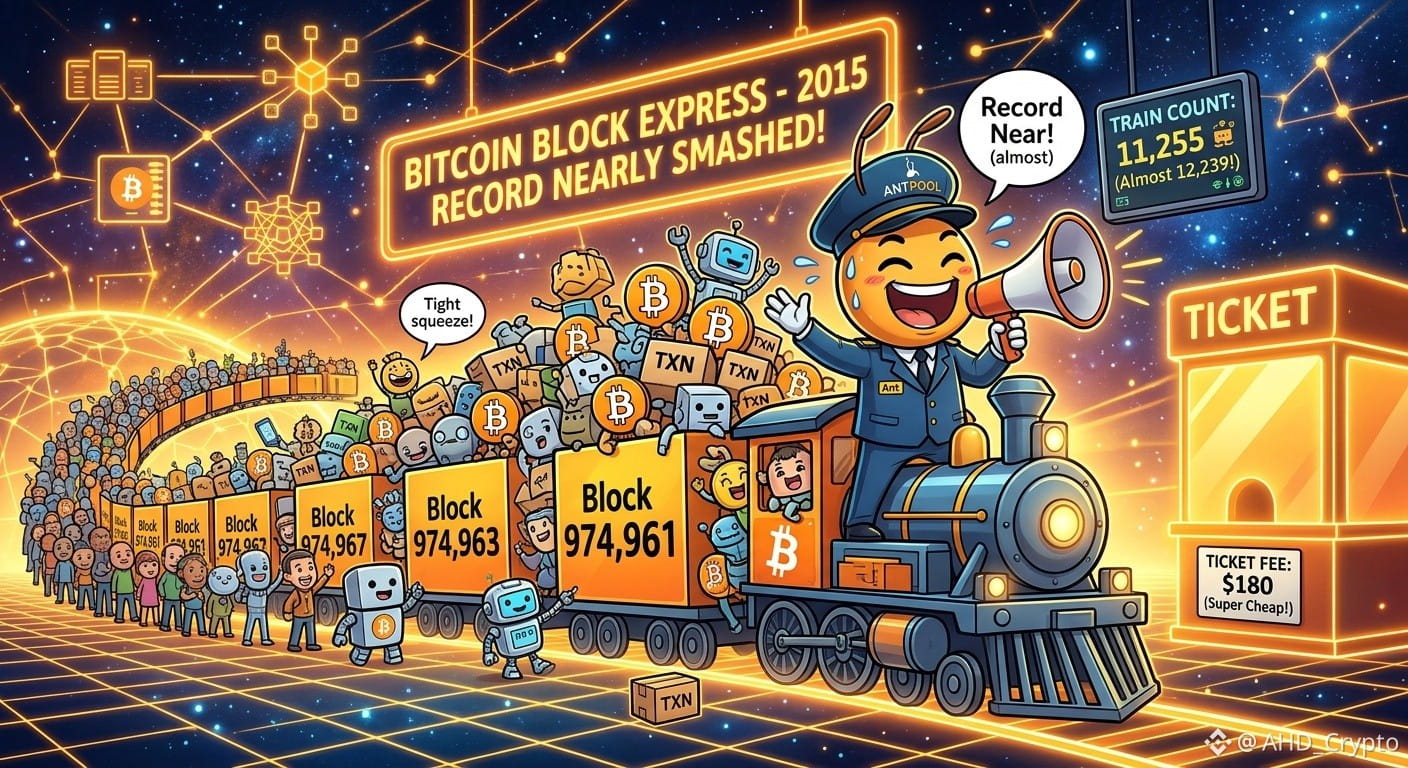
Mining pool AntPool mined Block 974,961 carrying 11,255 transactions—making it the second-busiest block in $BTC history. It fell just 984 transactions short of the all-time record set back in August 2015 (12,239 transactions).
💡 The Big Surprise: Low Fees
Despite carrying an overwhelming volume of activity, AntPool collected just ~0.0024 $BTC ($180) in transaction fees.
Fees made up less than 0.1% of the miner's total block reward (~$237,000), which relied almost entirely on the fixed 3.125 BTC block subsidy.
Many transactions paid as little as a single satoshi, below standard default relay minimums.
The high density was driven by tiny data payloads (such as Runes protocol transactions) rather than high-value financial transfers.
⚖️ Why This Matters for the Future
This massive discrepancy raises fresh debate around Bitcoin’s long-term fee market:
1- The Halving Problem: With the next $BTC halving projected for 2028, the fixed block subsidy will drop to 1.5625$BTC . $180 in fees wouldn't cover even 0.2% of that subsidy loss.
2- Miner Security: For long-term network security, transaction fee revenue must eventually rise to support miners when block subsidies fade.
What do you think—will network fees eventually rise to sustain miners, or will layer-2s and protocols shape a different future for $BTC? Sound off in the comments! 👇
#writetoearn #bitcoin #BTC #CryptoNews #Write2Earn