


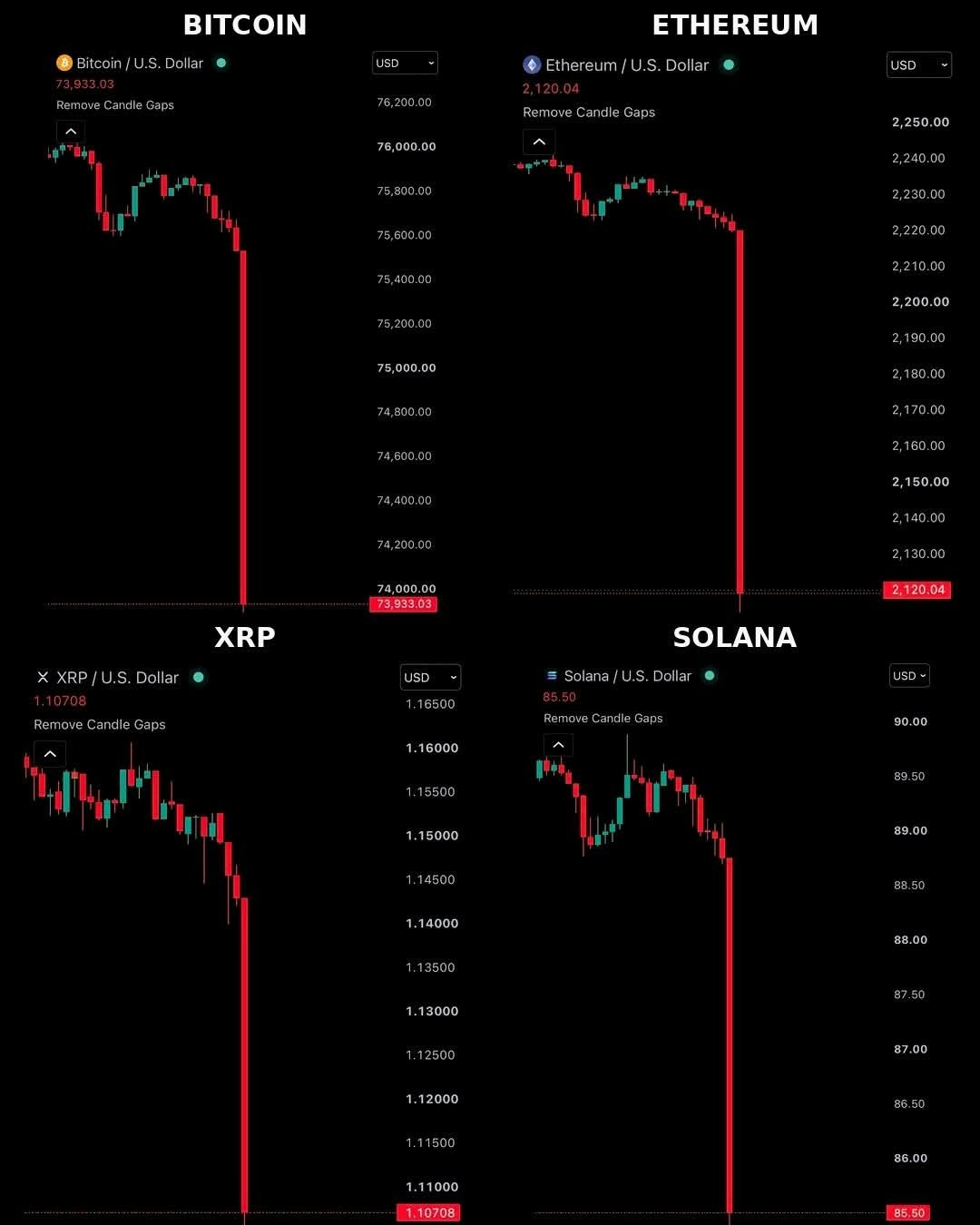
 The cryptocurrency market has entered another serious period of selling pressure.
Bitcoin dropped toward $73,700, while Ethereum touched approximately $2,223, with XRP and Solana also facing significant losses.
But this decline is not simply about investors losing confidence in crypto.
Several developments have combined to create a much more difficult market environment.
1. Wall Street's Technology Sell-Off
The first major pressure came from traditional financial markets.
On November 5, the Nasdaq Composite dropped approximately 5.5%, while the semiconductor index plunged 12.2%.
Investors were questioning the sustainability of massive AI infrastructure spending and whether the expected returns would justify the enormous costs.
When technology stocks come under pressure, speculative assets such as cryptocurrencies can face additional selling.
2. Political Uncertainty in Washington
The US midterm election results introduced another source of uncertainty.
Investors are concerned that changes in congressional control could affect the direction of cryptocurrency legislation and regulatory policy.
Markets generally dislike uncertainty, particularly when investors are already reducing exposure to risk.
3. The Binance Security Shock
The market was also dealing with reports of a security breach involving approximately $6.34 billion.
Even when an exchange says affected assets have been replenished or frozen, an incident of this scale can damage confidence and increase caution among traders.
4. Leveraged Traders Made the Decline Worse
This is arguably one of the most important parts of the entire sell-off.
Approximately $1.05 billion in crypto positions were liquidated over a 24-hour period.
Around $930 million came from bullish Long positions.
Nearly 211,000 traders were affected.
When Bitcoin falls, leveraged traders can lose their collateral.
Exchanges then automatically close those positions, creating additional selling pressure.
That selling can push prices lower, triggering another round of forced liquidations.
This creates a chain reaction that can turn an ordinary decline into a much faster market collapse.
5. Institutional Money Also Came Under Pressure
US spot Bitcoin ETFs recorded approximately $430.2 million in net outflows on November 5.
ETF outflows do not explain every price movement, but they indicate that institutional investment demand was weaker during that session.
What Happens Next?
Bitcoin's ability to stabilize around the $73,000–$75,000 region deserves close attention.
If selling pressure continues, traders may look toward lower support levels.
However, a recovery would require more than a temporary bounce.
Investors should monitor ETF flows, derivatives positioning, broader stock-market sentiment and developments surrounding crypto regulation.
Personally, I find the leverage data particularly concerning.
When almost 90% of reported liquidations come from Long positions, it shows how heavily the market was positioned for rising prices before the decline.
This does not mean the entire crypto market is finished.
It means excessive leverage, weaker risk appetite and negative headlines have collided at the same time.
The next recovery needs real demand, not just short-term optimism. #BTC $ETH $XRP $SOL
#BitcoinFiveWeeklyLosses #Write2Earn
#Binance #Market_Update