
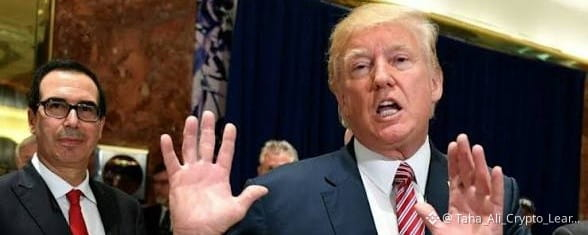

On November 3, Americans voted in the midterm elections, and Democrats won control of both the House and the Senate. They take over in January 2027. The president was not on the ballot, but the result changes the political backdrop for crypto, which has enjoyed a friendly Washington for the past two years.
So did the election move the market? And what does a divided picture in Washington mean for crypto rules? Here is a neutral look at the facts.
What happened to prices
• As results came in, $BTC dipped below $76K in Asian trading, a seven-week low at the time.
• On Nov 4, it bounced about 4% and touched roughly $81K, with $ETH


up about 6.6%. Much of that rebound came from short sellers closing positions, not from a wave of new buyers.
• On Nov 5, $BTC lost about 5.5% as tech stocks sold off.
• On Nov 6, a strong jobs report lifted expectations of a December rate hike, and $BTC fell to a low near $74.8K.
Politics wasn't the only driver
It's tempting to blame (or credit) the election for everything. But the week's biggest moves came from a tech-stock sell-off, a hot jobs report, and more than $1B in outflows from US spot Bitcoin ETFs. Analysts also noted that a Democratic win had been widely expected, so a lot of it was already priced in.
What the election means for crypto rules
The key bill is the CLARITY Act, which aims to set federal rules for crypto markets and decide who regulates which digital assets. It passed the House in July 2025 but stalled in the Senate in September 2026 on a 49-50 vote, and it expires when the current Congress ends in January unless it advances.
Here is what analysts and experts say may happen next:
• A new draft. House Democrats are reportedly discussing a broader market-structure bill, with stronger consumer protections, a bigger role for the SEC, and ethics rules for public officials' crypto activities.
• More oversight. A Democratic Congress is expected to scrutinize the crypto industry more closely, including political ties.
• Regulators still matter. The SEC and CFTC can keep writing rules and approving products without a new law, and the Senate's decisions on regulatory nominees will be important.
• Stablecoin rules are already in place under the GENIUS Act framework.
Two ways to read it
The cautious view: the friendly era is over. Tougher rules on DeFi and stablecoins, closer oversight, and a stalled CLARITY Act could weigh on sentiment.
The constructive view: a Democratic majority doesn't kill crypto legislation, it changes who writes it. The 2025 House vote had support from Democrats too, and clear rules, even strict ones, can reduce uncertainty. Several experts also note that tighter regulation doesn't automatically mean lower prices, because rates, demand and liquidity still drive the market.
A side note on political tokens
Politically themed meme coins were volatile this week. One report said the TRUMP memecoin fell more than 20% in 24 hours on Nov 5, though the cause wasn't confirmed. Meme tokens are speculative and can swing on headlines, so treat them as high risk.
What to watch next
• Nov 10: US October CPI inflation data
• Dec 9: the next Fed meeting, with a rate-hike now seen as likely
• January 2027: the new Congress takes over, and the CLARITY Act's fate becomes clear
• SEC and CFTC nominee decisions and any new market-structure bill
What it means for regular investors
1. Don't expect rules to change overnight. Platforms still offer what they offered before.
2. Watch macro first. Rates, jobs data and tech stocks moved prices more than politics this week.
3. Keep risk in check. Volatile headlines are a bad time for leverage.
Final thought
Politics can shift the mood of the market, but prices usually follow rates, liquidity and demand over time. Staying informed, not emotional, is the edge.
Do you think the new Congress will be good, bad, or neutral for crypto? Share your reasoning below.
Not financial advice. Do your own research.