$LSK: The Rushing Mind and the Quiet Screen
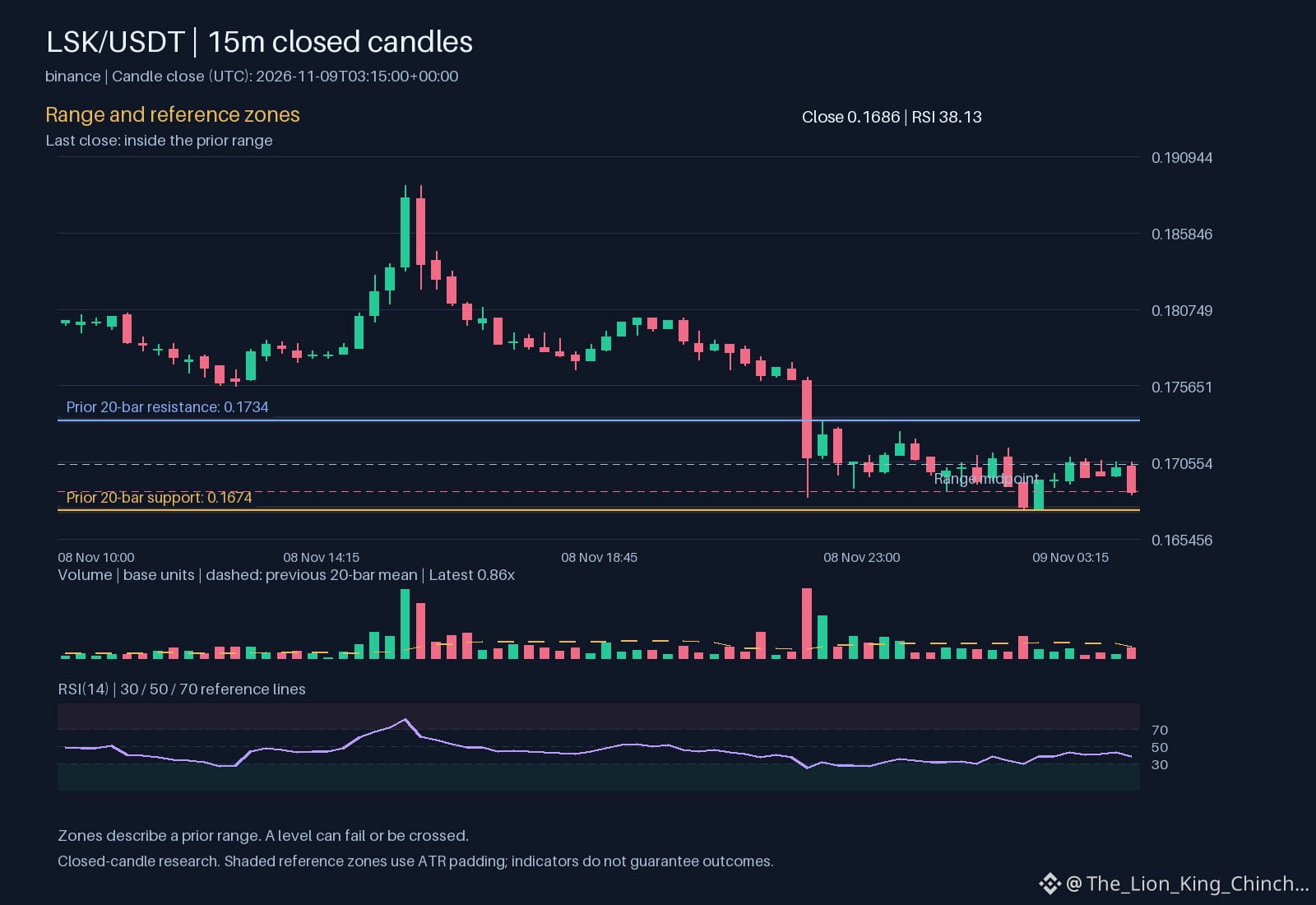
Imagine a quiet desk. The screen shows $LSK sitting inside its recorded range. The mind, however, races ahead. It imagines a breakout before the data confirms it. This is the hypothetical research habit: mistaking mental speed for market truth.
Why is this trap so understandable? Fast moves trigger a desire for certainty. The brain prefers a story over a wait. When -1.11437 shifts direction while volume remains 0.860016, the noise feels significant. This is the conflict. The chart is calm. The reflex is loud. A common error is adjusting a rule after seeing a candle tick. But the rule was built to handle that exact noise. Changing it now creates a new, untested path.
What is the useful lesson? Distinguish the observation from the implication. The observation is that price sits near 0.177492 with 0.00169216 defining the daily wiggle. The implication depends on what happens next. If price stays within 0.1674 and 0.1734, the range holds. If it breaks, the volume must agree. Right now, volume does not confirm urgency.
To reassess your interpretation, step back from the live feed. Ask: if I had no rule before this move, would I enter now? If the answer is no, the rule was correct. The move was just a test. The calm screen wins against the rushing mind. Trust the structure. Use 38.1344 only as a context marker, not a trigger. The lesson is patience. The data is not trying to excite you. It is trying to stay within bounds until a true shift occurs. Let the checklist do the work. Your mind provides the bias. The candle provides the proof. Until both align, wait.
Probabilistic market research, not a recommendation or guaranteed return.
Have you caught yourself changing a rule after seeing a fast move?
#LSK