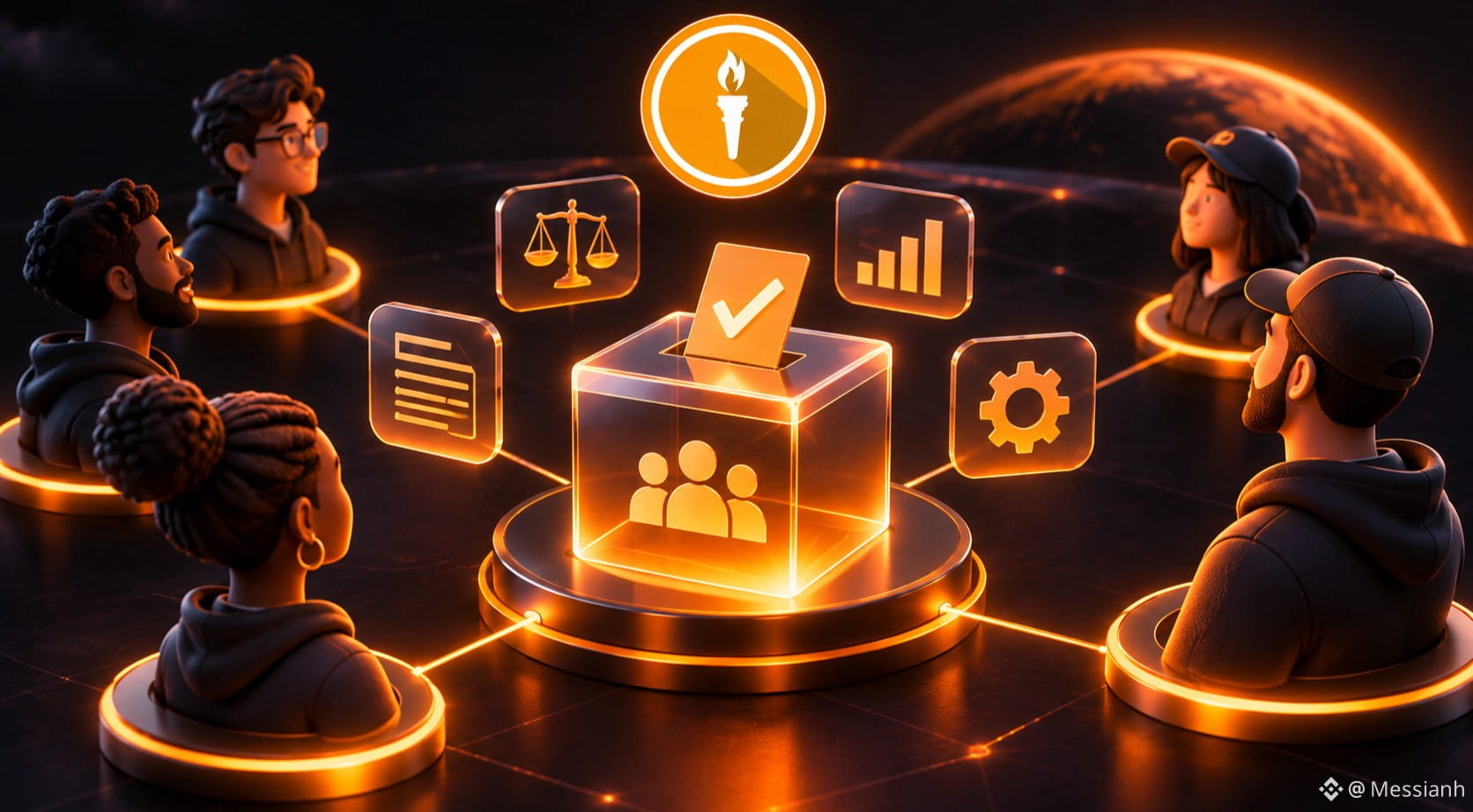
Who should decide the future of a decentralized project?
A small group of founders?
A central authority?
Or the community building and supporting it?
This is where DAOs enter the picture.
Let's break it down.
First, what is a DAO?
DAO stands for Decentralized Autonomous Organization. It's an organizational structure that uses blockchain-based tools and predefined rules to coordinate decisions and activities.
The goal is to enable collective governance without relying entirely on a traditional central authority.
How does a DAO work?
While governance models differ, many DAOs rely on three key elements:
• Proposals: Members suggest changes or initiatives.
• Voting: Eligible participants express their preferences.
• Execution: Approved decisions are carried out according to the governance rules.
That's the basic idea.
Why does governance matter?
Decentralization isn't just about where a network runs. It's also about who has influence over its direction. Without meaningful participation, decision-making power can remain concentrated in a small group.
Governance helps address that challenge.
But here's something important, not all DAOs are equally decentralized. Some give voting power based on token holdings.
Others use different participation and decision-making models. And even when voting is open, influence can still be concentrated. The design matters.
A well-designed governance system can give a community a structured way to:
• Discuss proposed changes.
• Participate in decisions.
• Influence project priorities.
• Coordinate around shared objectives.
It's not just about voting, it's about participation.
This is one of the areas worth exploring as Web3 ecosystems evolve. Liberdus has DAO features coming to its Testnet.
Before testing them, understanding the principles behind decentralized governance is a good place to start.
What makes a DAO genuinely decentralized, open participation, fair voting power, or transparent decision-making?
#JobsReportRaisesHikeOdds #Liberdus #WillAnthropicListOnTime $ONDO