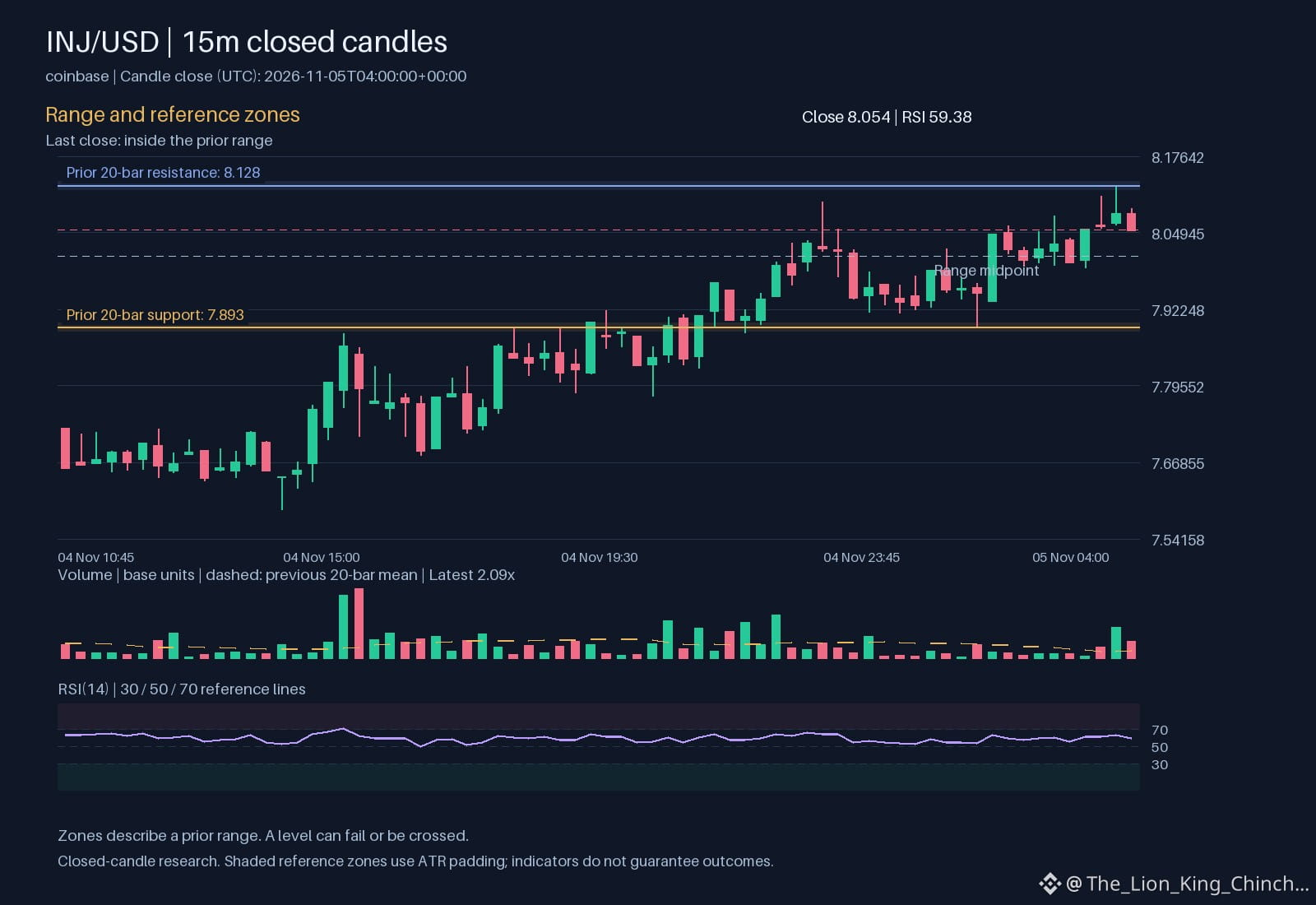
$INJ: INJ: A Psychology Lens on Rising Volume
Decision Bias
The current chart shows an hourly direction up and volume above baseline. This pattern often triggers the fear of missing out bias. Traders see the rise, notice the louder activity, and feel pressure to jump in before the move ends. The bias can shortcut careful analysis and push a premature entry.
How It Alters Research
When fear of missing out is active, attention narrows to the most recent price rise while earlier context fades. Anchoring to the latest high may cause a researcher to over‑weight that level and ignore the broader range or support zones. The result is a plan that leans on the excitement rather than a balanced risk view.
Practical Self‑Check
Before confirming a trade, pause and ask: “Am I reacting to the volume surge, or am I evaluating the underlying structure?” Write down the observation that volume is above baseline and the directional cue, then step away for a few minutes. Re‑read the note and see if the entry still fits the original criteria. If the plan changes, the bias likely influenced the first impulse.
Remember that each move offers a chance to observe your own reactions and refine the rule set.
Probabilistic market research, not a recommendation or guaranteed return.
Would you keep the same rule after missing a move?
#INJ #TradingPsychology #CryptoLearning