
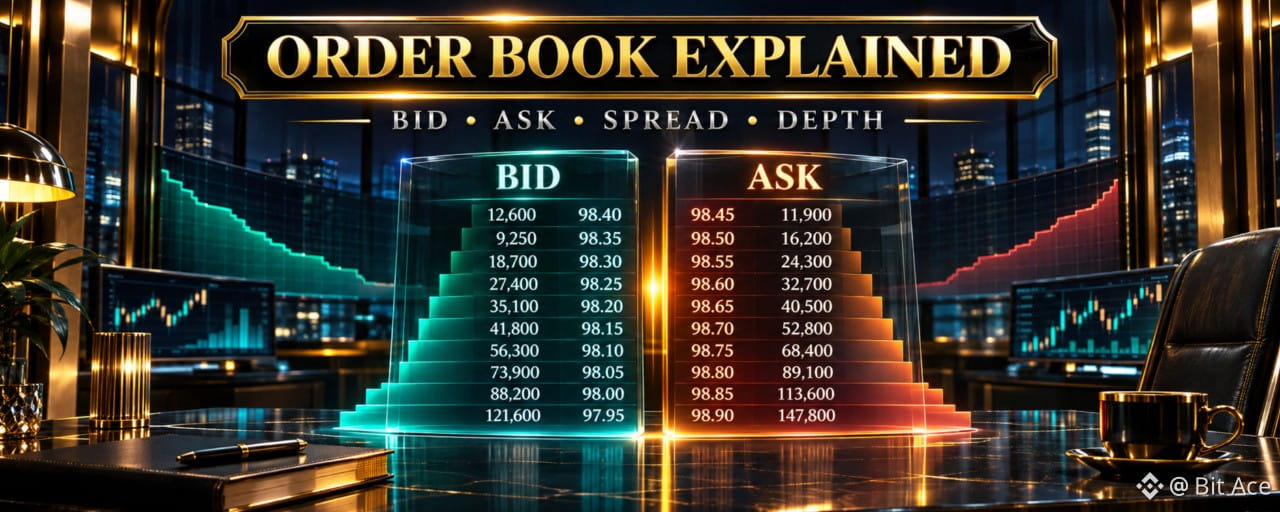

The Binance Spot order book is a live list of open buy and sell orders for a selected trading pair. It helps you see the best available bid and ask, the gap between them, and how much visible quantity is available at nearby price levels before you place an order.
An order book is not a price forecast. Orders can be filled, changed, or canceled quickly, so use it as a current liquidity snapshot alongside your own risk controls.
Start with the best bid and best ask
Bids are open buy orders. The highest bid is the highest price currently offered by a buyer. Asks are open sell orders. The lowest ask is the lowest price currently requested by a seller.
The best bid and best ask sit closest to the middle of the book. When an incoming order can match an available order on the opposite side, Binance's matching system can execute the trade according to the order rules and available quantity.
Read the spread before order size
The bid-ask spread is the difference between the best ask and the best bid. A narrow spread often appears in a more liquid market, while a wider spread can indicate less agreement between buyers and sellers or changing market conditions.
Compare spreads as a percentage when reviewing assets with very different prices. A small absolute difference can still be meaningful for a low-priced asset, and the spread can widen during volatility.
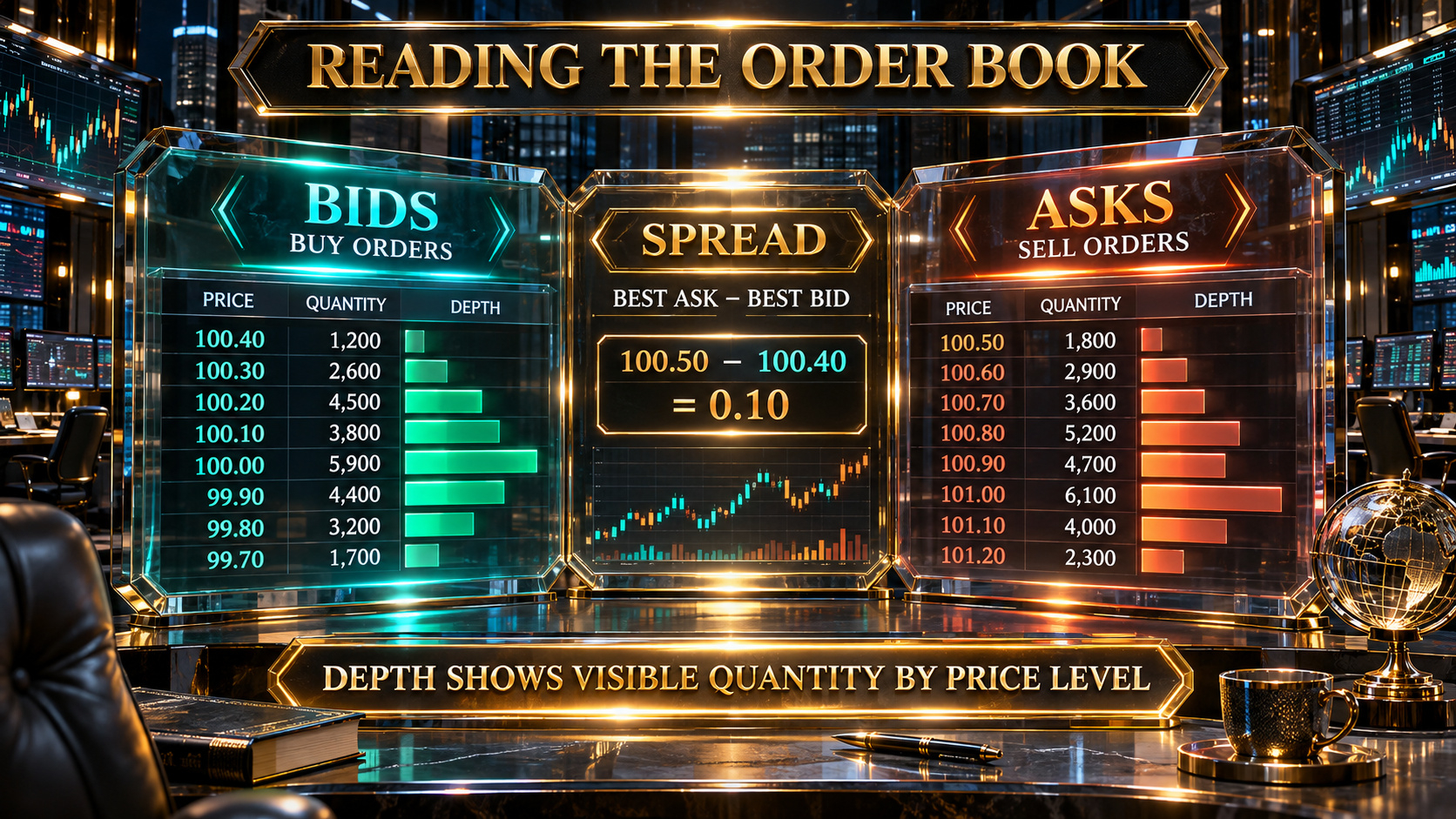
Caption: Read the closest bid and ask first, then inspect the visible quantity around them. The spread and displayed depth can change in real time.
Market depth shows quantity by price level
Market depth describes the visible buy and sell quantity across multiple price levels. A depth chart turns that data into cumulative bid and ask curves, which can help you compare the amount of displayed liquidity on each side.
Large clusters are sometimes called buy walls or sell walls, but they are not guaranteed support or resistance. Visible orders may be canceled before execution, and activity outside the displayed levels can also affect the market.
Order size can affect the average fill
A market order seeks immediate execution against the best available orders. If the requested quantity is larger than the amount available at the best price, the remaining quantity may fill across additional price levels. The resulting average execution price can differ from the price seen before submission; this is slippage.
A limit order sets a maximum buy price or minimum sell price, but it may remain open or fill only partially. Neither order type removes trading risk. Always review the order confirmation, fees, filled quantity, and average price after execution.
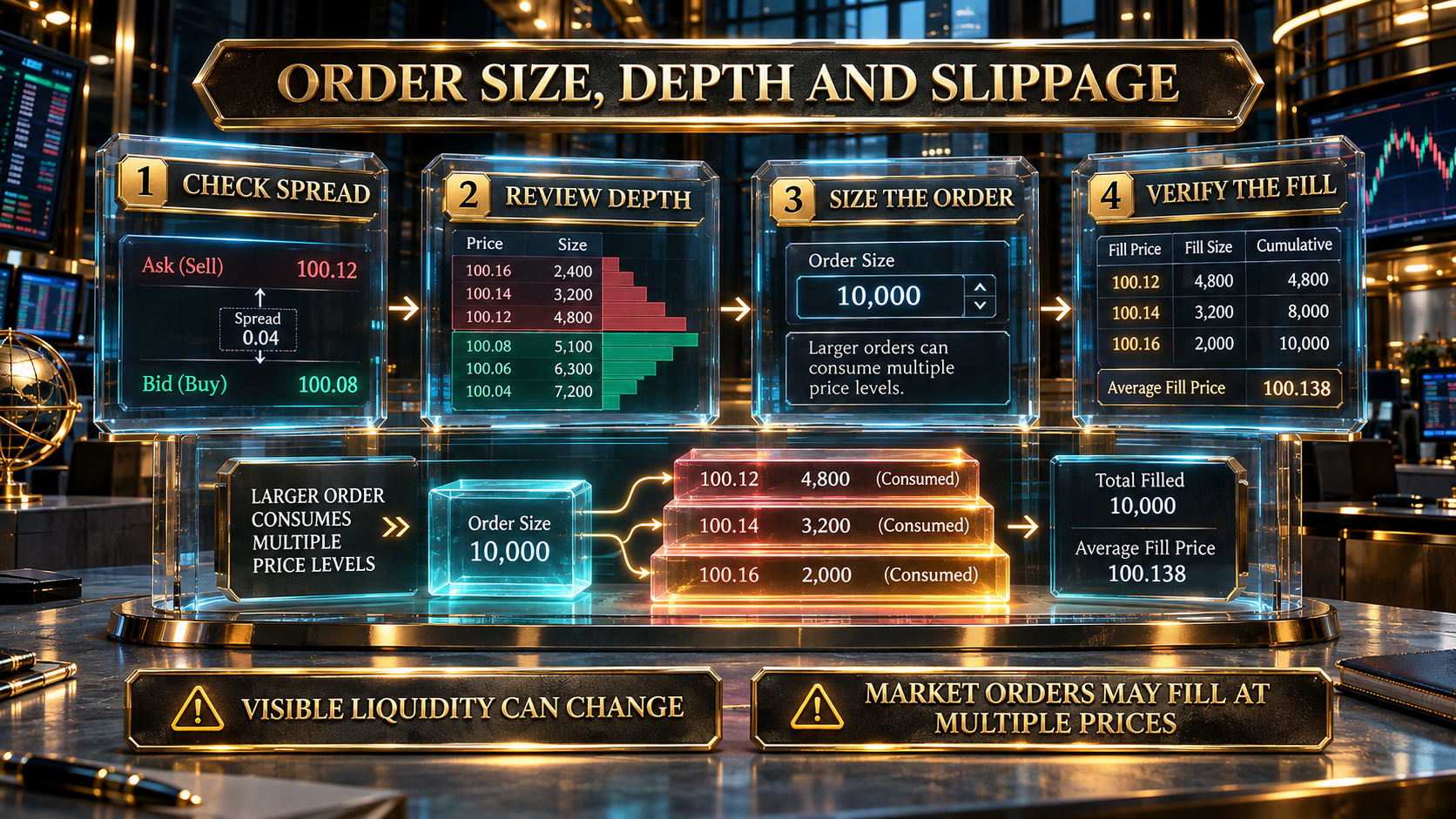
Caption: Check the spread, review nearby depth, size the order, and verify the final fill. Market orders may execute at multiple price levels.
A practical pre-order workflow
Confirm the trading pair and quote asset first. Then check the best bid, best ask, spread, nearby quantity, and your intended order type. Avoid treating one large visible order as a promise about future price direction.
After submitting, open the order or trade history and verify whether the order is open, partially filled, filled, expired, or canceled. Do not rely only on the order book display you saw before clicking.
Frequently asked questions
Q1. What is the difference between a bid and an ask?
A bid is a buyer's open price, while an ask is a seller's open price. The highest bid and lowest ask are the best prices currently displayed on their respective sides.
Q2. What does a narrow spread mean?
A narrow spread generally suggests that the closest buyers and sellers are near each other in price. It often accompanies higher liquidity, but it can change quickly and does not guarantee a specific execution price.
Q3. Does displayed market depth guarantee liquidity?
No. The book shows visible open orders at that moment. Orders can be filled, changed, or canceled, and hidden or future activity is not shown.
Q4. Why can a market order fill at several prices?
If the best price level does not contain enough quantity, the order can continue matching at additional available levels. This can change the average fill price.
Q5. Can the order book predict price direction?
No. It can provide context about current displayed supply, demand, and liquidity, but large orders or apparent walls can disappear. Use it with other information and risk controls.
Q6. Where can I verify the final execution?
Use the Binance Spot order and trade history to check status, filled quantity, average price, and fees after submission.
Official sources
Binance Academy: What Is an Order Book and How Does It Work?
Binance Academy: Bid-Ask Spread and Slippage Explained
Binance Academy: Your Guide to Binance Spot Trading
Check availability and terms before signing up
Trading pairs, order types, fees, and product availability vary by jurisdiction, account, and current interface. Use your genuine identity and actual residence, follow the rules that apply to you, and never bypass a restriction. If Binance is available where you live and you need a new account, confirm referral code UAUBG73C on the official registration form before submitting. No reward, discount, approval, trading result, or product access is guaranteed.
https://www.binance.com/join?ref=UAUBG73C
Affiliate disclosure: this Article includes a referral sign-up link.
#BinanceSpot #OrderBook #MarketDepth #CryptoEducation