
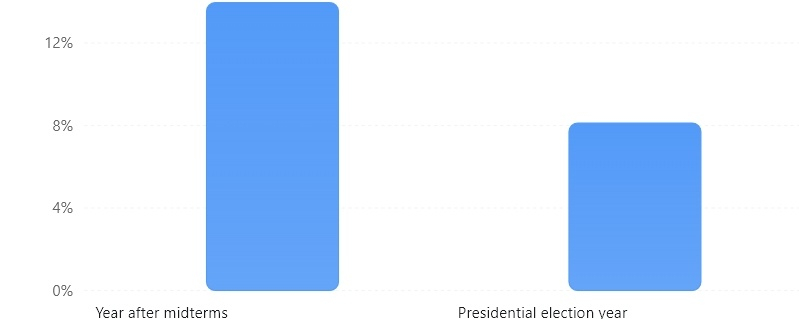

Wall Street is staging a powerful rally following a definitive shift in the political landscape. U.S. stocks surged on Wednesday as final vote counts confirmed that Democrats have won control of both the House of Representatives and the Senate in the November 3 midterm elections.
While market participants traditionally favor a split Congress or a Republican majority due to pro-business tax policy expectations, capital markets are reacting with intense optimism to this Democratic sweep.
Here are the 5 core reasons why the U.S. stock market is climbing after the midterm results:
1. Complete Removal of Political Uncertainty
Financial markets hate ambiguity far more than they fear specific political platforms. Leading up to November 3, investors heavily hedged against the risk of a contested election, delayed results, or protracted legal battles over voting counts. The clear, uncontested sweep by the Democratic Party provides Wall Street with immediate administrative clarity. With a definitive path forward established overnight, institutional capital that was sitting on the sidelines has aggressively re-entered the market, triggering a massive relief rally.
2. The Anticipation of Massive Infrastructure Spending
A unified Democratic Congress significantly increases the probability of a major, bipartisan infrastructure package. Wall Street forward-looking algorithms are already pricing in substantial federal funding for transportation, traditional grid modernization, and next-generation green energy projects. This expected influx of government spending is directly lifting shares of industrial giants, basic materials providers, and clean tech sectors, driving broad-based indices upward.
3. A Highly Predictable Regulatory Environment
While a unified government often brings stricter oversight, it also brings structural predictability. Corporations can adapt to strict regulations far better than they can adapt to unpredictable, shifting rules. For massive tech conglomerates and international financial institutions, a transparent legislative roadmap allows for precise multi-year budgeting, capital allocation, and merger-and-acquisition (M&A) planning that was previously paused due to political gridlock.
4. Expectations of Broad Macroeconomic Stability
International investors often view a unified legislative and executive branch as a sign of geopolitical stability. The election outcome signals a more predictable approach to international trade relations, global alliances, and tariff structures. This reduction in the threat of sudden trade disruptions provides immediate reassurance to multinational corporations, lowering the global risk premium and attracting foreign capital back into U.S. equities.
5. Institutional De-Hedging and Short Covering
In the weeks leading up to the midterms, hedge funds and institutional trading desks bought massive amounts of protective put options and established short positions to shield portfolios from potential chaos. Once the results were finalized without systemic disruption, these institutional players were forced to rapidly unwind their hedges. The simultaneous buying required to close out short positions and re-balance portfolios created an intense wave of buying pressure, accelerating the upward momentum across major stock indices.
#BTCRebounds80K #USMidterms-WhatAreMarketsExpecting? #USOctoberNFP-AreRateCutsStillPossible #BinanceIncidentReport