

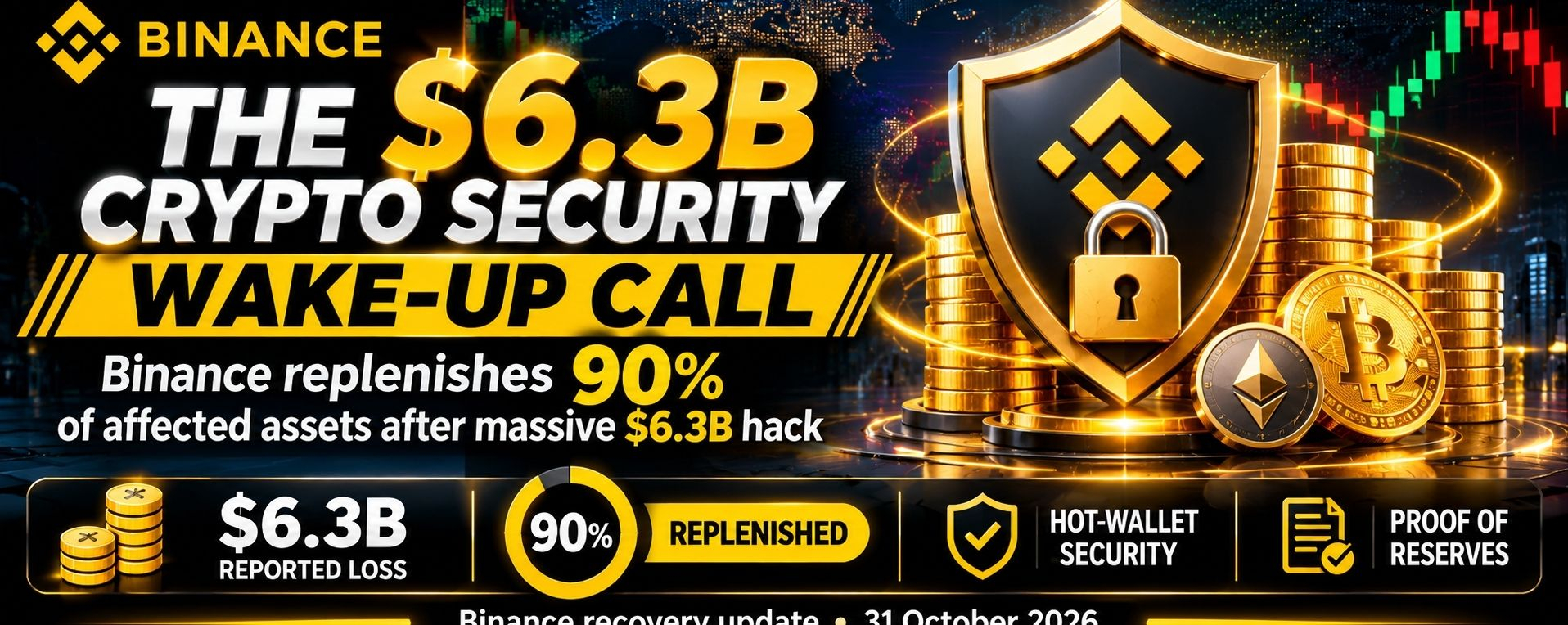


What happens when one of the world's largest cryptocurrency exchanges faces a $6.3 billion security breach?
The crypto industry is now facing a serious question: Is holding digital assets on centralized exchanges as secure as investors believe?
On October 29, Binance experienced a major security incident involving unauthorized withdrawals from compromised hot wallets. The reported losses reached approximately $6.3 billion, making this one of the largest crypto thefts ever reported.
But the most important development is what happened next.
Binance Moves to Cover the Losses
According to Binance's October 31 recovery update, the exchange had replenished approximately 90% of the affected assets.
Major cryptocurrencies, including BTC, ETH, BNB, SOL, XRP and USDT, were reported as fully backed at a 1:1 ratio.
Binance says it will absorb the financial impact rather than pass the losses to its users. The remaining 10% consists mainly of less-liquid tokens that require additional purchases.
Who Was Behind the Attack?
The FBI attributed the attack to TraderTraitor, a North Korean state-sponsored hacking group.
Investigators and blockchain security firms are working to trace the stolen funds. Binance also reported cooperation with industry partners to freeze affected assets.
The Bigger Problem: Exchange Security
This incident highlights an important weakness in the crypto ecosystem.
Even major platforms with advanced infrastructure can face sophisticated attacks. Hot wallets, internal access controls, compromised devices and transaction approval systems all deserve serious attention.
The lesson is clear: security cannot depend on reputation alone.
What Should Investors Learn?
1. Never keep all your crypto on a single exchange.
2. Enable strong authentication and withdrawal protections.
3. Use hardware wallets for long-term holdings where appropriate.
4. Verify official announcements before reacting to breaking news.
5. Understand the difference between exchange reserves and actual recovery of stolen funds.
The Final Question
Binance's effort to replenish 90% of the affected assets is significant, but replacing stolen funds does not automatically answer every question about how the breach happened.
The real test will be stronger security controls, independently verifiable reserves and greater transparency.
Crypto's future depends not only on innovation and adoption, but also on trust.
What do you think: Can centralized exchanges ever become completely secure, or will self-custody remain the safest long-term option?
#BinanceRestoresWithdrawalsForMultipleNetworksAndAssets #BinanceUpdatesProofofReservesAddresses