

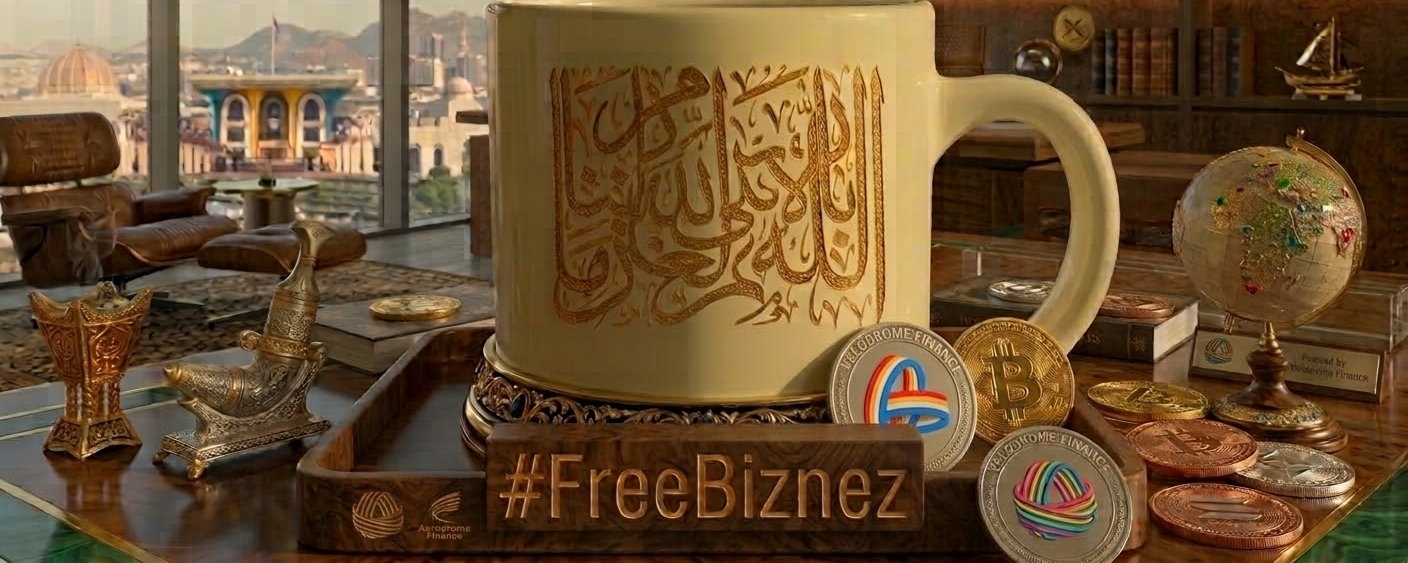

Velodrome Finance (VELO): A deep Review and Investment Analysis (October 2026) including its identity, technology, tokenomics, market potential, price outlook, and investment risks.
1. What is Velodrome Finance?
Velodrome Finance is a decentralised finance (DeFi) protocol built to provide cryptocurrency trading and liquidity infrastructure. It was launched on 2 June 2022 and subsequently introduced its V2 redesign in June 2023. Its original ecosystem was closely associated with Optimism, an Ethereum Layer 2 network.
Its principal functions include:
- Token swapping: Users exchange supported cryptocurrencies without relying on a traditional centralised exchange.
- Liquidity provision: Users deposit eligible token pairs into liquidity pools to facilitate trading.
- Liquidity incentives: Eligible liquidity providers can earn token rewards.
- Governance: Participants can lock tokens and vote on how protocol incentives are distributed.
- Trading-fee distribution: Eligible governance participants and liquidity providers can receive revenue according to the protocol's rules.
How does it make money?
Imagine that traders exchange ETH for USDC through a decentralised exchange.
1. Traders pay trading fees.
2. Liquidity providers supply assets that make those trades possible.
3. Eligible liquidity providers receive incentives.
4. Governance participants help determine which liquidity pools receive token emissions.
5. Eligible voters receive a share of trading fees and other incentives.
This mechanism is intended to attract liquidity, increase trading activity and make the platform more useful.
However, a successful protocol does not automatically mean its cryptocurrency will increase in price. Token supply, incentives, market demand and the distribution of economic value all matter.
---
2. Important October 2026 development: Velodrome is merging into Aero
This is the most important issue to understand before considering an investment in the established Velodrome Finance token.
On 16 October 2026, Binance announced that it would support the merger of Velodrome Finance into Aerodrome Finance and the associated token conversion. Binance updated its announcement on 20 October 2026.
The announced conversion is:
1 VELODROME = 0.044 AERO
This is a token-conversion ratio, not a promise that either token will maintain a particular market value.
Key dates and implications
28 October 2026 Binance will settle and remove the VELODROME perpetual futures contract.
2 November 2026 Binance will remove VELODROME from certain services, including Convert and Buy & Sell Crypto.
3 November 2026 Binance will stop spot trading in VELODROME/USDT and suspend VELODROME deposits and withdrawals.
After the conversion Binance says it will provide further information about the availability of deposits and withdrawals for the new AERO token.
These dates and actions are based on Binance's published announcement and could be subject to updates.
Why this matters to investors
The merger creates both an opportunity and a risk.
Potential benefits
- Integration into a larger combined trading and liquidity ecosystem.
- The possibility of improved cross-chain trading and liquidity.
- A unified token ecosystem that could attract more users and activity.
Potential risks
- Confusion between the old and new tokens.
- Temporary volatility around the conversion.
- Changes in liquidity and exchange support.
- Differences between exchange-managed conversions and tokens held in personal wallets.
- Losses if a holder uses the wrong conversion process or interacts with a fraudulent website.
Do not assume that every wallet, exchange or decentralised trading platform will handle the migration identically.
If you already hold Velodrome, check the official migration instructions and the specific terms of the platform where your tokens are held before taking action.
Official sources:
- Velodrome Finance
- Binance's official merger announcement
---
3. Current price and market performance
The following figures refer to the established Velodrome Finance token, not an independently verified cryptocurrency called Veldrome Finance.
Market data available on 20 October 2026 provides the following reference points:
Market indicator: Reported figure
Approximate token price: $0.035
Approximate market capitalisation:$32 million
Approximate circulating supply: 915 million tokens
Reported total supply: 2.64 billion tokens
Historical all-time high: Approximately $0.4245
Historical all-time low: Approximately $0.00545
These figures come from CoinMarketCap's Velodrome Finance listing and may change with market conditions. The listing reports that the token is substantially below its historical peak.
Important: These historical statistics describe the legacy Velodrome token before its announced conversion into AERO. They should not be treated as the price or supply statistics of the new AERO token.
What does the price history tell us?
At approximately $0.035, the token is trading around 92% below its reported all-time high.
That may attract investors searching for undervalued cryptocurrencies, but a large decline alone does not prove that an asset is cheap.
A cryptocurrency can remain below its previous high for years, particularly if demand declines, token emissions dilute holders or its underlying business loses market share.
The more relevant questions are:
- Is the protocol attracting more traders?
- Is liquidity increasing?
- Are trading fees growing?
- Is the new combined ecosystem gaining users?
- Does token demand grow faster than the supply?
- Is the market assigning a reasonable valuation to the protocol's actual economic activity?
These are better indicators of long-term potential than the token's previous high.
---
4. Tokenomics: How the token's value is determined
Tokenomics describes how a cryptocurrency is issued, distributed, used and potentially diluted.
Velodrome's original token economy used two principal assets.
Token: Main purpose
VELO: Utility token distributed through protocol emissions and used within the original ecosystem
veVELO: Governance position obtained by locking VELO, with voting rights and eligibility for fees and incentives
The original protocol allocated its initial VELO supply across community members, partner protocols, the Velodrome Foundation, Optimism and a genesis liquidity pool. Subsequent token emissions were used to incentivise liquidity.
The benefits of this model
The system attempts to align the interests of traders, liquidity providers and governance participants.
For example, a protocol that needs liquidity for its token can offer incentives to liquidity providers. Governance participants help direct incentives towards selected pools.
If this attracts trading activity, the protocol may generate more fees.
The weaknesses
There are several potential problems with incentive-driven token economies.
1. Inflation and dilution
If additional tokens enter circulation faster than demand increases, the token price can come under pressure.
2. Reward dependence
Liquidity providers may leave when rewards become less attractive. High incentives do not necessarily indicate sustainable organic demand.
3. Speculative demand
Investors may buy a token because they expect its price to rise rather than because they need its utility.
4. Uncertain future value
Even when a protocol generates fees, its token holders do not necessarily receive those fees directly or equally. The precise rights attached to the token matter.
What changes with Aero?
The official Aero upgrade hub says the new AERO token is intended to unify the Aerodrome and Velodrome ecosystems.
Its published conversion terms specify:
- 1 existing AERO converts to 1 new AERO.
- 1 existing VELO converts to 0.044 new AERO.
- Velodrome holders are allocated 5.5% of the new token supply, while Aerodrome holders receive 94.5%.
- The new token's expected maximum supply at launch is approximately 2.127 billion.
These are the project's published upgrade terms and supply projections, not guarantees of future market value.
The project also says the new token economy will allow eligible staked AERO holders to allocate rewards to liquidity pools across supported chains and earn a share of exchange revenue.
For a long-term investor, the important question is whether the combined ecosystem can generate enough sustained activity to support the value of its token.
---
5. Technology and competitive advantages
Velodrome's original technology was designed around automated market-making and liquidity incentives.
The broader Aero project aims to expand this model into a unified liquidity network across multiple blockchain ecosystems.
Potential advantages
A. Established protocol history
Velodrome has operated since 2022. That gives it a longer operational history than a newly launched cryptocurrency with no demonstrated usage. It does not, however, guarantee that the protocol is safe.
B. Liquidity-focused design
Decentralised exchanges need sufficient liquidity to support trading without excessive price impact. Incentive mechanisms can help attract liquidity to important trading pairs.
C. Revenue-linked participation
The protocol's governance and reward mechanisms attempt to connect participation with trading activity and incentives.
D. Multi-chain ambitions
Aero's launch documentation identifies Base, Ethereum Mainnet, OP Mainnet, Arc, Ink, Robinhood Chain and Arbitrum as launch networks. A broader presence could increase access to traders and liquidity if adoption follows.
What could limit its success?
Competition in decentralised finance is intense.
Velodrome and Aero must compete with other decentralised exchanges, established liquidity protocols, centralised exchanges and newer cross-chain trading systems.
The key challenge is not simply launching across more networks. It is attracting users who trade regularly and generate meaningful economic activity.
---
6. Security review: Is Velodrome Finance safe?
This is one of the most important parts of the analysis.
There are two separate questions:
1. Is the protocol's technology reasonably secure?
2. Is buying its token a good financial decision?
A project can have useful technology but still expose investors to substantial losses.
Security considerations
Risk: (Explanation) - What to check
Smart-contract vulnerabilities: (Bugs can cause funds to be lost or locked). - Published audits, security reports and known incidents.
Liquidity risk: (There may not be enough liquidity to sell large positions at a fair price).-Trading volume, pool depth and price impact.
Token dilution: (Additional token issuance can reduce the value of existing holdings).-Emissions, circulating supply and token economics.
Governance risk: (Governance decisions can affect rewards and protocol economics).-Voting concentration and governance proposals.
Bridge risk: (Moving assets between chains introduces additional technical risks).- Official bridge documentation and supported networks.
Migration risk: (Incorrect conversion procedures can result in lost funds).- Official upgrade instructions and verified contract addresses.
Market risk: (The price can decline sharply even if the project continues operating).- Market conditions, valuation and investor sentiment.
What do security ratings tell us?
CoinGecko's Velodrome listing displays third-party security information, including a low overall score on its 20 October 2026 snapshot. These scores are indicators rather than definitive proof that a protocol is safe or unsafe. They should be interpreted alongside the underlying audit coverage, testing information and other security evidence. (CoinGecko)
I would not describe this project as risk-free or guarantee that its contracts are secure.
My security assessment: Treat the token migration as a particularly sensitive period. Verify every contract address using the project's official documentation and repositories. Never share your wallet's recovery phrase or private keys with a migration website.
--
7. Fundamental analysis: What could drive future growth?
I would assess the combined Aero ecosystem using five main factors.
Factor 1: Trading volume
More genuine trading activity can increase the fees generated by the protocol.
However, volume alone is insufficient. The relevant question is how much revenue the protocol retains or distributes after accounting for incentives and operating costs.
Positive signal: Trading volume and fees increase consistently over several months.
Negative signal: Volume rises temporarily around the merger and then falls sharply.
Factor 2: Total value locked (TVL)
TVL measures the value of assets deposited in a DeFi protocol.
Increasing TVL may indicate that users trust the platform with more capital.
However, TVL can increase simply because cryptocurrency prices rise. It can also fall when incentives disappear.
Therefore, TVL should be evaluated alongside trading volume, liquidity depth and fee generation.
Factor 3: Growth across multiple blockchains
Aero's planned multi-chain presence creates an opportunity to attract more users and liquidity.
The challenge is ensuring that this expansion produces sustainable economic activity rather than simply spreading existing liquidity across additional networks.
Factor 4: Token supply
The Aero upgrade hub estimates annual AERO inflation of approximately 12% initially, with a 20% annual ceiling at launch. These are project estimates and parameters, not guaranteed future inflation rates. (Aero upgrade documentation)
Investors should examine whether the ecosystem's economic growth can offset dilution from new token issuance.
Factor 5: Demand for the token
A token needs a reason for people to hold or use it.
For the new AERO ecosystem, relevant factors include governance participation, reward allocation, trading activity and the value distributed to eligible participants.
If demand grows while supply growth remains controlled, that could support the price. If supply grows faster than demand, the opposite may occur.
---
8. Price prediction: November 2026, December 2026 and 2027
Because the Velodrome-to-Aero migration is imminent, I would avoid presenting a conventional VELO price forecast as though the token's existing market structure will continue unchanged.
Instead, the following scenarios illustrate possible outcomes for the new AERO token after migration.
These are hypothetical scenarios, not statistically validated predictions or guaranteed price targets.
Period
Bearish scenario
Base scenario Bullish scenario
November 2026
Migration-related selling and weak liquidity Price stabilises as trading conditions normalise
Strong demand following a successful launch
December 2026
Adoption disappoints and token dilution weighs on price
Gradual ecosystem growth supports valuation
Trading activity and demand exceed expectations
2027
Weak DeFi conditions and declining revenue Moderate adoption with mixed price performance
Strong multi-chain adoption and sustained revenue growth
I would not assign precise dollar targets to these scenarios without a reliable post-migration market price, current circulating supply, liquidity data and a defensible valuation model.
What could happen in November 2026?
November is likely to be an important period for evaluating how the market responds to the merger.
Potential positive developments include:
- Smooth token conversion.
- Continued exchange support.
- Strong trading activity.
- Growing liquidity on the new platform.
Potential negative developments include:
- Profit-taking after the launch.
- Confusion about token conversions.
- Temporary reductions in liquidity.
- Selling pressure or weaker-than-expected adoption.
The market could react positively to the merger announcement and still decline afterwards. An announced upgrade does not guarantee price appreciation.
What about December 2026?
By December, investors should have more information about the initial performance of the combined ecosystem.
I would pay particular attention to:
- Whether trading volume remains strong after the launch.
- Whether fees increase.
- Whether the new token attracts sustained demand.
- Whether the supply and reward mechanisms support long-term holders.
A successful launch followed by growing economic activity would strengthen the bullish case. A successful launch followed by declining activity would weaken it.
What about 2027?
The 2027 outlook depends more on sustained adoption than on the merger itself.
A bullish outcome would require the combined ecosystem to establish itself as a competitive liquidity platform, attract regular users and generate meaningful economic activity.
A bearish outcome could develop if competitors capture market share, incentives fail to attract lasting liquidity or token supply grows faster than demand.
My assessment: The merger provides a significant catalyst, but the long-term investment case remains dependent on execution, adoption and token economics.
---
9. Could Velodrome or Aero deliver a 5x or 10x return?
It is useful to examine what those returns would require rather than assuming that they are likely.
Suppose a hypothetical investment is worth $1,000.
Return scenario Investment value Profit or loss
50% decline $500 -$500
50% gain $1,500 +$500
2x $2,000 +$1,000
5x $5,000 +$4,000
10x $10,000 +$9,000
These examples exclude trading fees, taxes and other costs.
A 5x or 10x return is mathematically possible for a cryptocurrency, but it should not be treated as the expected outcome.
To assess whether such growth is plausible, calculate the implied market capitalisation:
Future market capitalisation = Future token price × Future circulating supply.
The calculation must use the new AERO token's supply, not the legacy VELO supply.
For example, if a token's price increases fivefold while its circulating supply also increases, its market capitalisation would rise by more than five times only if the supply growth and price increase combine accordingly. Price appreciation and market-capitalisation growth are related but not identical.
---
10. Is the merger bullish or bearish?
My assessment is that the merger is a potentially positive long-term development with significant short-term execution and market risks.
Consideration Assessment
Combined ecosystem Potentially positive
Multi-chain expansion Positive if it attracts real usage
Existing protocol history Positive
Token conversion Creates uncertainty and operational risk
Token inflation A potential headwind
Competition Significant
Short-term price volatility Potentially high
Long-term price appreciation Possible, but unproven
The distinction between the legacy VELO token and the new AERO token is crucial.
Velodrome holders are not receiving one new AERO for every old VELO. The announced ratio is 0.044 AERO per VELO, reflecting the project's proposed allocation of the new supply.
Consequently, comparing the nominal prices of VELO and AERO without adjusting for the conversion ratio would be misleading.
---
11. How to verify whether Veldrome Finance is genuine
There is still one unresolved issue: I have not independently verified a separate cryptocurrency with the exact name "Veldrome Finance."
If you encountered that exact spelling on an exchange, Telegram group, website or investment platform, do not assume that it is the established Velodrome Finance project.
Use this checklist before purchasing:
1. Verify the name and ticker. Confirm whether the asset is VELO, VELODROME, AERO or something else.
2. Check the contract address. Compare it against the project's official documentation and blockchain explorer.
3. Confirm the blockchain. Make sure the token exists on the network claimed by the project.
4. Check trading liquidity. A quoted price is not enough; determine whether you can actually buy and sell the asset.
5. Investigate the team and documentation. Look for verifiable development activity and credible technical information.
6. Check the audit evidence. Confirm that any claimed audit relates to the actual contract you intend to use.
7. Avoid guaranteed-return claims. Promises of fixed profits, guaranteed price increases or risk-free staking are major warning signs.
8. Avoid unsolicited migration links. Use the official Aero upgrade hub rather than links sent by strangers.
The fact that a token has a website or appears in a wallet does not establish that it is legitimate.
---
12. Final verdict
My overall assessment of Velodrome Finance and the Aero transition
Velodrome Finance has an established DeFi history and a recognisable role in decentralised trading and liquidity provision. The proposed merger into Aero creates an opportunity to unify liquidity and broaden the ecosystem across several blockchain networks.
However, the investment case has changed significantly because of the token migration scheduled for 22 October 2026 at 00:00 UTC, equivalent to 4:00 a.m. in Oman. The official upgrade hub specifies that the new token will be called AERO and that VELO will convert at a ratio of 0.044 AERO per token.
My conclusions are:
- Project fundamentals: Worth investigating because of its established protocol and liquidity-focused design.
- Growth potential: Depends on whether the combined ecosystem attracts sustainable trading activity and generates meaningful fees.
- Short-term outlook: Uncertain because of the migration, exchange changes and potential volatility.
- Long-term outlook: Potentially attractive if adoption and economic activity grow, but far from guaranteed.
- Investment risk: High, as with many DeFi governance and utility tokens.
I would not buy solely because the token has fallen far below its historical high or because the merger is expected to create excitement.

