


On the evening of 30 October 2026, the cheapest Binance P2P ads that took Mercado Pago were asking about ARS 1,620 to 1,625 for one USDT. At that level, ARS 200,000 turns into roughly 123 USDT. Most money lost on these orders goes on a handful of avoidable slips, and this page walks through them from the first-order basics to the larger-order details.
The route itself is short. Verify your Binance account and turn on two-factor authentication, open P2P, choose Buy, USDT and ARS, filter by Mercado Pago, and type your amount. Place the order, send the exact pesos from your own Mercado Pago account to the CVU or alias shown inside the order, tap Transferred, Notify Seller, and the seller releases the coins into your Funding wallet once the pesos show up.
👉 Open a Binance account for ARS P2P
Peso prices below come from one evening's ads or are made-up illustrations. They will be different when you read this.
What does a Mercado Pago ad on Binance P2P show you?
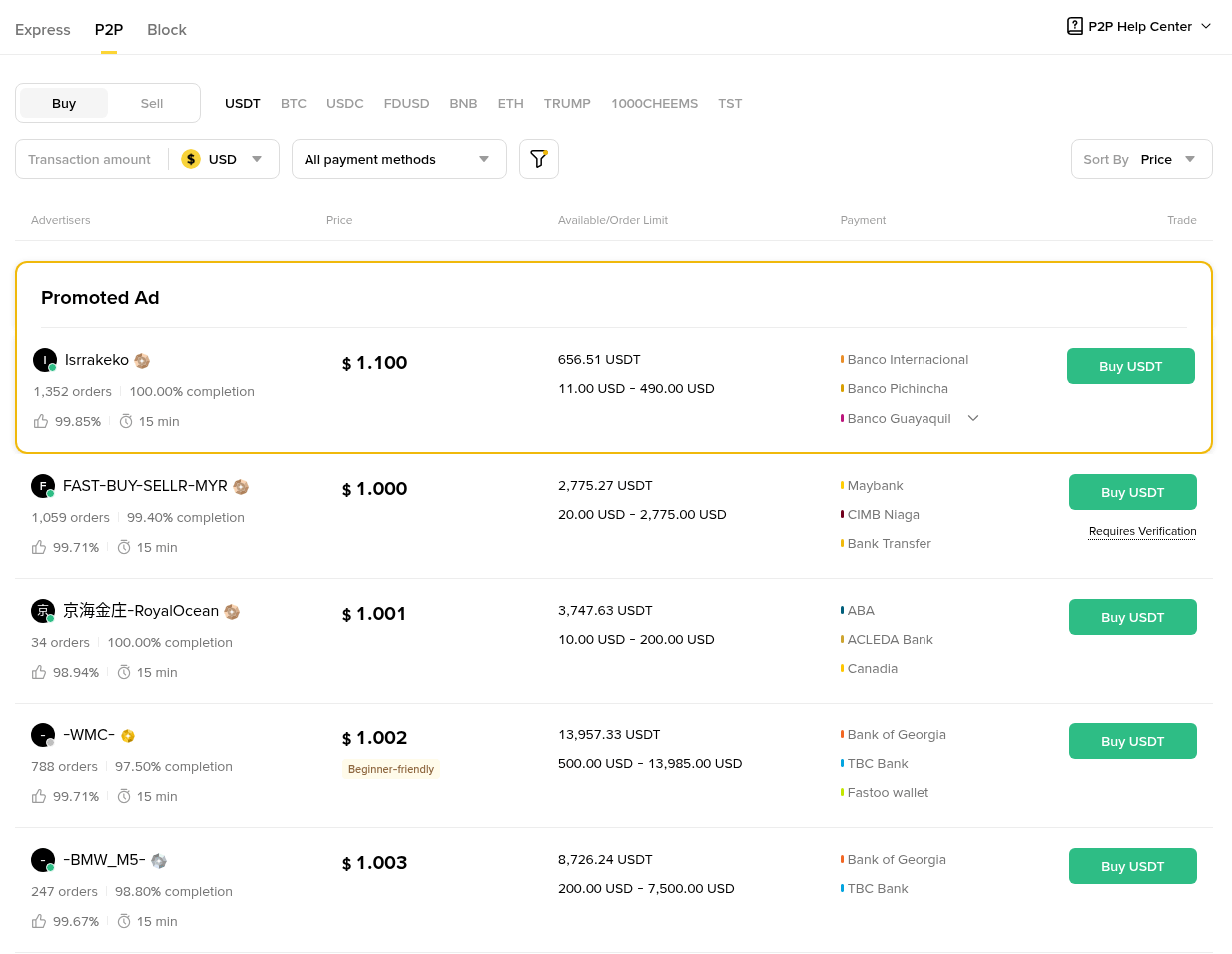
Each row on the P2P Buy tab is an offer from another user, and Binance holds that user's USDT while your order is open. Before you click Buy USDT, read five parts of the row.
Price in ARS: The advertiser's own rate for 1 USDT. It moves through the day, often several times an hour when the peso is busy.
Available and order limit: How much USDT sits on the ad and the smallest and largest peso order it accepts. In the 30 October snapshot, minimums ran from about ARS 7,840 to ARS 2,500,000.
Transfer methods: Mercado Pago rarely appears alone. The same ads also listed Lemon Cash, Ualá, Brubank, Naranja X or a bank transfer.
Time limit: Almost every ARS ad in that snapshot gave 15 minutes to send the pesos.
Track record: Orders in the last 30 days and completion rate. Some advertisers carry a merchant badge, others are ordinary users.
Binance's P2P policy also says the platform has no business relationship with the transfer methods listed on ads. Mercado Pago is just the channel two users agree on, so its own rules and limits still apply to your account.
Why does sending from someone else's Mercado Pago account sink the order?
Because Binance requires the sending account to carry the same name as your verified Binance profile, and it treats anything else as a third-party transfer. This is the slip that costs beginners the most.
What the rules say: If you send from an account in another person's name, your P2P access is suspended for at least 15 days, and in a dispute the buyer who sent third-party funds bears the loss.
What usually happens: The seller sees "Lucía Fernández" on the incoming transfer while your Binance name is "Martín Fernández". A careful seller refunds and cancels. A careless one may release, and then both of you have a problem if Lucía's bank or Mercado Pago later questions the transfer.
The fix: Use only your own Mercado Pago account, verified under your own DNI. If your partner wants USDT, they open their own Binance account.
The same rule runs the other way. The CVU or alias shown inside the order should belong to the seller's verified name. A different name is a reason to cancel before any pesos move. This P2P safety checklist written for Pix buyers in Brazil applies the same name check to another local rail, and the habits carry over to Mercado Pago almost word for word.
Why is the cheapest ARS price often the wrong ad?
Because the top of the list is usually built for large orders, and a slightly higher price from a busier seller can cost you less in time and stress. Here is a worked example for ARS 200,000 using the 30 October snapshot.
Ad 1 at ARS 1,620.00: The lowest price on the page, but its minimum was ARS 2,500,000. Your order can't even open.
Ad 2 at ARS 1,621.49: Minimum ARS 8,000, 277 orders that month, 100% completion. ARS 200,000 ÷ 1,621.49 = about 123.34 USDT.
Ad 3 at ARS 1,624.88: A merchant with over 5,000 monthly orders. ARS 200,000 ÷ 1,624.88 = about 123.09 USDT.
The gap between Ad 2 and Ad 3 is about 0.25 USDT, close to ARS 400. Either seller is a reasonable pick. Type your amount in the Transaction amount box before you scroll, and the ads you can't use disappear.
What goes wrong when you tap Transferred before Mercado Pago confirms?
The order moves to Releasing and tells the seller money is on the way when it isn't. Binance's policy says marking an order before the transfer is made or completed can get your account suspended.
Send first, tap second: Make the transfer in the Mercado Pago app, wait for the green confirmation, then go back to Binance.
Keep the comprobante: Save the transfer receipt with the operation number. Post a screenshot in the order chat if the seller asks.
Watch the clock: With 15 minutes on the timer, open the Mercado Pago app before you place the order, not after.
Why does rounding or splitting the amount cause disputes?
Because the seller checks for one transfer of the exact peso amount shown in the order, and anything else needs explaining. Two typical cases:
Short by a little: The order says ARS 200,000 and you send ARS 199,000. Under the appeal rules you can be asked to send the missing ARS 1,000 within a set time. If you don't, the seller refunds what arrived and the order is cancelled.
Two transfers: Mercado Pago tells you a single transfer is over your limit, so you send ARS 150,000 and then ARS 50,000. Ask in chat first. Some sellers accept it, some don't.
The cleanest habit is to copy the amount from the order screen instead of typing it from memory.
Why should the conversation never leave the order chat?
Because the order chat is part of the record Binance support reads in an appeal, and WhatsApp or Telegram isn't. Binance's P2P rules also tell users not to put phone numbers or social handles in ad terms or in the order chat.
Fake support: A message from "Binance Argentina" on WhatsApp saying your order is frozen and asking for a code or a "verification transfer" is a scam.
Fake receipts: When you sell later, an edited Mercado Pago screenshot is the classic trick. Check your actual Mercado Pago balance and activity, not the picture in chat.
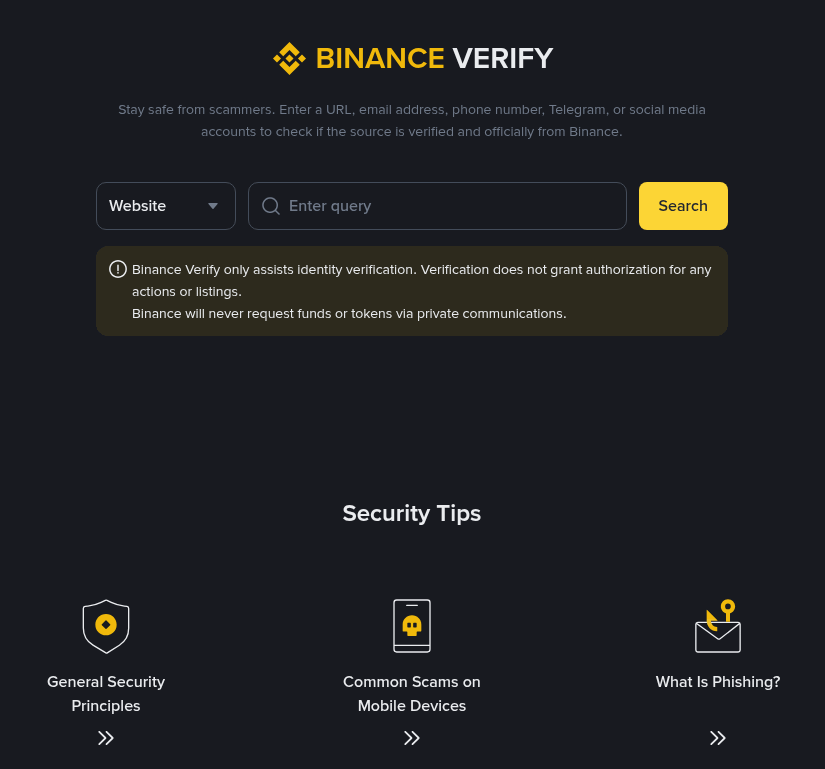
Checking a contact: Binance Verify lets you paste a website, email, phone number, Telegram or social handle to see whether it is really Binance.
Why is cancelling after you have sent the pesos so costly?
Because cancelling hands the locked USDT back to the seller while your pesos are already in their account. Binance's own guide warns against cancelling once your money has gone out, unless the seller has already sent it back, and three cancelled orders in a day suspend buying until the next day.
When the timer expires with no release, stay on the order page and escalate step by step.
Message first: Post the comprobante and the time of the transfer in chat. Many delays are a seller who stepped away.
Appeal next: Use Help and then Appeal, choose a reason, and attach the Mercado Pago receipt.
Then wait: If the seller doesn't answer, Binance customer support reviews the case. The USDT stays locked meanwhile.
Why does treating USDT as a sure inflation shield backfire?
Many Argentines buy USDT to hold something tied to the US dollar instead of pesos. That is the honest description of the use case: USDT is designed to track the dollar, so it moves with the peso's exchange rate against the dollar, not with Argentine prices. It is not a bank deposit, it has no deposit insurance, and it carries its own risks, including the issuer's reserves and short breaks from the dollar peg.
The cost of getting in and out is the part buyers forget. Take ARS 500,000 bought at ARS 1,621.49, which gives about 308.36 USDT. If you sold it straight back to the top sell-side Mercado Pago ad in the same snapshot, around ARS 1,616.30, you would receive about ARS 498,400. That ARS 1,600 is the spread between the two sides of the market, and you lose it again on every round trip.
Now two made-up scenarios for the same 308.36 USDT a few months later.
If the ARS price of USDT rises 5%: At about ARS 1,702 the coins would sell for roughly ARS 525,000, before the spread on the way out.
If it falls 5%: At about ARS 1,540 the same coins would fetch roughly ARS 475,000. The peso has strengthened against the dollar before, and when it does, the USDT holder is the one who loses pesos.
Neither path is a forecast. If holding dollars is the goal, decide how long you plan to hold, keep only what you can afford to see swing, and don't borrow pesos to buy.
What changes when you buy more than ARS 1,000,000?
Larger orders run into limits that small ones never touch.
Mercado Pago's own limits: Check the daily and per-transfer limits in your Mercado Pago app before you open a big order, not halfway through the 15 minutes.
Ad minimums: Big merchant ads often start at ARS 1,000,000 or ARS 2,500,000 and reach close to ARS 20,000,000, so a larger amount opens more choice.
Account reviews: A sudden jump in what moves through your Mercado Pago account can trigger questions from Mercado Pago itself. Keep the Binance order numbers next to each transfer so you can explain every movement.
Where does the USDT go once the seller releases it?
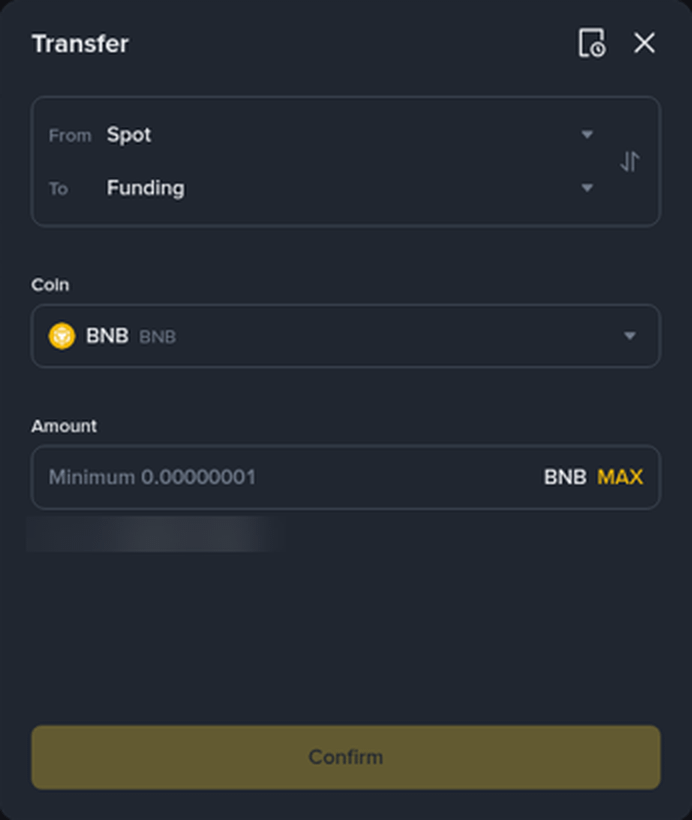
P2P purchases land in your Funding wallet, not in Spot. From there you can leave them where they are, use Transfer to move them to Spot for trading, or withdraw them to your own wallet after checking the network and address twice and sending a small test amount first.
Why does skipping the records hurt at tax time?
Because ARCA taxes gains when you sell or swap crypto, not while you hold it, and the gain is worked out from your own purchase cost. Without the peso price of each buy, that number is guesswork.
Ganancias on a sale: ARCA's crypto page applies 5% to a gain from a sale in pesos without an adjustment clause and 15% to a sale in foreign currency. Gains it treats as foreign source are taxed at 15% in every case. The cost of the coins, fees and a special deduction come off first.
Bienes Personales: Crypto held on 31 December counts toward your total assets. For tax year 2025 the tax only applies above ARS 384,728,044.57 in total assets, at 0.5% to 1% on the excess.
A made-up example. You bought 308.36 USDT for ARS 500,000 and later sell them for ARS 560,000. The gain before the special deduction is ARS 60,000. At 5% that is ARS 3,000 and at 15% it is ARS 9,000, and the special deduction may wipe out a small gain entirely. Which rate fits a P2P sale is a question for your contador.
For each order, keep the order number, date, peso amount, USDT amount and the Mercado Pago comprobante.
What does Binance's CNV registration in Argentina mean for you?
Binance Services Latinoamérica appears in the CNV's public register of virtual asset service providers, known as PSAV, where it was entered in September 2024 for exchange between crypto and pesos, exchange between cryptoassets, transfers and custody. CNV General Resolution 1058 of 2025 later raised the requirements for providers on that register, and they must display their register number.
Keep the scope in mind. A register entry concerns the provider and its anti-money-laundering duties. It doesn't vet the stranger on the other side of your P2P order, and it doesn't cover a Mercado Pago transfer you send to the wrong person. Your protection on a P2P trade is the escrow and the appeal process, used correctly.
Which habits keep both accounts out of trouble?
One account per rail: Use one Mercado Pago account for P2P, in your name, and keep it separate from the account your salary lands in if you can.
Sellers with history: Hundreds of completed orders and a high completion rate lower the odds of meeting money from a fraud.
A file per order: Order number, chat, comprobante and the counterparty's verified name.
Small first order: Start with ARS 10,000 to ARS 20,000 on an ad with a low minimum and learn the timer with little at stake.
For a wider look at how P2P works with local transfer methods in different countries, this guide to buying and selling on Binance P2P with local methods covers both sides of the trade.
If you are opening a Binance account for this, the link under the first paragraphs carries GETREWARD. Eligible new users can also read the current welcome bonus tasks on Binance, where completing set tasks can lead to rewards of up to $19,800.
Treat this page as general information, not financial or tax advice. Prices, limits and Argentine tax rules change, so confirm figures in the app and with a contador.
FAQ
Can I buy USDT with the money in my Mercado Pago account without linking a card?
Yes. On P2P you don't connect Mercado Pago to Binance at all. You send a normal transfer from the app to the seller's CVU or alias shown in the order.
What is the smallest ARS order on a Mercado Pago ad?
Each advertiser sets it. In the 30 October snapshot a few ads started below ARS 10,000, while merchant ads often wanted ARS 100,000 or more.
Does Binance charge buyers a fee on P2P?
Binance has announced zero P2P trading fees for takers, meaning whoever responds to someone else's ad, so for a buyer the real cost is built into the price and the spread. Check the P2P fee page for ARS before you rely on it.
Can I ask Mercado Pago to reverse a transfer after the USDT was released?
No. Clawing back pesos once an order is complete counts as fraud and can get your Binance account and your Mercado Pago account restricted.
Disclosure: GETREWARD, used in the sign-up link on this page, is my own code. Every peso price, order size and tax figure above is an example, never a quote or a forecast.