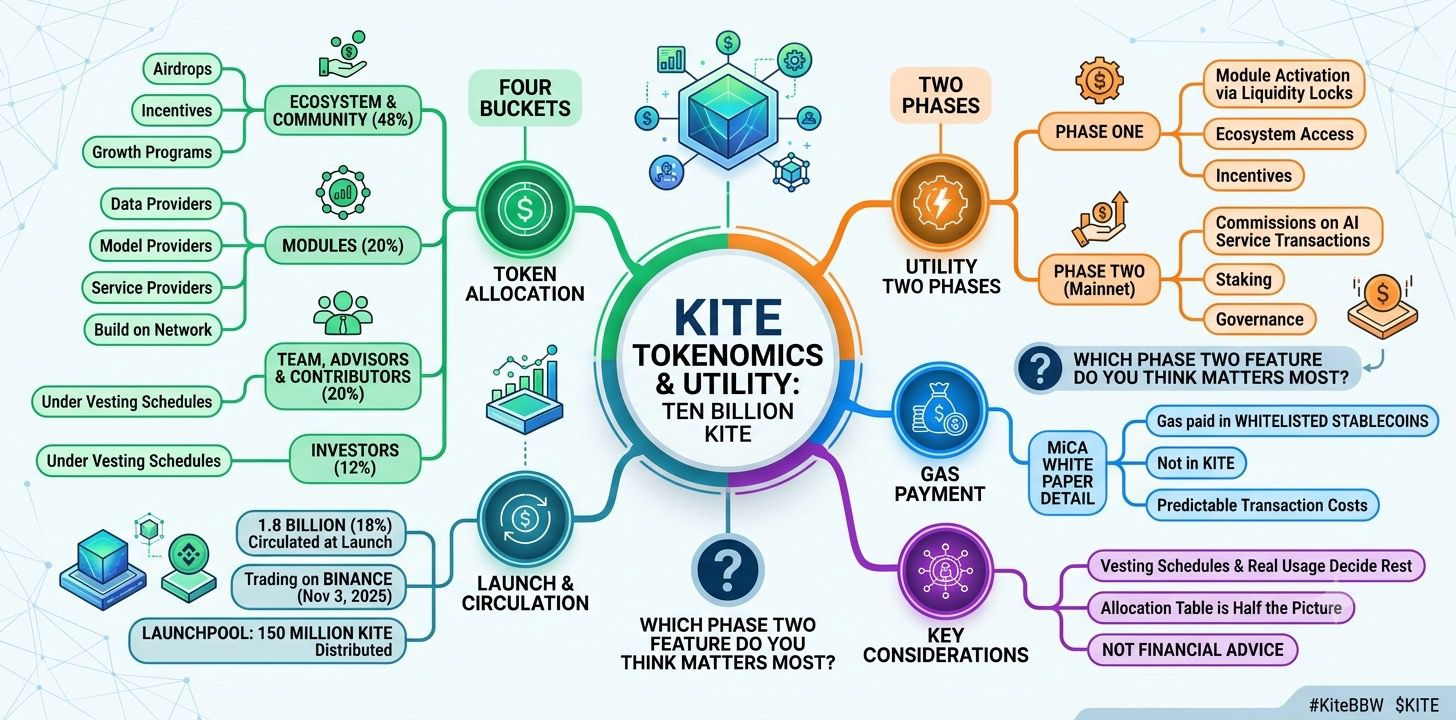
Ten billion KITE. Four buckets.
Ecosystem and community holds 48%, covering airdrops, incentives and growth programs. Modules take 20%, aimed at the data, model and service providers who build on the network. Team, advisors and early contributors hold 20%, and investors 12%, both under vesting schedules.
About 1.8 billion tokens, 18% of supply, circulated at launch, and KITE began trading on Binance on November 3, 2025 after a Launchpool round that distributed 150 million tokens.
Utility arrives in two phases. Phase one covered module activation through liquidity locks, ecosystem access and incentives. Phase two comes with mainnet: commissions on AI service transactions, staking and governance. The MiCA white paper adds a detail that surprises people. Gas is paid in whitelisted stablecoins, not in KITE, so transaction costs stay predictable.
An allocation table is half the picture. Vesting schedules and real usage decide the rest. Not financial advice.
Which phase two feature do you think matters most?
#KiteBBW $KITE