


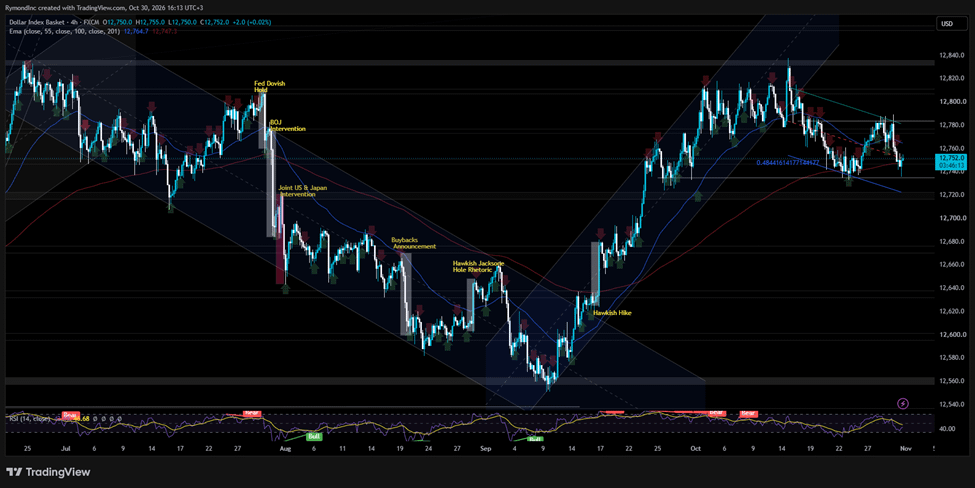
The U.S. dollar index has slipped to around 101.8 on Friday, its third straight daily loss. Even so, the currency is on course for a second consecutive monthly gain, after climbing nearly 2% in September.
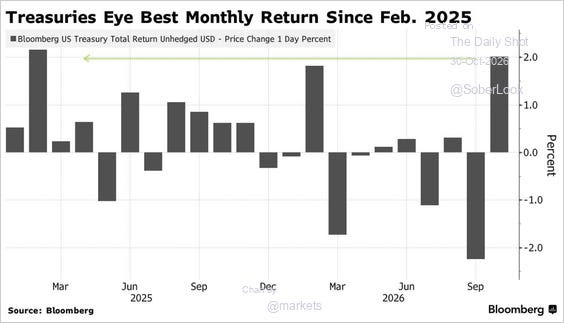
Bonds did the work. A global selloff in technology and AI shares sent investors hunting for shelter, and they found it in Treasuries, where yields fell as buyers piled in. Haven demand skipped the dollar this time. Treasuries rallied as the AI-driven technology selloff boosted demand for safe-haven assets, putting the benchmark index on track for its strongest monthly performance since February 2025.
This week's earnings lit the fuse. Alphabet shed about 12% on Thursday after missing on both profit and revenue. Intel and Amazon followed with reports of their own, and in premarket trading Friday, Intel was down more than 25% and Amazon about 7%. Three different companies, one shared unease: how long investors will keep bankrolling AI spending on this scale without a clearer payoff.
However, plenty of analysts still see room for the dollar to climb. The bigger push may come from the Fed itself. Officials are expected to resume raising rates once the midterm elections are behind them. Chair Kevin Warsh nudged that expectation along at his press conference, saying the committee had made clear its "readiness to act," though he offered no firm signal on December.
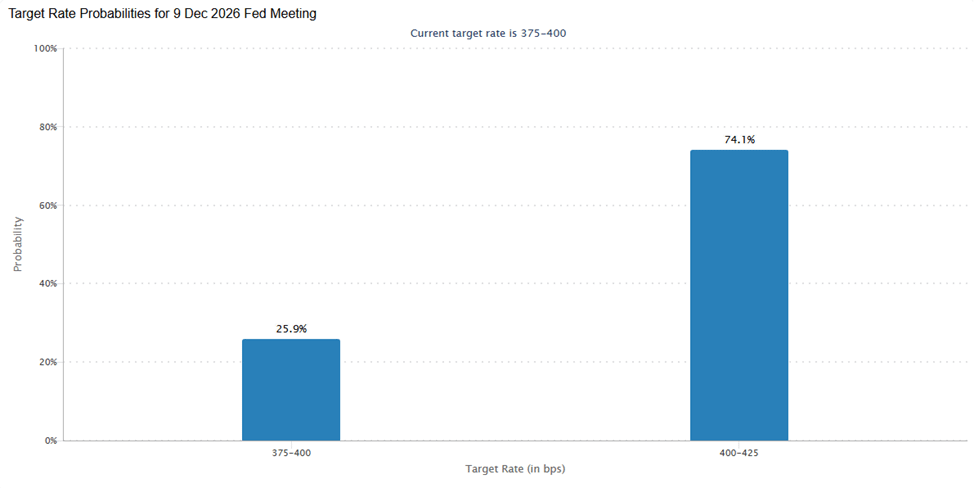
The Fed left its policy rate at 3.75% to 4% on Wednesday, though Governor Lisa Cook and Cleveland Fed President Beth Hammack both voted for a quarter-point increase. Futures traders now put the odds of a December hike at roughly 75%, according to CME's FedWatch tool.
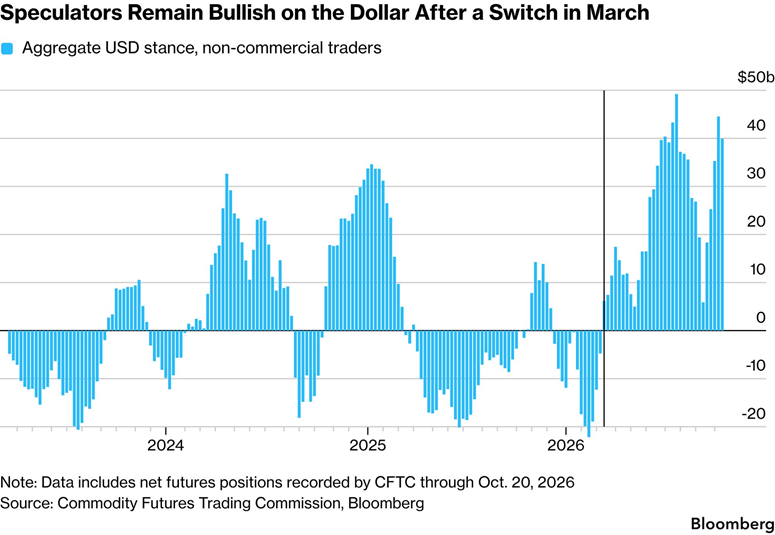
September's hike, the Fed's first in three years, gave the greenback its best month since March by Bloomberg's count. Big money hasn't backed away. Asset managers and other non-commercial accounts held just under $40 billion in bets on a stronger dollar, based on CFTC data through the week of Oct. 20.
Bloomberg's reporting adds a wrinkle: the dollar's run may carry enough momentum to ignore the vote altogether. High rates and a surge in AI-linked spending keep drawing money into the U.S., the logic goes, even if the election hands Washington a divided Congress.
Andreas Koenig, head of global FX at Amundi, points to the U.S. as the center of AI growth, where capital spending, margins and corporate earnings all look healthy, with the rate differential adding support. Bank of America strategist Alex Cohen sees the risks tilting toward the dollar holding its strength through the end of the year.
Growth Gives the Bulls Another Argument
The economic data hasn't hurt the case either. U.S. output grew at a 3.4% annualized rate in the third quarter, the Bureau of Economic Analysis said in its advance estimate, up from 2.2% in the second. Consumer spending contributed 2.52 percentage points, fixed investment 1.66, inventories 1.61 and government spending 0.90. Net exports took 3.32 points back as imports surged.
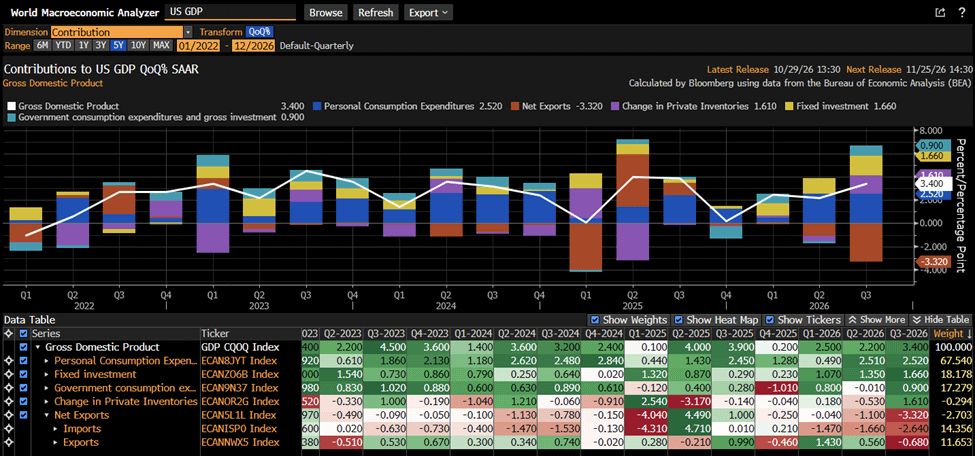
Inventories have a habit of returning what they lend, so that slice deserves some skepticism. Still, the report shows an economy entering the fourth quarter with more momentum than it carried through the second.
Other Central Banks are Tightening, but the Rate Gap Stays Wide
Other central banks are raising rates too. The European Central Bank, for instance, held its deposit rate at 2.5% on Thursday after raising it in September, and markets lean toward another increase in December. Still, the Fed's target range sits well above that, and the gap is what currency desks keep coming back to.
Citigroup strategist Daniel Tobon thinks the ECB could eventually reach a point of "negative knock-on effects" that forces it to reverse course, a scenario that would leave the dollar better placed against the euro. Tobon, who has pushed a short-euro trade against the dollar since January, sees the balance of fresh information tilting toward the dollar.
Gridlock Is Coming, and the Dollar May Not Flinch
The Bloomberg Dollar Spot Index touched its highest level since May 2025 earlier this month, lifted by inflation readings that came in hotter than forecast. Fund managers and currency strategists don't expect the forces behind that climb to change, no matter how the Nov. 3 vote turns out.
Wall Street's Dollar Bears Back Down
Morgan Stanley has already changed sides. For months its strategists argued the dollar would weaken in the second half of the year. Then, in a note last month led by David Adams, they dropped the call, conceding "We were wrong." Wider interest-rate gaps and sturdy U.S. growth did the persuading. The bank now expects dollar strength through year-end and into 2027.
Haven demand is the other leg, according to HSBC's Daragh Maher. When the world looks as if it's coming apart, he said, money runs into the dollar, and the debasement story gets pushed aside. He called it one of the market's truisms that is holding firm: "The dollar is your haven." Friday's trade.
Options pricing pointed in the same direction when Bloomberg checked last month. Risk reversals, which compare demand for bullish and bearish bets, favored the dollar across maturities.
That reversal runs against two years of conventional wisdom. Tariffs set off loud calls for de-dollarization, and the national debt, now past $40 trillion, fed the so-called debasement trade: a bet that loose fiscal discipline is wearing down the value of money and government bonds, with gold and similar assets as the beneficiaries.
Then There's Iran, and Nov. 3
The geopolitical backdrop is getting heavier. The Wall Street Journal reported that Adm. Brad Cooper, who leads U.S. Central Command, briefed President Donald Trump on military options for Iran on Thursday. Cooper made the trip in person, an unusual step for him. Defense Secretary Pete Hegseth and Joint Chiefs Chairman Gen. Dan Caine were in the room, the Journal said, citing U.S. officials and others with direct knowledge, as Washington weighs a return to major combat operations.
The optics alone have fed speculation that the administration is edging toward renewed action. Gulf capitals are getting their own message. Trump administration officials have told Arab Gulf states to be ready for a short, intense campaign once the midterms are over, the Journal reported.
Trump hasn't talked the idea down. At a rally in Florida last Friday, he looked back on the heavy U.S.-Israeli campaign earlier this year, which Washington calls Epic Fury, and said the U.S. might stage "another little Epic Fury" unless Iran comes to terms.
How Trump handles Iran once the ballots are counted may matter most for currencies, according to CIBC Capital Markets strategist Noah Buffam. The market broadly expects a material step-up in U.S. aggression after the midterms, he said, but CIBC is less convinced. If the military action turns out to be limited, its view is that the dollar could sell off alongside oil.
That answer isn't coming before Tuesday. It may not come right after, either. Investors are also bracing for divided election results, the kind of legislative standoff that usually doesn't help the greenback, and polls suggest Democrats could take at least one chamber of Congress.