$SOXLB : The Sprint Toward a Static Checklist
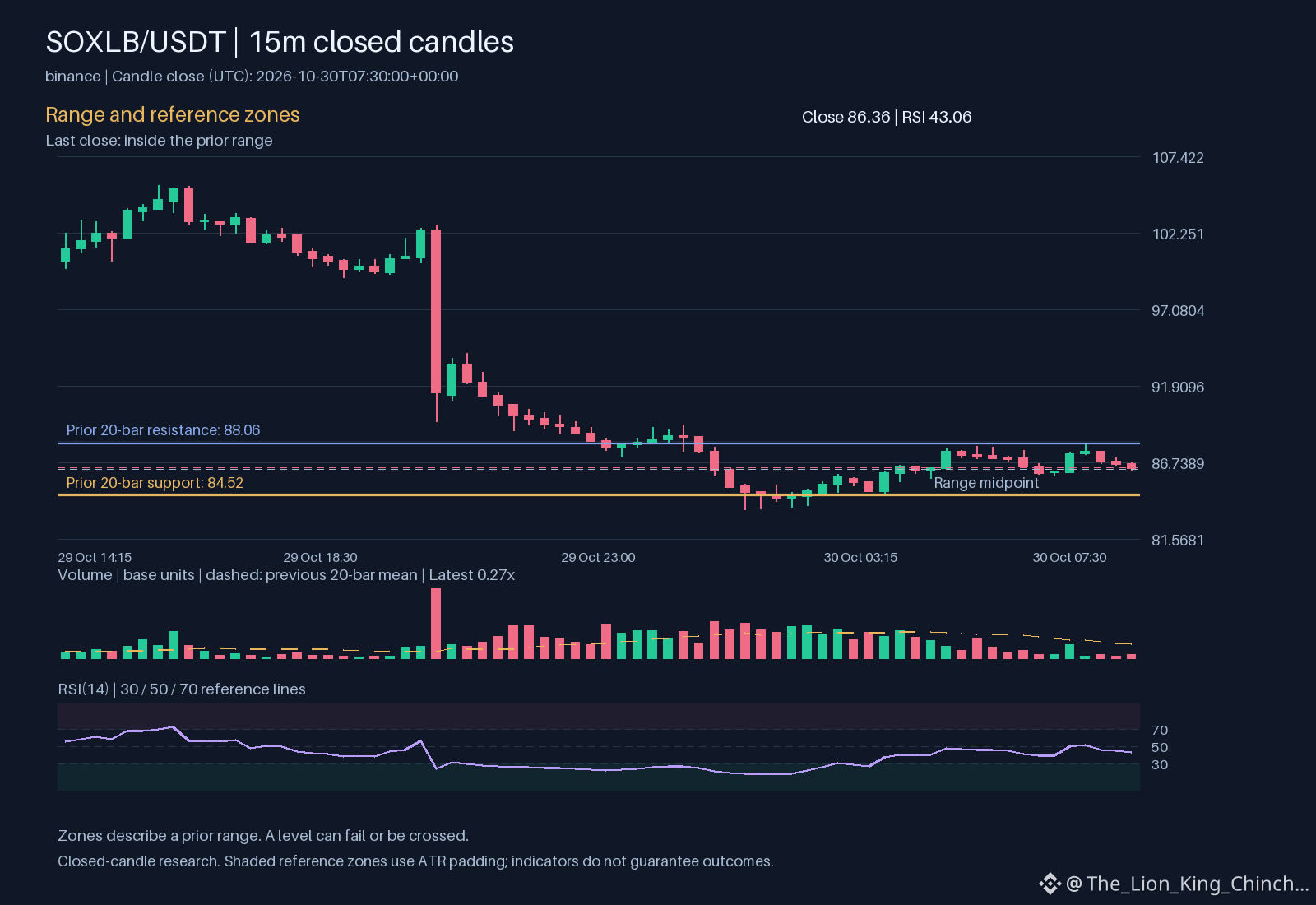
I sometimes imagine my research habit is like a professional athlete preparing for a race, only to realize I am actually just a person in pajamas staring at a screen. There is a specific humor in watching a calm watchlist while my mind races at high speeds. I tell myself I will wait for a perfect signal, but as soon as a candle moves, my internal logic starts sprinting to justify a shortcut. For $SOXLB , the daily change is -12.3605 and the hourly direction is down. Even when the data feels quiet, the urge to find a hidden pattern is loud.
The trap is understandable because our brains hate missing out on perceived momentum. When we see the price at 86.36 and an RSI of 43.06, we often try to bend our rules to fit the current motion. If the RSI is not yet at an extreme, we might invent a reason why the current level is special. This mental flexibility is actually a risk. It turns a disciplined strategy into a series of impulsive guesses based on short-term feelings.
A useful habit is to perform a reverse check. Instead of asking why a move might continue, ask what specific evidence would prove my current idea is wrong. For example, if the hourly trend stays down but volume is not above the baseline, the move might lack the strength I imagined. By checking the ATR at 0.915547 against the recent range, I can see if the volatility actually matches my excitement. True learning happens when we let the checklist slow us down instead of racing to ignore it. A calm mind sees the chart more clearly than a rushing one.
Probabilistic market research, not a recommendation or guaranteed return.
Have you caught yourself changing a rule after seeing a fast move?
#SOXLB