$GRAM: Missed Moves and Anchoring
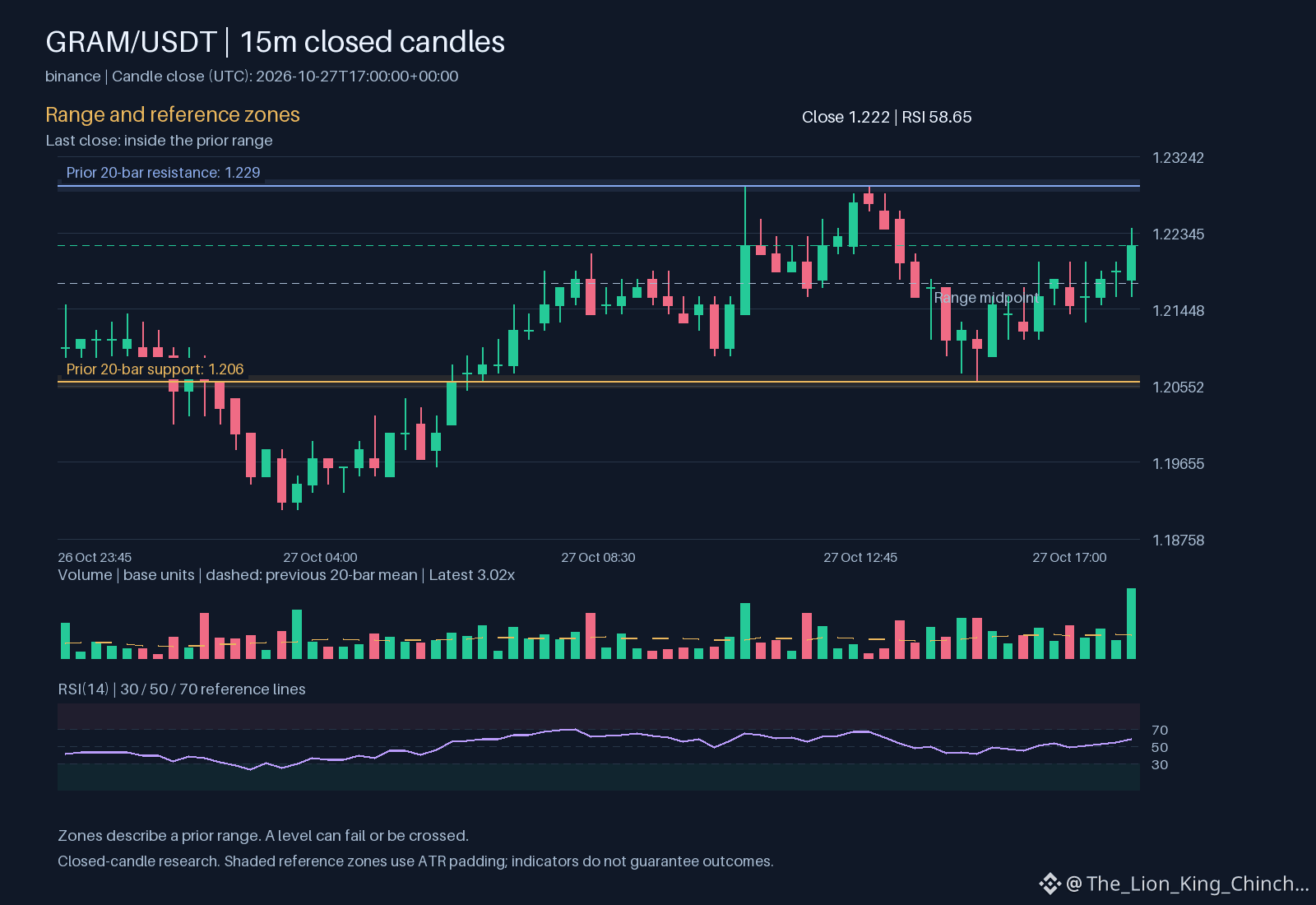
Anchoring traps you in the past. When you miss a trade, you lock onto the old price. Your mind refuses to update. You see the current spike at 1.222 and feel regret. This is not a good plan. It is an emotional reflex. The chart shows relative volume at 3.0211. This context matters. But if you anchored on yesterday's low, you ignore the new data. Your decision quality drops. You might chase the move. This creates risk. The RSI at 58.6457 shows momentum. Yet your brain focuses on what you did not get. You compare your empty position to the gain. This pain is real. It is not a market fact. It is a personal story. A good researcher separates the two. They ask: what does the data say now? Not: what did I miss? The price sits near 1.206. If you entered here, is it for the pattern or the regret? That is the trap. Focus on the logic. The daily change is 0.246103. Your rule should cover both outcomes. If you set a target, stick to it. Do not move it because you feel left out. A simple self check helps. Write your entry reason before the trade. If the reason is 'I like the price,' delete it. If it is 'Volume confirms trend,' keep it. This filter removes noise. It forces clarity. You act on evidence. You do not act on fear. The market moves on. Your attachment does not help. Let the old price go. Look at 0.00580452 for range size. Plan for volatility. Do not plan for your mood. This shift changes your results. You stop reacting. You start observing. The bias fades. You trade better.
Probabilistic market research, not a recommendation or guaranteed return.
Would you keep the same rule after missing a move?
#GRAM #TradingPsychology #CryptoLearning