

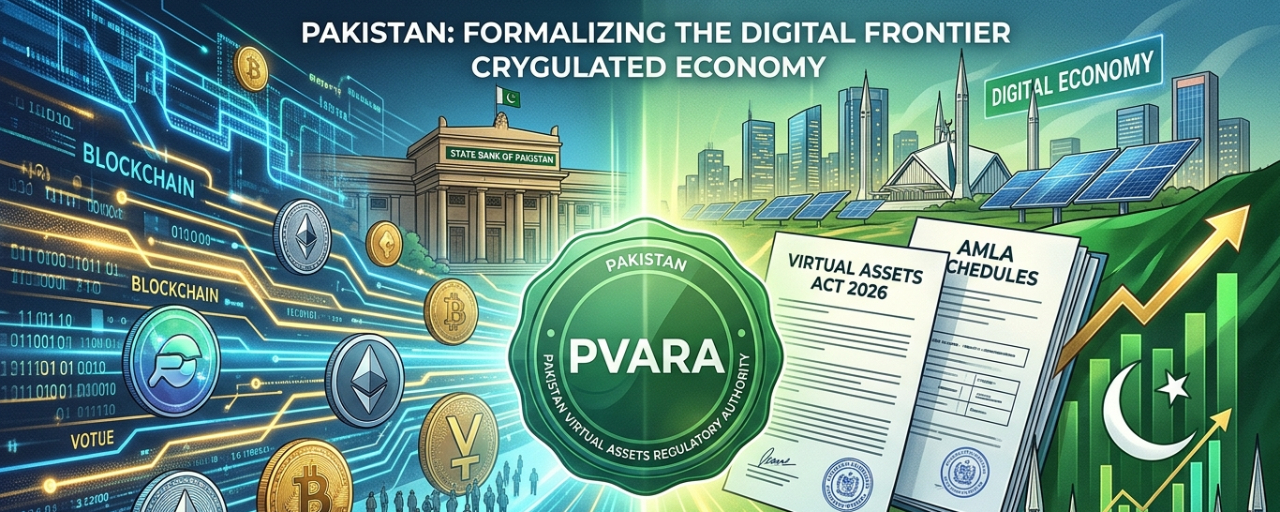

For nearly seven years, cryptocurrency in Pakistan existed in a state of regulatory limbo—treated by authorities as a legal gray area, a capital flight risk, and financial contraband. Millions of citizens traded, staked, and stored digital assets through peer-to-peer networks while navigating strict banking bans imposed by the State Bank of Pakistan (SBP) back in 2018.
That era has officially come to an end. With the passage of the Virtual Assets Act 2026, Pakistan has moved definitively from blanket restriction to formal, institutional regulation. By establishing the Pakistan Virtual Assets Regulatory Authority (PVARA) as a permanent statutory watchdog, the government is making its most aggressive push yet to rein in the informal economy, protect investors, and align with international financial standards.
A Giant Retail Market Steps into the Light
The urgency behind Pakistan’s new legislative framework is hard to overstate. According to global crypto metrics, Pakistan ranks third worldwide in retail crypto adoption, boasting an estimated user base of over 20 million people.
Despite a lack of prior legal protections or formal banking access, everyday citizens turned to digital assets to hedge against inflation, facilitate cross-border remittances, and participate in the digital economy. However, this massive grassroots enthusiasm operated almost entirely within an unmonitored gray market, keeping billions of dollars out of the documented financial system.
The 2026 framework aims to change that narrative entirely by bringing these millions of users and billions in capital into a fully taxed, transparent, and monitored digital ecosystem.
Core Pillars of the 2026 Regulatory Framework
The transition from prohibition to oversight involves several sweeping structural changes across Pakistan's financial landscape:
Permanent Statutory Oversight: The Virtual Assets Act converts previous provisional measures into permanent law, empowering PVARA to license, supervise, and regulate all Virtual Asset Service Providers (VASPs)—including exchanges, custodians, and token issuers.
Lifting the Banking Boycott: In a crucial policy shift, the State Bank of Pakistan modified its historical restrictions, allowing regulated financial institutions to open commercial and client-segregated bank accounts for PVARA-licensed VASPs. This bridges the long-standing gap between traditional banking and digital assets.
Tight Compliance and Strict Penalties: The state has drawn a hard line against unregistered operators. Unlicensed platforms face immediate closure, with non-compliance carrying severe legal consequences—including criminal penalties of up to five years in prison, substantial financial fines reaching up to PKR 50 million, or both.
Shielding the Financial System (AML & CFT): To ensure digital assets are not exploited for illicit activities, the National Executive Committee (NEC) formally incorporated PVARA into the Anti-Money Laundering Act (AMLA) schedules. This integration builds robust defenses against terror financing, money laundering, and cross-border financial crimes, aligning Pakistan tightly with Financial Action Task Force (FATF) guidelines.
The Road Ahead: Challenges and Opportunities
Legalizing and regulating crypto is a massive milestone, but the execution phase will test both regulators and market participants. Local exchanges and international firms seeking to operate in the country must meet strict capitalization rules, comprehensive Customer Due Diligence (KYC) standards, and mandatory Sharia compliance guidelines for relevant financial products.
Ultimately, Pakistan’s pivot reflects a pragmatic realization: when tens of millions of citizens are already participating in a technological revolution, prohibition fails. By replacing hostility with strict, transparent regulation, Pakistan is betting that it can harness its massive grassroots adoption to build a modern, secure, and documented digital economy.
#WorldCoin. #FOMCWatch $BNB $BTC
