

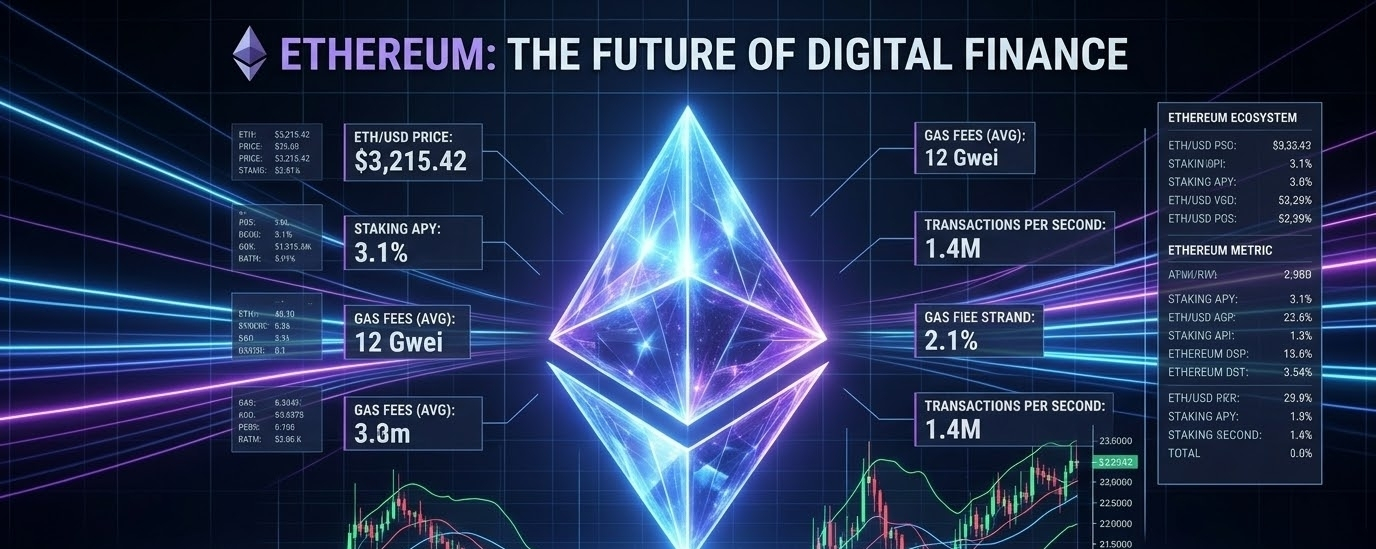

💎 Ethereum (ETH) Trading Overview: Benefits, Price & Market Volatility
Ethereum ($ETH ) remains the world's second-largest cryptocurrency by market capitalization and the foundational layer for decentralized finance (DeFi), smart contracts, and Web3 applications. Below is a breakdown of ETH trading benefits, current market price levels, and the key drivers behind its upside and downside movements.
📊 Current Market Overview
Current $ETH Price: ~$2,315 – $2,320 USD
Market Capitalization: ~$288.5 Billion USD
Circulating Supply: ~122.2 Million ETH
Technical Setup: ETH is currently consolidating near key exponential moving averages (200-day EMA near $2,316), facing temporary downside pressure alongside broader market conditions.
🚀 Key Benefits of Trading Ethereum
High Liquidity:ETH is traded across all major global crypto exchanges, allowing for smooth trade execution, low slippage, and easy entry/exit for traders.
Staking & Passive Yield:Under Proof-of-Stake (PoS), holders can stake ETH directly or through liquid staking protocols to earn staking yields while retaining exposure to price growth.
Smart Contract & $DEFI Ecosystem dominance:Unlike currencies purely used for transfer, ETH powers decentralized exchanges, NFT platforms, layer-2 networks (e.g., Arbitrum, Optimism), and lending protocols, ensuring continuous network usage and demand for ETH as gas fees.
Deflationary Potential (EIP-1559):A portion of network transaction fees is permanently burned. During periods of high network activity, the amount of ETH burned can exceed new issuance, reducing overall supply over time.
Institutional Access & ETFs:Approved spot Ethereum ETFs provide institutional investors with regulated channels to gain exposure to ETH.
📉 Ups & Downs: Drivers of ETH Volatility
🟢 Factors Driving Price UPS (Bullish Drivers)
Layer-2 Expansion & Network Upgrades: Continuous protocol improvements reduce gas fees and scale transaction throughput, boosting user adoption.
Network Activity Surge: Spikes in DeFi usage, DEX volume, and Web3 activity increase demand for gas fees paid in ETH.
Institutional ETF Inflows: Increased allocation into spot ETH ETFs directly channels institutional capital into the market.
Macroeconomic Easing: Lower interest rates by central banks foster a "risk-on" environment for crypto assets.
🔴 Factors Driving Price DOWNS (Bearish Drivers)
Macro Uncertainty & Interest Rates: Hawkish central bank policy or elevated inflation fears can lead traders to pull capital out of risk assets.
Competition from Alternative Layer-1s: Faster or cheaper alternatives like Solana, Sui, and Avalanche challenge Ethereum's dominance in user volume.
Short-Term Technical Resistance: Resistance near key technical moving averages (100-day & 200-day EMAs) can trigger short-term seller pressure or profit-taking.
💡 Summary for Traders
Ethereum offers a strong mix of high liquidity, utility-driven demand, and yields through staking. However, short-term trading requires close monitoring of macroeconomic signals, spot ETF capital flows, and technical resistance levels.#BinancePick #EarningsSeason #ArgentineCourtDismissesLIBRACaseAgainstMilei #KeystoneWebsiteBreachExposesBuyersShippingAddresses