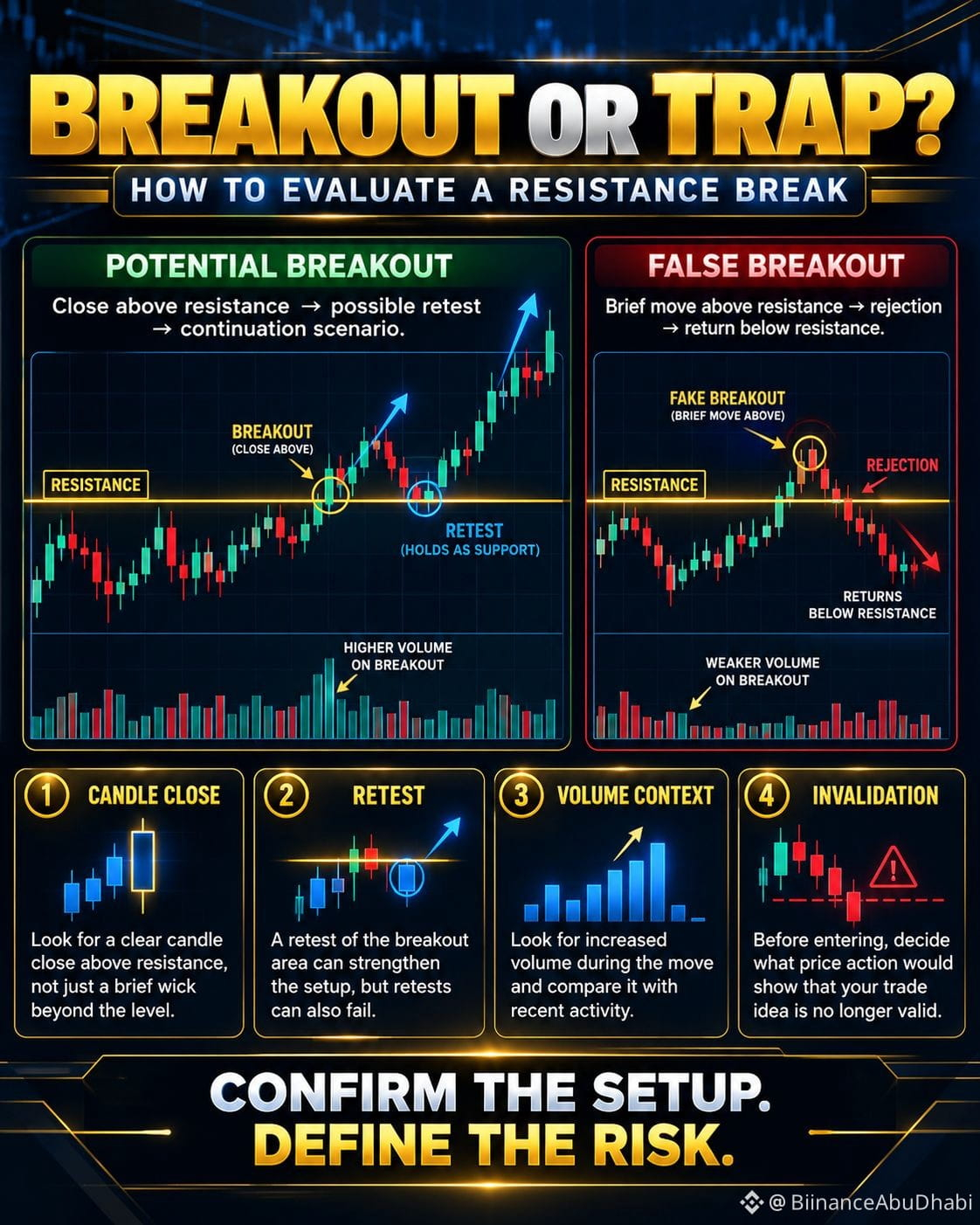
📈 A BREAKOUT IS NOT CONFIRMED JUST BECAUSE PRICE MOVES ABOVE RESISTANCE.
.
One of the most tempting moments in trading is watching price break above a level everyone has been watching.
.
Candles accelerate. Excitement builds. Traders rush to enter.
.
Then suddenly… price falls back below resistance. 😬
.
Welcome to the potential false breakout.
.
🔍 WHAT SHOULD TRADERS WATCH?
.
🔹 1. THE CANDLE CLOSE
.
Did the candle close above resistance, or did price only briefly move beyond it? A close can provide useful information, although it does not guarantee continuation.
.
🔹 2. THE RETEST
.
Does price return to the breakout area and hold it as potential support? A successful retest may strengthen the setup, but retests can fail too.
.
🔹 3. TRADING VOLUME
.
Is participation increasing during the move? Compare volume with recent activity, but remember that volume alone cannot confirm a breakout.
.
🔹 4. THE INVALIDATION LEVEL
.
Before entering, identify what price action would show that your trade idea is no longer valid.
.
🔹 5. THE RISK-TO-REWARD SETUP
.
Even a promising breakout may not offer an attractive trade if your entry is late and your potential downside is too large.
.
🧠 THE EXPERIENCED TRADER'S ADVANTAGE?
.
Not predicting every breakout correctly. It's having a process for evaluating the setup—and accepting that sometimes the best decision is to wait.
.
⚠️ A breakout can fail even when several signals look convincing. No single indicator or confirmation method eliminates that risk.
.
💬 COMMUNITY QUESTION:
.
When you see a breakout, do you prefer entering after the candle closes or waiting for a retest? What makes you trust your setup?
.
Share your reasoning. Different approaches can teach us something valuable.
.
#BTC $BTC #BinanceSquare
.
One of the most tempting moments in trading is watching price break above a level everyone has been watching.
.
Candles accelerate. Excitement builds. Traders rush to enter.
.
Then suddenly… price falls back below resistance. 😬
.
Welcome to the potential false breakout.
.
🔍 WHAT SHOULD TRADERS WATCH?
.
🔹 1. THE CANDLE CLOSE
.
Did the candle close above resistance, or did price only briefly move beyond it? A close can provide useful information, although it does not guarantee continuation.
.
🔹 2. THE RETEST
.
Does price return to the breakout area and hold it as potential support? A successful retest may strengthen the setup, but retests can fail too.
.
🔹 3. TRADING VOLUME
.
Is participation increasing during the move? Compare volume with recent activity, but remember that volume alone cannot confirm a breakout.
.
🔹 4. THE INVALIDATION LEVEL
.
Before entering, identify what price action would show that your trade idea is no longer valid.
.
🔹 5. THE RISK-TO-REWARD SETUP
.
Even a promising breakout may not offer an attractive trade if your entry is late and your potential downside is too large.
.
🧠 THE EXPERIENCED TRADER'S ADVANTAGE?
.
Not predicting every breakout correctly. It's having a process for evaluating the setup—and accepting that sometimes the best decision is to wait.
.
⚠️ A breakout can fail even when several signals look convincing. No single indicator or confirmation method eliminates that risk.
.
💬 COMMUNITY QUESTION:
.
When you see a breakout, do you prefer entering after the candle closes or waiting for a retest? What makes you trust your setup?
.
Share your reasoning. Different approaches can teach us something valuable.
.
#BTC $BTC #BinanceSquare