
If you have spent even a few minutes looking into the world of finance or technology over the last few years, you have undoubtedly heard of Bitcoin. It is a word that sparks excitement, curiosity, and sometimes a bit of skepticism. But beyond the hype, the charts, and the daily price swings, what is Bitcoin really about, and where is it heading?
To understand Bitcoin, we have to look past just being a digital currency. It is a complete shift in how we think about money and value.
From Humble Beginnings to a Global Asset
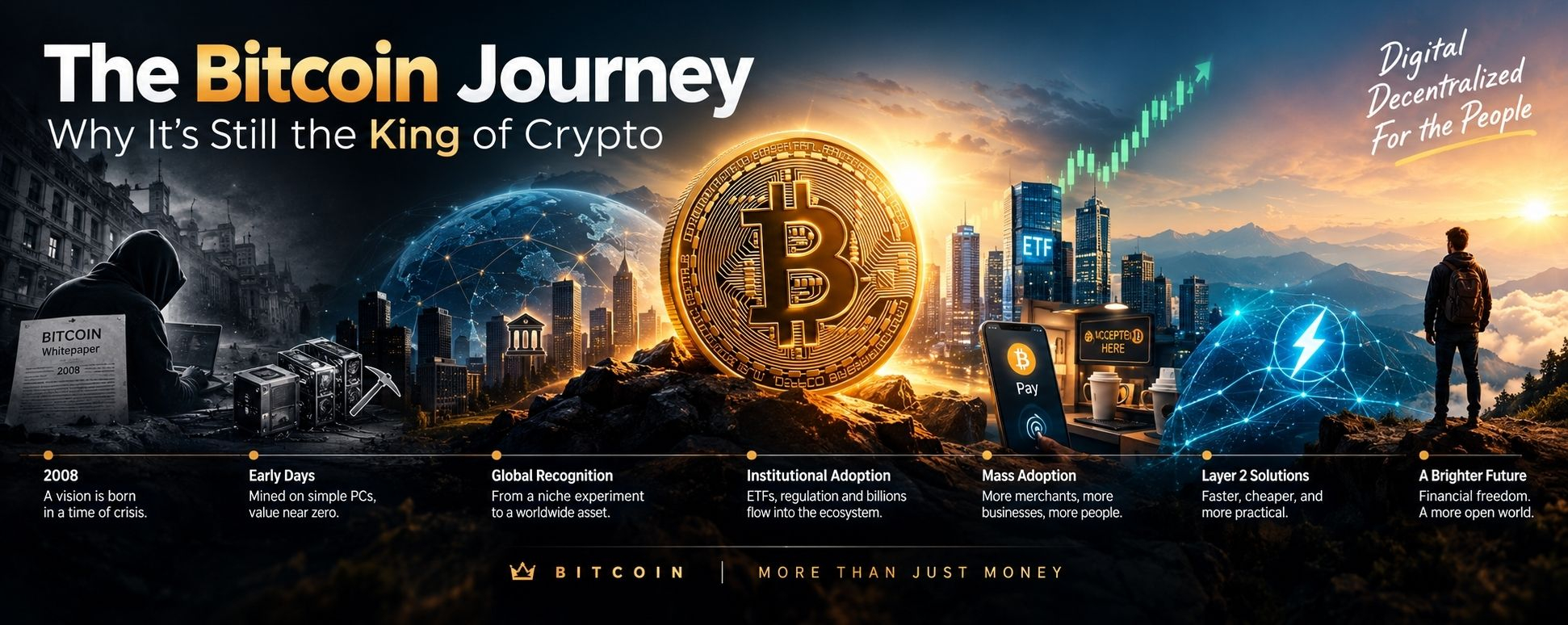
Back in 2008, when a mysterious figure named Satoshi Nakamoto published the Bitcoin whitepaper, the world was in the middle of a major financial crisis. Trust in traditional banking systems was shaken. Out of this chaos, Bitcoin was born—a decentralized digital currency that operates without any central authority, government, or bank.
In the early days, people could mine Bitcoin on basic computers, and its value was practically zero. Fast forward to today, and the landscape is entirely different. Bitcoin has grown from a niche internet experiment into a globally recognized asset class. Major institutions, corporations, and everyday people view it not just as a speculative tool, but as "digital gold"—a reliable hedge against inflation.
Where Do We Stand Right Now?
Bitcoin’s journey is defined by its cycles, usually tied to its "halving" events (where the reward for mining new Bitcoin is cut in half every four years). This built-in scarcity is what makes Bitcoin unique; there will only ever be 21 million Bitcoins created.
The market has matured significantly. Gone are the days when Bitcoin was just traded by tech enthusiasts in online forums. Today, with spot ETFs and widespread regulatory clarity in many parts of the world, billions of dollars flow into the ecosystem effortlessly.
As of late 2026, Bitcoin continues to hold its dominant position at the center of the crypto universe. Its price moves dynamically, driven by global economic trends, institutional adoption, and the growing demand for decentralized financial freedom. When economic uncertainty rises globally, people increasingly look toward Bitcoin as a safe harbor to preserve their purchasing power.
What Does the Future Hold?
Looking ahead, the future of Bitcoin looks brighter and more integrated than ever. We are moving toward an era where digital assets are part of everyday life.
Mass Adoption: More merchants, payment processors, and financial institutions are accepting and integrating Bitcoin into their everyday systems.
Layer 2 Solutions: Innovations like the Lightning Network are making Bitcoin transactions faster and cheaper, transforming it from a "store of value" into a practical medium of exchange for daily purchases.
The Store of Value Narrative: Just as gold has served humanity as a store of value for thousands of years, digital-native generations are increasingly choosing Bitcoin for long-term wealth preservation.
Final Thoughts
Bitcoin is much more than a ticker symbol or a green and red candlestick chart on a screen. It represents freedom, financial sovereignty, and an alternative to a traditional system that often leaves the common person behind.
Whether you are a seasoned trader watching the market every day or someone just starting to learn about blockchain technology, Bitcoin teaches us one crucial lesson: the future of money is digital, decentralized, and driven by the people.