
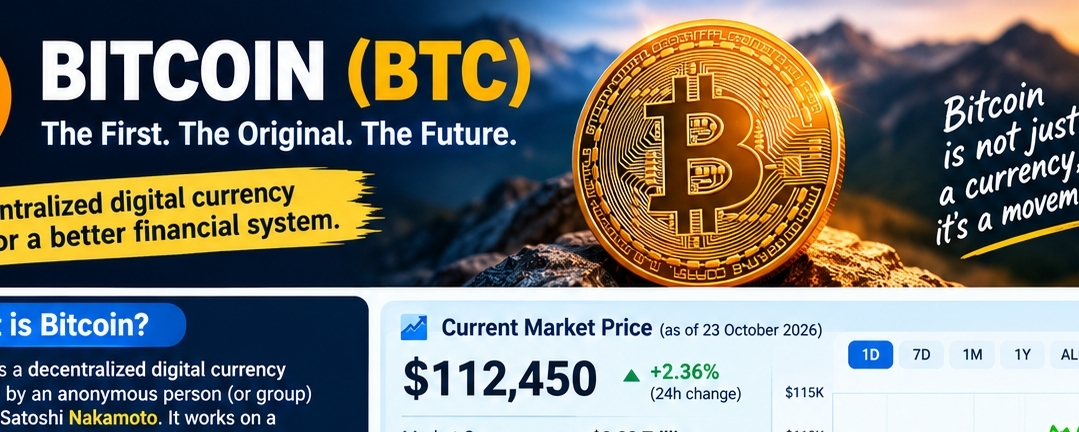

Bitcoin (BTC): The Future of Digital Money
Bitcoin $BTC (BTC) is the world's first decentralized cryptocurrency. It was introduced in 2009 by an anonymous person or group known as Satoshi Nakamoto. Bitcoin operates on blockchain technology, which allows transactions to be recorded securely without depending on a central bank.
1. Why Is Bitcoin Important?
Bitcoin has a limited supply of 21 million coins, making it different from traditional currencies. People use Bitcoin to transfer money, invest, and participate in the digital economy.
Key Benefits of Bitcoin
- Decentralization: Bitcoin is not controlled by a single government or bank.
- Limited Supply: Only 21 million BTC will ever exist.
- Security: Blockchain technology records transactions transparently.
- Global Access: Bitcoin can be transferred across borders, subject to applicable laws.
- Investment Opportunity: Some people buy Bitcoin hoping its value will increase, although losses are possible.
2. How to Buy and Sell Bitcoin
You can buy Bitcoin through a cryptocurrency exchange such as Binance, where available and permitted.
1. Create an account using the official website or app.
2. Complete identity verification if required.
3. Enable two-factor authentication (2FA).
4. Deposit funds using a supported payment method.
5. Search for the BTC/USDT trading pair.
6. Select Spot trading and enter the amount you want to buy.
7. Review the price, trading fees, and order details before confirming.
8. To sell, open BTC/USDT, select Sell, enter the amount, and confirm after reviewing the details.
3. Practical Security Steps
Secure Your Exchange Account
- Use a unique password: Create a long password that you do not use on any other website.
- Enable 2FA: Use an authenticator app or a passkey if supported. Do not rely only on SMS if a stronger option is available.
- Secure your email: Use a unique password and 2FA on the email account linked to your exchange.
- Enable anti-phishing features: If your exchange offers an anti-phishing code, configure it through its official security settings.
- Check website addresses: Open the exchange using its official app or a saved, verified website address. Avoid links sent by strangers.
- Never share verification codes: Genuine support staff should not need your password, 2FA code, or recovery phrase.
Protect Your Bitcoin Wallet
- Keep recovery phrases private: Never share your seed phrase or private keys with anyone. Legitimate support staff will never need them.
- Back up your recovery phrase offline: If you use a self-custody wallet, write it down and keep it somewhere secure, away from cameras and internet-connected devices.
- Verify wallet addresses: Check the recipient address carefully before sending Bitcoin. Malware can replace copied addresses.
- Send a small test transaction: For a large transfer, consider sending a small amount first and confirm it arrives. Remember that network fees may apply twice.
- Use a hardware wallet for substantial holdings: Buy directly from the manufacturer or an authorized seller, and initialize the device yourself.
- Beware of fake giveaways: Never send Bitcoin to someone promising to return double the amount or guarantee profits.
Protect Your Phone and Computer
- Install app and operating-system updates promptly.
- Download wallet and exchange apps only from official sources.
- Use a screen lock and device encryption.
- Avoid signing into financial accounts on public or shared computers.
- Never install remote-access software at the request of a stranger claiming to be exchange support.
4. Common Bitcoin Scams to Avoid
- Fake investment platforms promising guaranteed daily returns.
- Fake customer-support accounts on WhatsApp, Telegram, or social media.
- Phishing websites that imitate cryptocurrency exchanges.
- Fake airdrops that request your recovery phrase.
- People asking you to pay an additional fee to release supposed profits.
Remember: If an offer guarantees high returns with no risk, treat it as a warning sign.
5. Bitcoin Investment Risks
Bitcoin's price can rise or fall sharply. Investors may lose money because of market volatility, scams, exchange failures, or mistakes when transferring funds.
- Start with a small amount you can afford to lose.
- Avoid borrowing money to invest.
- Understand trading fees and withdrawal fees.
- Do not put all your savings into one cryptocurrency.
- Check the laws and regulations that apply in your country.
6. What to Do If You Suspect Your Account Has Been Compromised
1. Use the exchange's official app or website to secure or temporarily disable your account.
2. Change your exchange and email passwords from a trusted device.
3. Revoke unknown sessions and API keys, and disable suspicious withdrawal permissions.
4. Contact the exchange through its official support channel.
5. If a self-custody wallet's recovery phrase has been exposed, create a new secure wallet and move remaining assets to it as soon as safely possible. Do not reuse the compromised phrase.
Remember that cryptocurrency transfers are generally irreversible, so acting quickly is important.
Conclusion
Bitcoin is an important innovation in digital finance. It offers new ways to transfer and store value, but it is not a guaranteed way to make money.
Learn the basics, secure your accounts, verify every transaction, and research carefully before investing.
Final rule: Protect your keys, verify every address, and never invest money you cannot afford to lose.