


A stop-loss is the single tool that separates a professional trader from a gambler. Most beginners either don't set a stop-loss at all or place it arbitrarily (e.g., "minus $10" or "1% from entry price"). This is a fundamental mistake: the market doesn't know your account size, and it doesn't care about your desires.
In this article, we will break down the technical logic behind placing stop-loss orders for both Long and Short positions, as well as the correct algorithm for trailing your stop into profit (Trailing Stop).
1. Core Rule: Stop-Loss Goes Behind Invalidation Levels
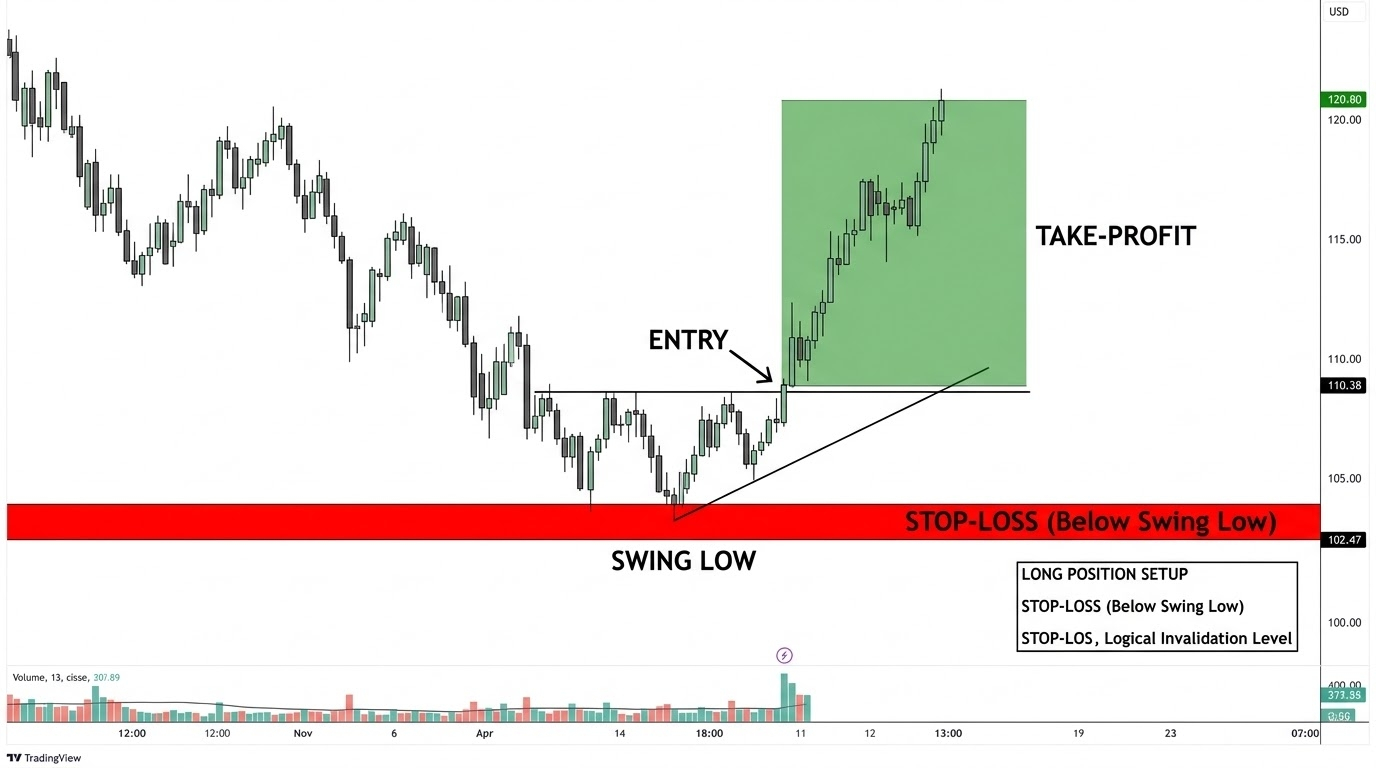
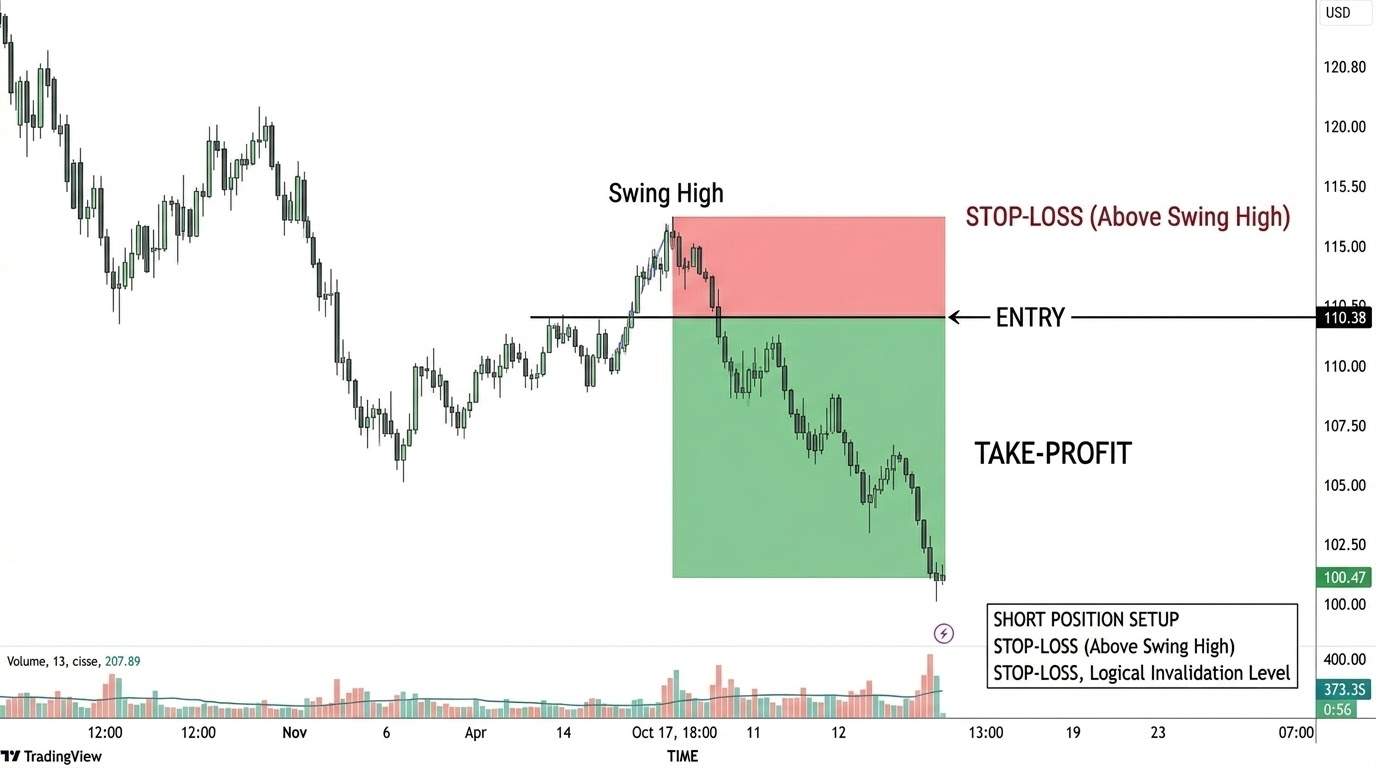
A proper stop-loss is always anchored to the chart structure. It must sit exactly where your trade setup is proven wrong (the invalidation level).
For a Long Position: The stop-loss is always hidden below the local swing low (Swing Low). If price breaks below this low, the bullish structure is invalidated, and staying in the trade makes no technical sense.
For a Short Position: The stop-loss is hidden above the local swing high (Swing High). Breaking above this high indicates a bearish structure failure.
2. The Main Beginner Trap: Moving to Breakeven Too Early
The most common mistake is moving your stop-loss to breakeven (or profit) right after price moves just a few points in your favor. In 90% of cases, the market creates a local pullback, triggers your stop-loss, and only then rockets toward your original target.
The Safe Trailing Stop Rule:
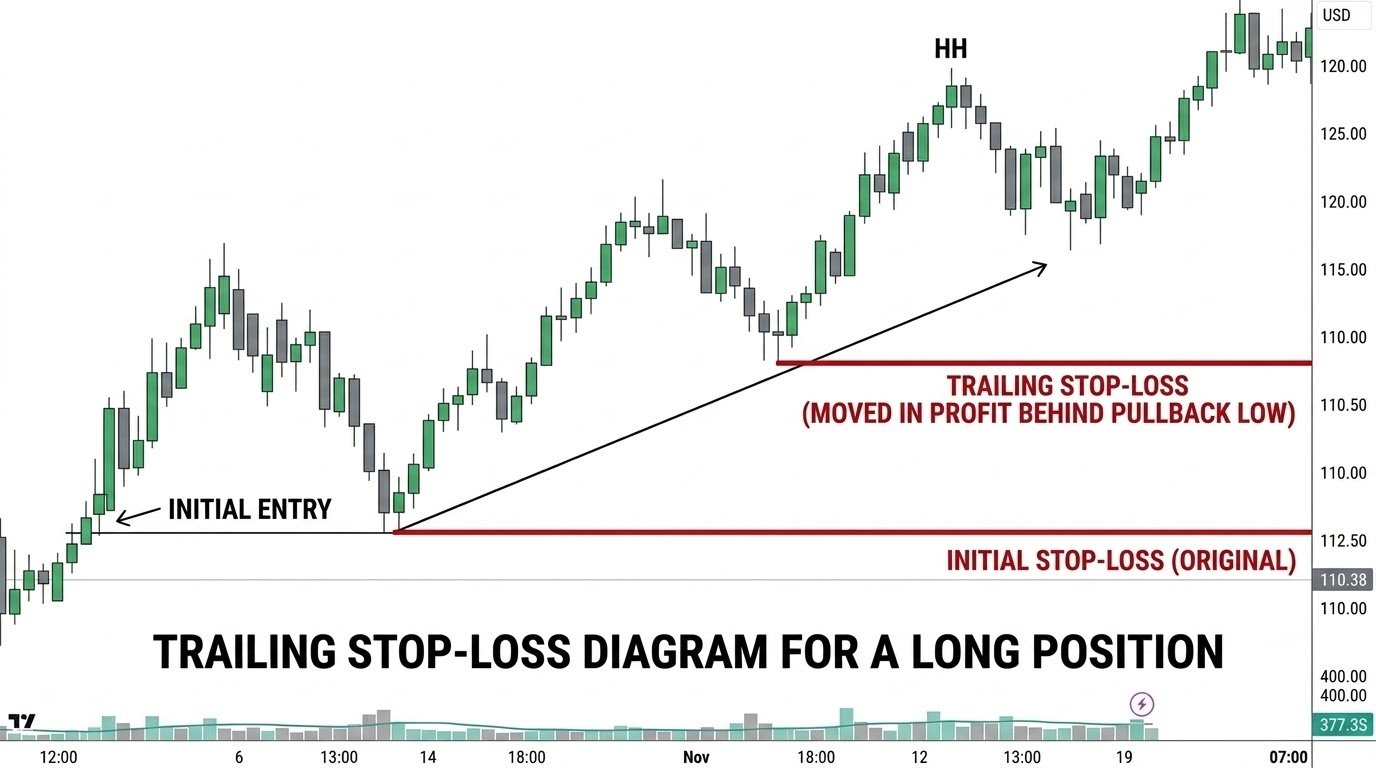
Move your stop-loss ONLY after a confirmed structural sequence: Pullback ➡️ Structural Breakout (New High/Low).
Dynamics for a Long Position:
You enter a Long position; price forms a new high (High).
Price makes a local pullback and forms a higher low (Higher Low).
Price breaks above the previous high, making a new peak (Breakout / Higher High).
Only after this breakout do you trail your stop-loss under the newly established pullback low (Higher Low).
Dynamics for a Short Position:
You enter a Short position; price makes a new low (Low).
Price pulls back upward, forming a lower high (Lower High).
Price breaks down below the previous low (Breakout / Lower Low).
Only after this breakdown do you trail your stop-loss behind the newly formed pullback high (Lower High).
Key Rules:
Never set stops randomly or based on fixed account percentages.
Your stop-loss must always be protected by market structure.
Give price room to breathe: trail your stop only after confirmed structural expansion.
Hit Subscribe for more systematic market analytics, strict risk management rules, and execution-ready trade setups!