


Interacting with a new blockchain network or digital asset requires more than connecting a wallet and confirming a transaction.
Users need to understand the network, verify the asset evaluate the transaction conditions and recognize the risks involved.
When exploring a cross-chain swap such as USDT on TON to USDG on Robinhood Chain through STON.fi use the following checklist before proceeding.
1. Verify the Network
Confirm the source and destination networks before initiating the swap.
For this example USDT is the source asset on TON while USDG is the intended destination asset on Robinhood Chain.
Check that the destination network is explicitly identified in the interface Do not assume that a familiar token name means the receiving network is correct.
When interacting with a newer network also confirm that your wallet and the application support it.
2. Confirm the Asset's Identity
Token tickers and names are not always unique across blockchain networks.
Before swapping verify that the selected token is the intended asset on the correct network. Where available check the official token contract address against a reliable source for stablecoins, understand the issuer the intended peg and the associated risks.
A token designed to maintain a value of one US dollar is not guaranteed to trade at exactly that price under all market conditions.
Most importantly confirm that the specific asset and route are supported by the application. Support for one token does not imply support for every token on the same blockchain.
3. Review the Quote Before Confirming
A quote helps you understand the expected outcome of a transaction.
Check the amount you intend to exchange, the estimated amount you will receive and any exchange-rate or slippage information displayed.
If the interface provides a minimum receiving amount review it carefully. Understand what happens if the transaction cannot execute within the specified conditions.
Quotes can change as liquidity and market conditions change. Recheck the latest quote before authorizing the transaction.
Never rely on an outdated screenshot or an estimated amount from an earlier transaction as proof of the current price.
4. Understand the Total Transaction Cost
Cross-chain swaps may involve several types of costs depending on the route and its implementation.
These can include source-network gas fees, swap or routing fees and other applicable network charges.
Determine which costs are included in the displayed quote and which may be charged separately.
The estimated receiving amount is important, but so is the total cost of completing the transaction.
A favorable exchange rate may be less attractive once all applicable fees are considered.
Ensure your wallet has enough funds for the required transaction fees before proceeding.
5. Verify the Wallet and Transaction Approvals
Confirm that you are using the official application and that the correct wallet is connected.
Check that the wallet holds the intended source asset and is connected to the required source network. Review the destination network and receiving details presented by the application.
Before signing examine the transaction request and understand what you are authorizing.
Be cautious if a transaction requests unexpected permissions or actions unrelated to the swap. Never share your private keys or recovery phrase with a website, application or another person.
A wallet signature is an authorization not a substitute for understanding the transaction.
6. Understand How Execution and Settlement Work
Cross-chain transactions can involve coordinated operations across separate networks for infrastructure such as Omniston understanding the execution model helps users distinguish between obtaining a quote, authorizing a transaction and completing settlement.
Do not assume that submitting the source transaction means the destination asset has already arrived.
Monitor the transaction status and follow the application's instructions. If execution is delayed or fails, consult the official status information and recovery instructions before taking further action.
Avoid repeating the transaction simply because the first one appears delayed. Confirm its status to reduce the risk of unnecessary duplicate transactions.
7. Evaluate the Risks of the Network and Asset
Newer networks and newly supported assets may have limited operating history, changing liquidity or evolving infrastructure.
Consider the following risks:
Liquidity risk: Limited liquidity can affect pricing and the amount received.
Smart-contract risk: Vulnerabilities or unexpected contract behavior can result in financial losses.
Network risk: Congestion, outages or technical failures can delay transactions.
Stablecoin risk: A stablecoin may lose its intended peg or face issuer, reserve, regulatory or operational problems.
Integration risk: The application or route may not support every asset or transaction type available on the destination network.
Understand which risks apply to your specific transaction rather than assuming that a familiar interface makes every route equally safe.
8. Confirm Receipt on the Destination Network
After the swap verify that the transaction has completed and that the intended asset is available on the destination network.
Check the transaction status and confirm that the receiving wallet shows the expected asset. If necessary, use the destination network's appropriate transaction explorer or the official application's status information.
If the asset does not appear immediately investigate the transaction status before attempting another swap.
Successful submission successful execution and verified receipt are different stages of a transaction. Confirming the final outcome helps establish whether the intended result was achieved.
Before interacting with a new blockchain network or digital asset ask yourself:
Am I using the correct network?
Have I verified the asset's identity?
Do I understand the quote and expected receiving amount?
Have I reviewed the total transaction cost?
Do I understand the wallet approvals?
Do I know how execution, settlement and recovery work?
Have I considered the relevant technical and financial risks?
Can I verify that the transaction completed successfully?
If any critical question remains unanswered, pause and investigate before proceeding.
Cross-chain infrastructure can make digital assets more accessible across blockchain ecosystems.
However accessibility alone does not guarantee safety, liquidity or successful execution.
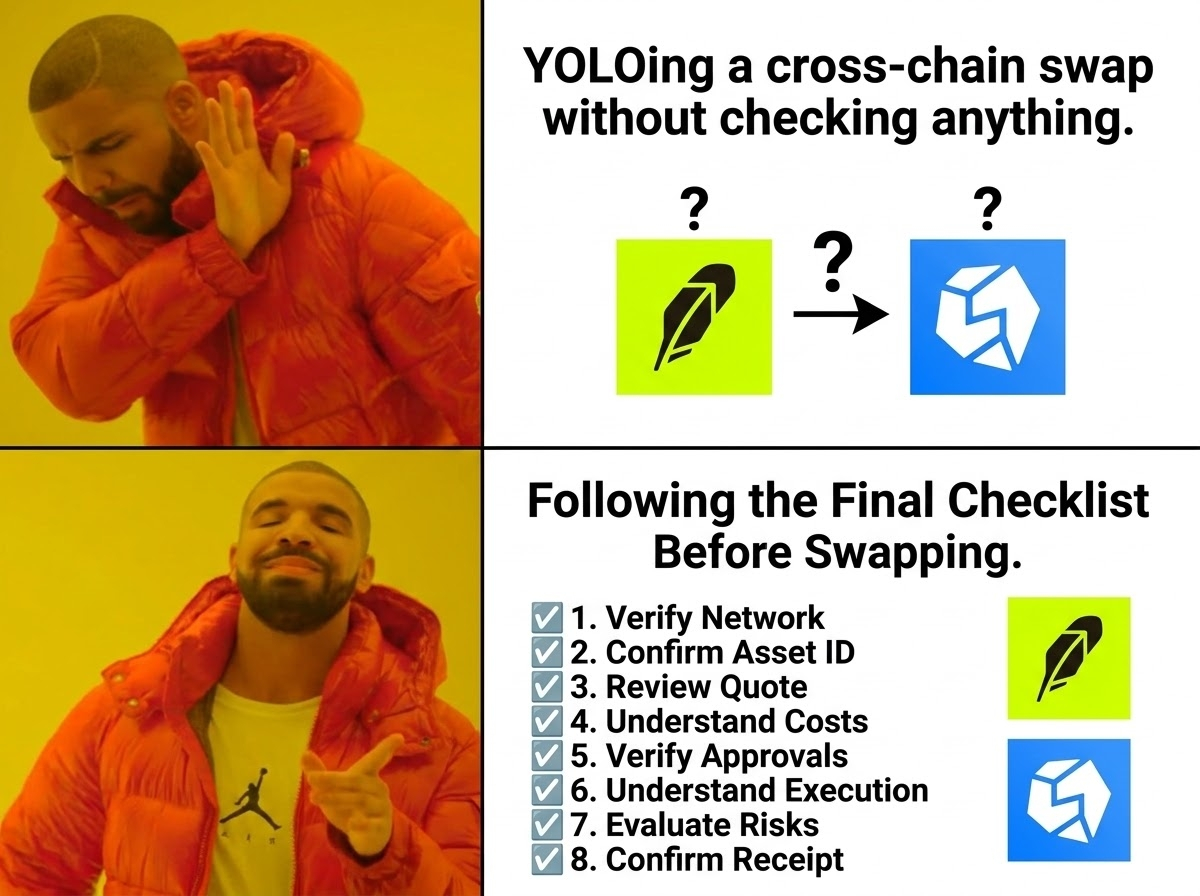
The goal is not simply to complete a swap. It is to understand the transaction, evaluate the conditions and verify the outcome.
Verify the network.
Confirm the asset.
Review the quote.
Understand the risks.
Verify the result.
Explore more on: https://ston.fi/cross-chain-swap-from-ton-to-base
That is how technical understanding becomes responsible onchain participation.