Nillion: Making Data Useful Without Sacrificing Privacy
I’ve been spending time researching Nillion, and its approach to blind computation is one of the most interesting ideas I’ve come across in the privacy space.
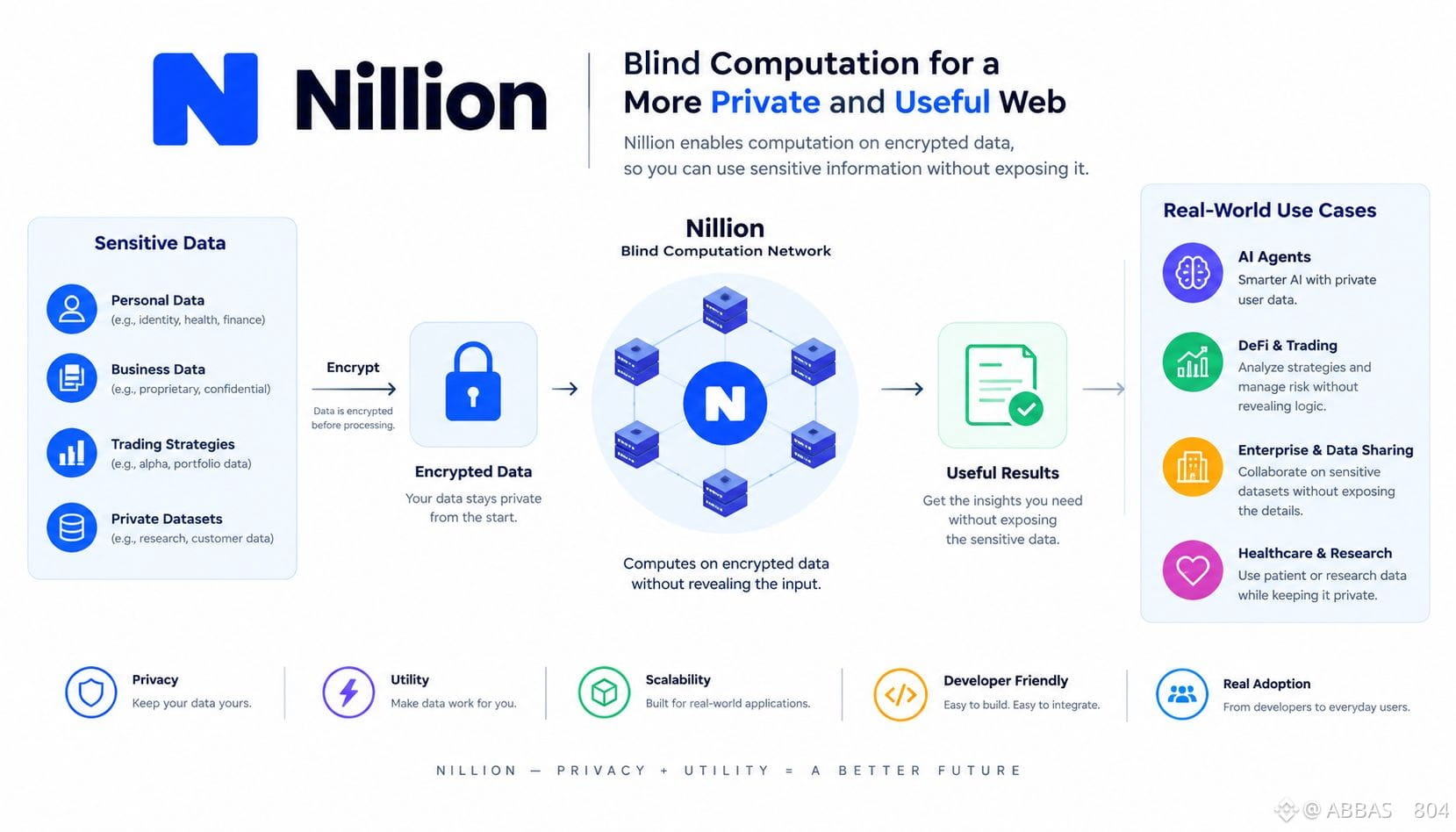
The core concept is powerful: what if applications could process sensitive information without unnecessarily exposing the underlying data? Instead of forcing users to choose between privacy and utility, Nillion aims to make both possible.
Imagine AI agents accessing personal data to deliver smarter results without revealing private details. Think about trading systems analyzing confidential strategies without exposing their logic, or businesses collaborating on sensitive datasets while protecting valuable information.
These are not just theoretical concerns. As AI, decentralized finance, and data-driven applications continue to grow, protecting information while keeping it useful becomes increasingly important.
However, the technology itself is only part of the story. Real adoption will depend on security, computational performance, developer experience, and how easily teams can integrate Nillion into existing applications.
I’m particularly interested in seeing which projects are building on the network, what problems they solve, and whether users return because the technology provides genuine value.
For me, the biggest question is not simply whether blind computation works, but whether it can become practical infrastructure for applications that handle sensitive data every day.
Where do you see Nillion making the biggest impact: AI agents, DeFi, or privacy-preserving data sharing?
#nil $NIL @Nillion