

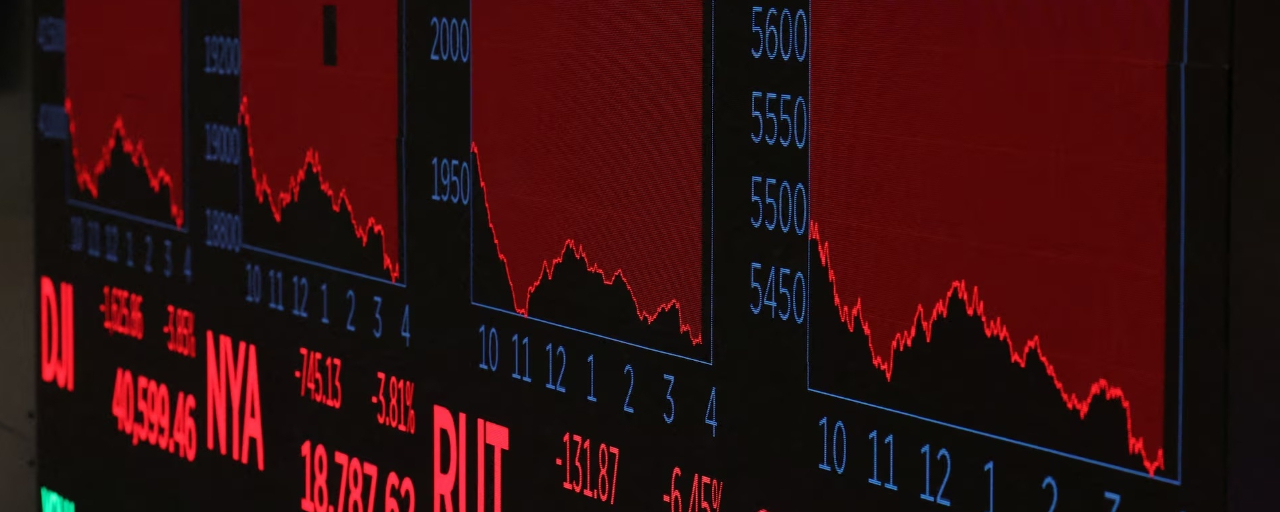

Chipmakers sold off again Wednesday and pulled the broader market down with them. Stocks were already leaning the wrong way on bets that the Federal Reserve will raise interest rates again to fight inflation, and the September consumer price report handed that view fresh support.
Prices rose 0.6% from August, which matched forecasts. Over the past year, though, the gain came in at 3.7%, a tenth of a point above the 3.6% that economists polled by Dow Jones had expected. Core inflation, which leaves out food and energy, ran at 0.3% for the month and 2.6% for the year, where forecasters had said 0.2% and 2.5%. Narrow misses, but narrow was enough.
A quiet streak ends
The S&P 500 fell 1.11% to 7,718.94, which ended its longest run without a 1% decline in more than six years. About 2% came off the Nasdaq 100, and the small-cap Russell 2000 gave back 1.9% to close at 2,729.65. The Dow Jones Industrial Average barely moved. It slipped 0.09% to 51,621.48, helped along by gains in UnitedHealth and Amgen.
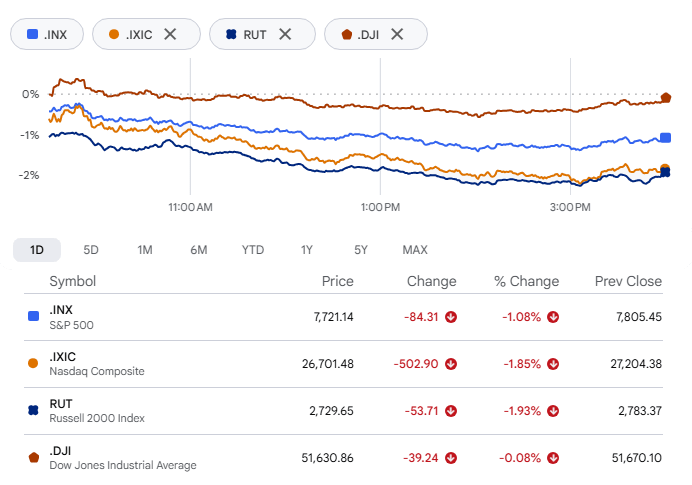
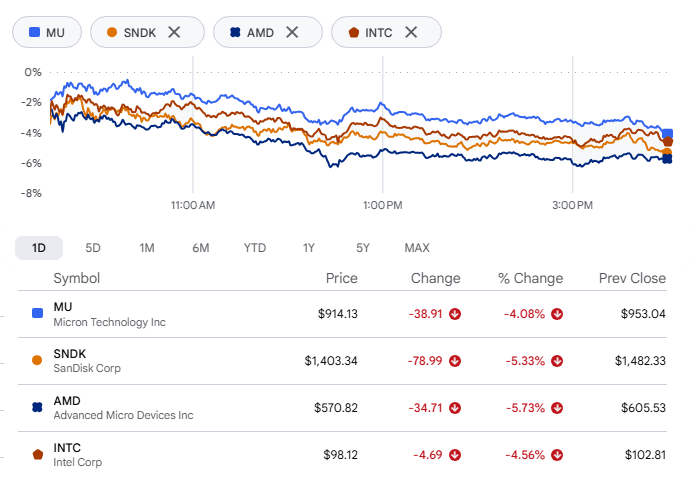
Rates were not the only thing keeping buyers away. Investors also grew uneasy about how much debt technology companies outside the so-called "Magnificent Seven" are piling up to pay for the artificial intelligence boom. Chips, already bruised, took more damage. Micron Technology had lost more than 3% a day earlier and fell another 4% on Wednesday. Sandisk and Advanced Micro Devices did worse, each sliding more than 5%. Intel shed 4%.
CoreWeave's bonds sound an alarm
No stock captured the debt anxiety quite like CoreWeave. Its shares sank as much as 17% during the session before closing about 15.5% lower, and its bonds due in 2032 changed hands for less than 80 cents on the dollar.
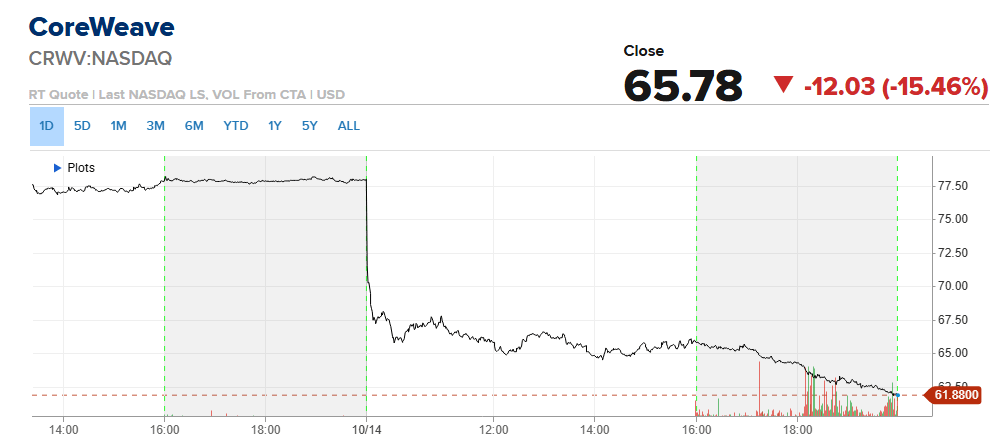
Bond math runs backward for most people. When a price falls, the yield rises, so a yield near 15% tells you lenders now want a steep payout for handing CoreWeave their money. The slide had already caught the eye of Elon Musk, who answered on his own social media platform with a single word: "yikes."
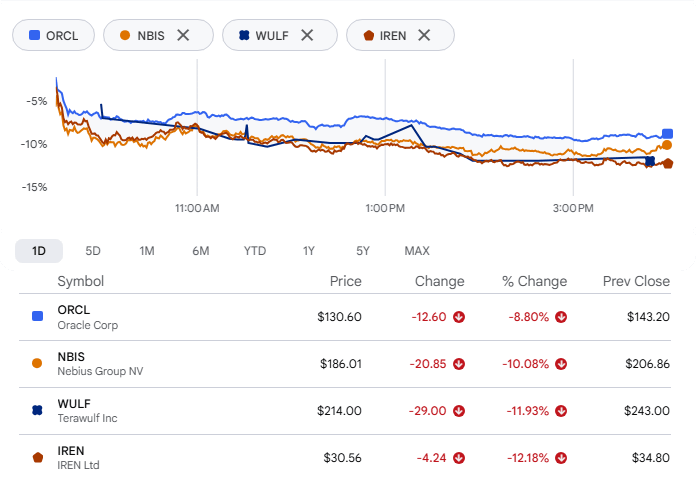
CEO Michael Intrator pushed back in an internal email. He wrote that the market was acting "irrationally" because it misunderstands how the company makes its money. He also pointed at rivals, saying the shaky, delayed IPOs and debt deals several of them have attempted are seeping into the story investors tell about CoreWeave. CoreWeave had plenty of companies on the way down. Oracle gave back about 9%. Nebius, TeraWulf and IREN all fell by more than 10%.
Barclays takes the shine off Dell and HPE
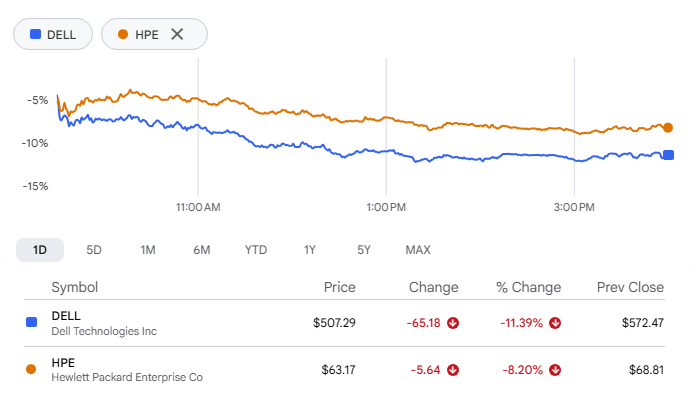
Hardware names got a push of their own. Barclays cut Dell Technologies and Hewlett Packard Enterprise to equal weight from overweight, and Dell tumbled more than 11% while HPE lost about 8%. Both had been among the year's big winners, with Dell up more than 350% in 2026 and HPE up 185% before the downgrade. Analysts at the bank doubt those runs can last much longer, arguing that recent revenue strength reflects pricier memory more than real demand for AI.
Oil producers hit records
Crude, at least, kept climbing. U.S. oil is up 4% this week and trades above $95 a barrel, lifted by fighting between Saudi Arabia and Iran-backed Houthi militants and by Iran's stepped-up attacks on tankers and other commercial ships crossing the Strait of Hormuz.
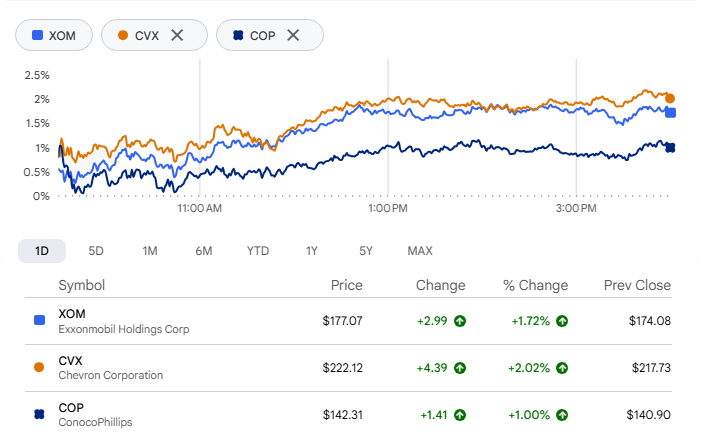
That pushed the biggest U.S. producers to all-time intraday highs. Exxon Mobil topped $177, Chevron touched $222.20, and ConocoPhillips reached $142.50, though each has eased back a little since.
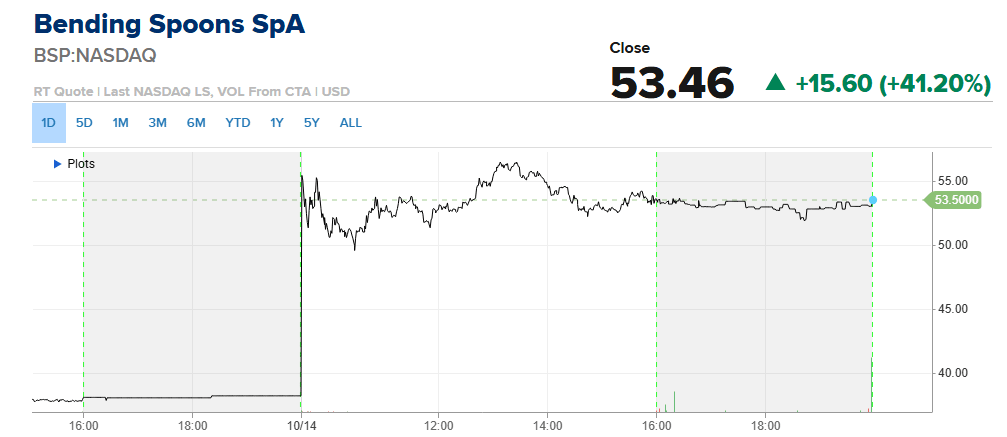
Berkshire writes another check. Bending Spoons, the Italy-based serial acquirer, jumped more than 40% after filings showed Berkshire Hathaway putting in another $330 million. Berkshire gets 10 million new shares at $33 apiece, which lifts its stake in the company to 4%. It comes on top of the $600 million Berkshire invested in July, when Bending Spoons listed on the Nasdaq.
Sector Analysis:
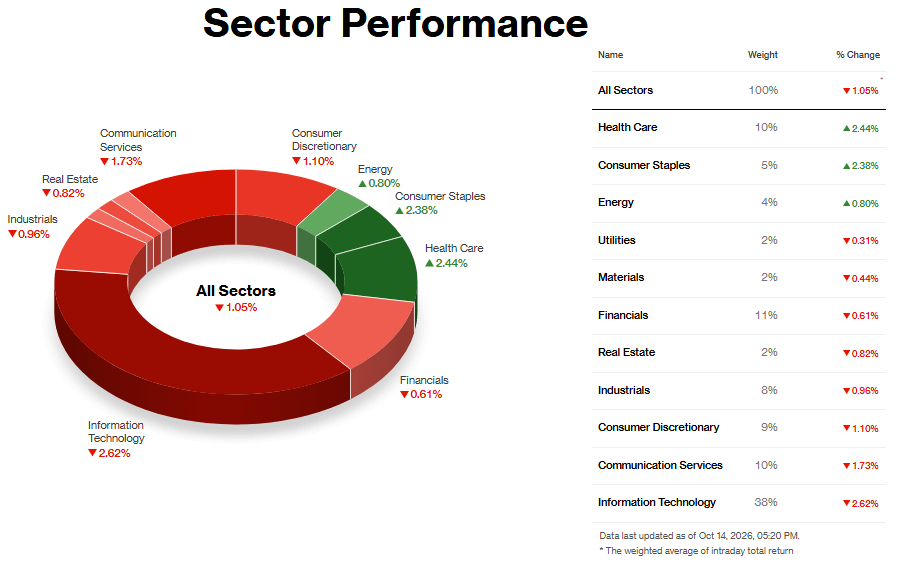
Only three sectors finished higher on Wednesday, and all three are places investors hide when rates are the problem. Health Care (+2.44%), Consumer Staples (+2.38%) and Energy (+0.80%) led a tape that sold off after September CPI rose 3.7% from a year earlier against forecasts of 3.6%, with core inflation also running hotter than expected. Yields followed, with the 10-year Treasury climbing past 5.27%. Fed officials added to the pressure, since New York’s John Williams said one more hike this year looks appropriate.
Health Care was the cleanest expression of the defensive bid. AstraZeneca, Merck, Bristol-Myers, AbbVie, Lilly and Pfizer all traded up roughly 4% at midday, helped by stock-specific news such as Lilly’s new trial collaboration and a UBS upgrade of Amgen. I found no company-specific driver behind Staples, so the move looks like money seeking pricing power and steady earnings as growth stocks fell.
Energy had a firmer anchor. Houthi forces struck a Saudi Aramco administrative building in Dhahran, and Brent held above $106. That makes Energy a war trade tied to the Iran conflict, and it will last only as long as the supply risk does. The defensive rotation itself has been building for days.
Worst-Performing Sectors
Information Technology fell 2.62%, and at 38% of the index that alone explains most of the S&P 500’s slide. The pressure came from semiconductors. Seoul’s market had crashed nearly 11% the previous day as chip heavyweights sold off, on fears that China’s CXMT could erode the market share and profitability of Samsung, SK Hynix and Micron. In New York, Nvidia dipped about 3%, while Micron and AMD fell more than 4% and 5% respectively. Valuation worries added to it, as Barclays downgraded Dell, HPE and NetApp, and Dell lost 8.28%. Higher yields hurt long-duration growth stocks on top of that. The weakness is sector-wide.
Communication Services (-1.73%) had no single dominant driver. Netflix announced layoffs of about 6% of its workforce, and its shares gave up early gains, while Skydance’s drop was a technical reset as its warrants began trading separately. The rest looks like the growth selloff spilling over.
Consumer Discretionary (-1.10%) also lacked a company-level catalyst I could verify. Gasoline-driven inflation and higher borrowing costs weigh on the sector, although bank earnings suggested consumers are still holding up.
The next test comes fast
Producer prices are due Thursday, and the Fed meets Oct. 27 and 28 with another increase still in play. Companies that borrowed heavily to build AI capacity now watch the price of that debt move by the day. How much investors will charge them to keep borrowing is the part nobody has settled.