
🇺🇸 Donald Trump: Leadership, Economic Policies, and Global Influence
Introduction
Donald J. Trump is the 45th and 47th President of the United States. A former businessman and television personality, Trump has played a significant role in American politics and continues to influence discussions about the economy, international trade, immigration, and global relations. His political approach, often described through the slogan “America First,” focuses on prioritizing American national interests. <Cite refs={["turn136839search0"]}/>
Economic Policies and Trade
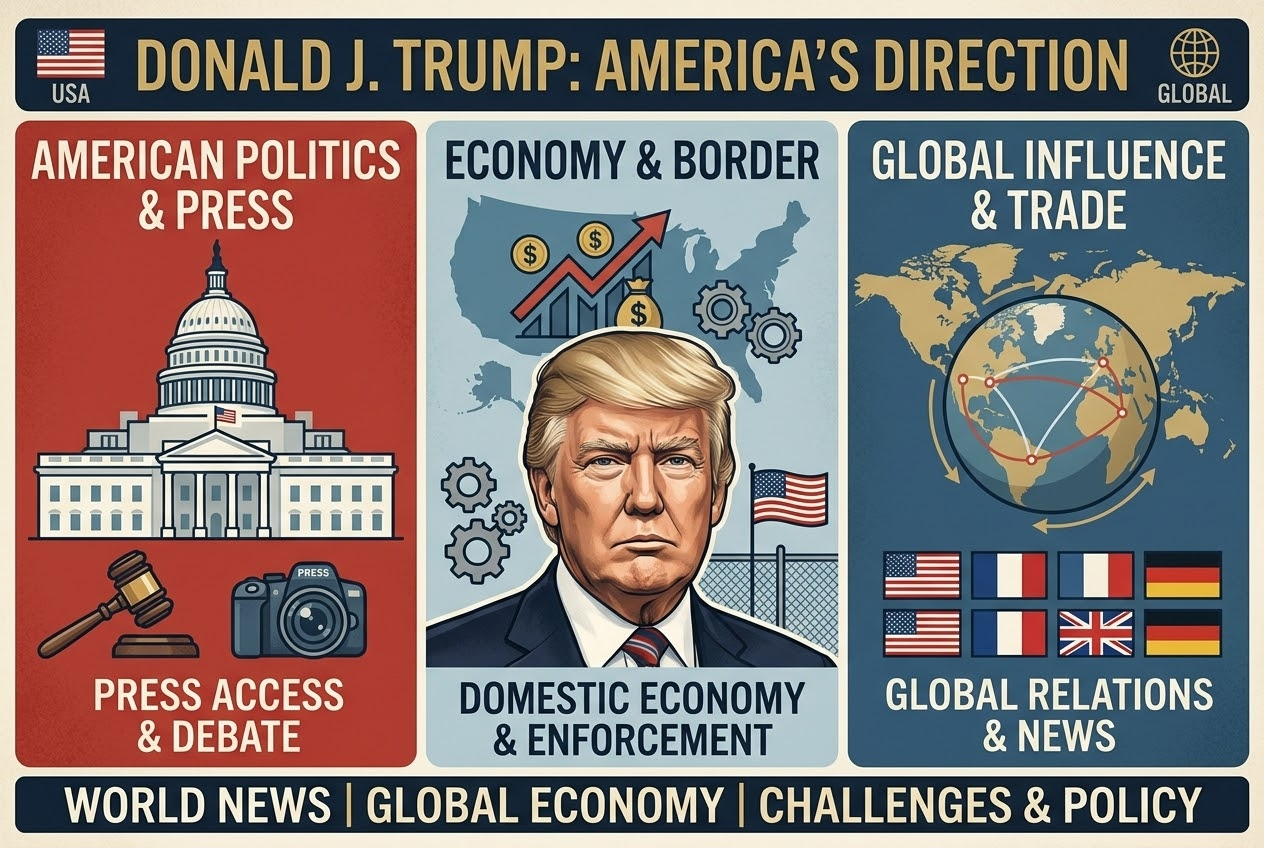
The economy is one of the central issues associated with Trump's presidency. His administration has emphasized domestic manufacturing, tax policies, energy production, and trade negotiations. Trump has also supported tariffs on imported goods as a way to protect American industries and encourage companies to manufacture products within the United States.
However, these policies have generated debate. Supporters argue that tariffs can strengthen domestic industries, while critics warn that they may increase costs for businesses and consumers. The long-term effects depend on how companies, consumers, and international trading partners respond. <Cite refs={["turn136839news19","turn136839news20"]}/>
Immigration and Border Security
Immigration and border security remain major priorities for Trump's administration. His policies have focused on stricter border enforcement, changes to immigration procedures, and reducing unauthorized immigration. Supporters view these measures as important for national security and the enforcement of immigration laws. Critics have raised concerns about humanitarian consequences, family separation, and the treatment of migrants.
These competing perspectives make immigration one of the most widely debated issues in American politics.
Foreign Policy and International Relations
Trump's approach to foreign policy emphasizes negotiations, economic pressure, national security, and burden-sharing among international partners. His decisions can affect relationships with allies and rivals, as well as international trade and energy markets.
His administration's approach to conflicts and diplomatic negotiations has attracted considerable global attention. The results of these policies are assessed differently by governments, political analysts, and international observers.
Challenges and Public Debate
Like other political leaders, Trump faces challenges involving economic conditions, government decisions, legal questions, and public accountability. On October 14, 2026, a federal judge extended protections for journalists from CNN, MS NOW, and Politico in a legal dispute over White House press access. The ruling concerned constitutional protections for journalists and the administration's decision to restrict access. <Cite refs={["turn136839news12","turn136839news14"]}/>
Such disputes highlight the importance of freedom of the press, constitutional rights, and accountability in a democratic system.
Conclusion
Donald Trump's presidency continues to shape conversations about America's economic future, immigration policy, international relations, and the role of government. His supporters and critics often disagree about the effectiveness and consequences of his decisions. Understanding his leadership requires examining verified information, policy outcomes, and different perspectives rather than relying only on political slogans or social media claims.
As the United States continues to navigate domestic and international challenges, Trump's decisions will remain an important subject of political and economic discussion.
What do you think about Donald Trump's economic and foreign policies? Share your opinion respectfully in the comments.
#WorldNews #GlobalEconomy #Leadership #InternationalRelations #BreakingNews