
Wall Street spent Monday going nowhere in particular. Stocks drifted between small gains and small losses as traders waited on a busy week of earnings results and inflation data, while Treasury futures barely budged with the cash market shut for Columbus Day.
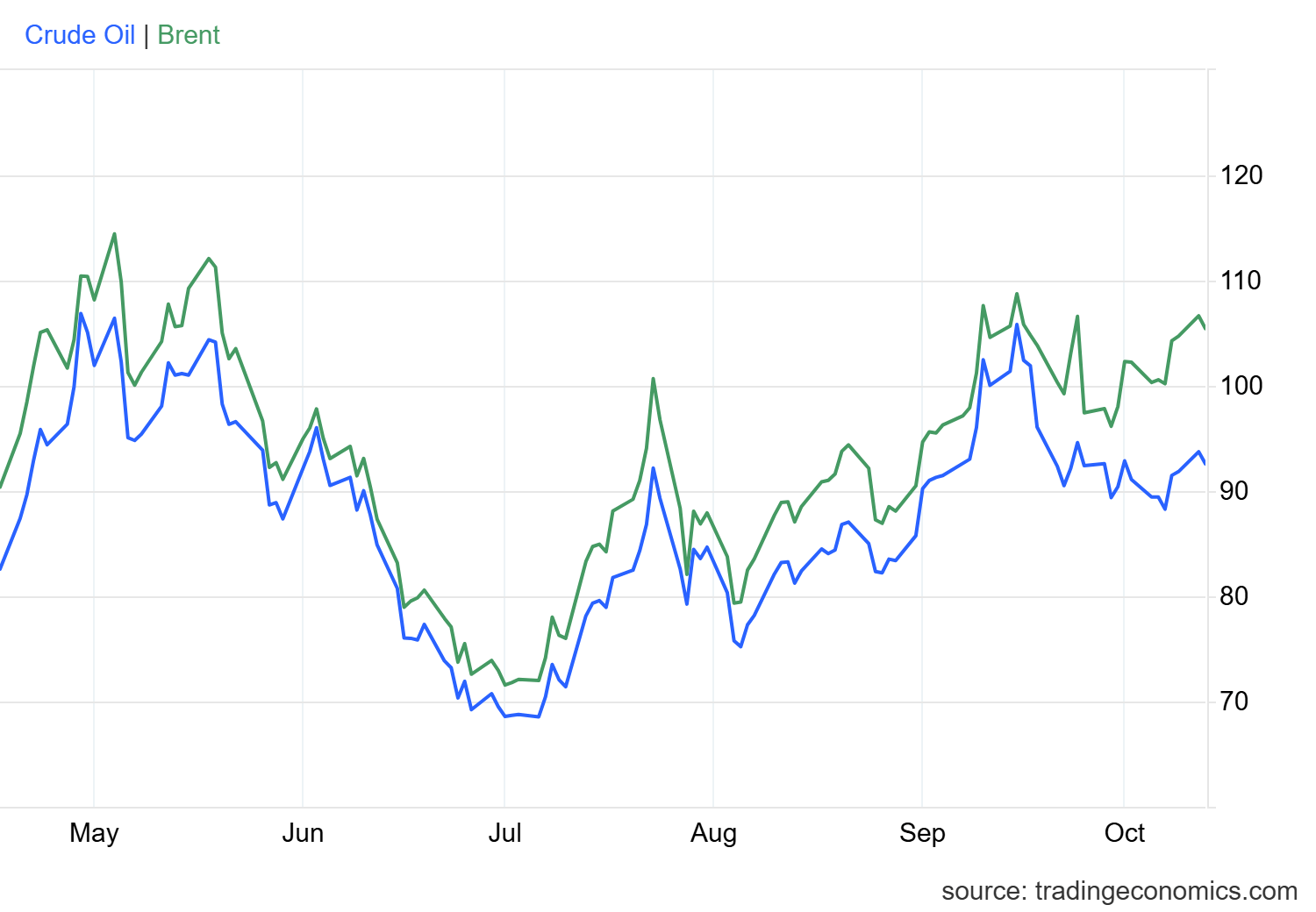
Two things did the damage: oil and memory chips. Crude rose after President Donald Trump's claim of an energy ceasefire between Russia and Ukraine ran into Ukrainian President Volodymyr Zelenskyy's statement that Moscow had already broken it. Brent futures added 1.8% to close at $106.65 a barrel, and West Texas Intermediate gained 2% to settle at $93.74.
Only the Dow Finishes in the Green
The S&P 500 ended a hair below the flatline, down 0.06% at 7,807.24, after a winning week for the major averages. The Dow Jones Industrial Average was the lone gainer. It rose 195.60 points, or 0.38%, to 51,850.55, its third straight advance, helped along by a rally in Salesforce.
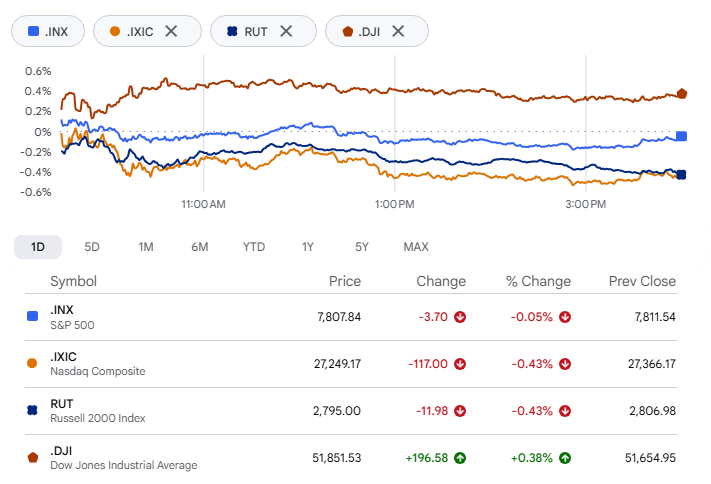
Tech did worse. The Nasdaq Composite lost 0.44% and closed at 27,245.90, and small caps followed it down, with the Russell 2000 falling 0.45% to 2,794.48.
Micron Takes the Blame for the Nasdaq
Micron Technology was the Nasdaq's problem, off 3.9%. The trigger arrived from China over the weekend. ChangXin Memory Technologies, known as CXMT, reported progress on a new chip structure, and its president, Cao Kanyu, said at an industry event in Shanghai that the company plans to deliver a next-generation DRAM product for servers, according to the South China Morning Post. Asian media reports say it will compete with offerings from the big U.S. and South Korean memory makers.
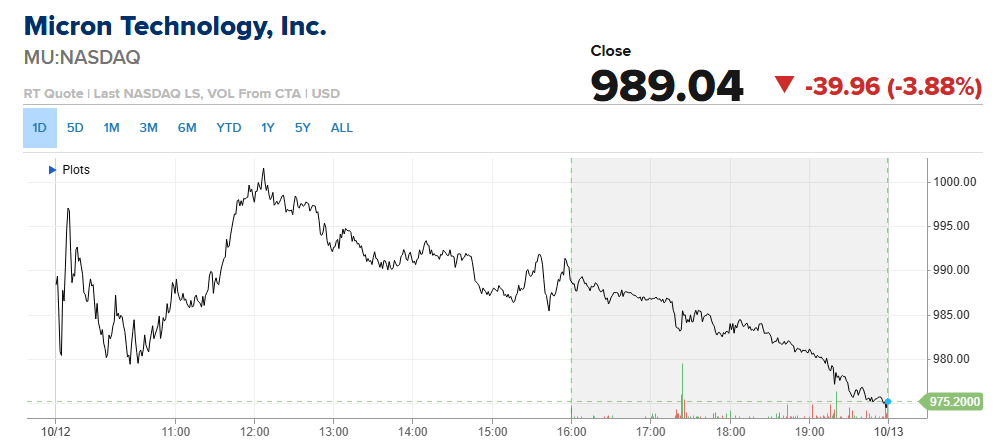
Samsung Electronics and SK Hynix shares fell more than 3% as well. For Micron, the timing stung. The stock had climbed roughly 260% this year through Friday's close, which leaves a great deal of gain to protect.
Shipping Names Ride Oil to Records
Oil's climb helped a different corner of the market. The SonicShares Global Shipping ETF (BOAT) notched another all-time high at the opening bell, and several companies that ship oil and gas, Torm, Hafnia and Teekay Tankers among them, opened at fresh 52-week highs.
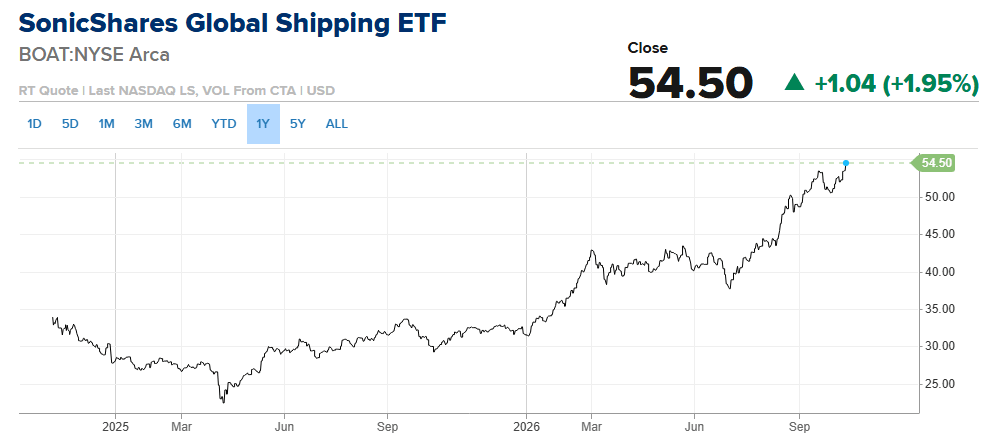
CNBC's Brian Sullivan reported that the cost of moving oil, with tensions in the Middle East still unresolved, is adding premiums to the price of crude beyond what Brent and WTI futures show. Both benchmarks were trading at their highest levels in more than two weeks Monday morning.
Software Gets a Rare Vote of Confidence
It has not been a good year for Salesforce. Shares are down about 14%, largely on fears that wider AI adoption could cut demand for software tools. Bank of America took the opposite view Monday, double upgrading the stock to buy from underperform and raising its price target to $285 from $160, a level 24% above Friday's close.
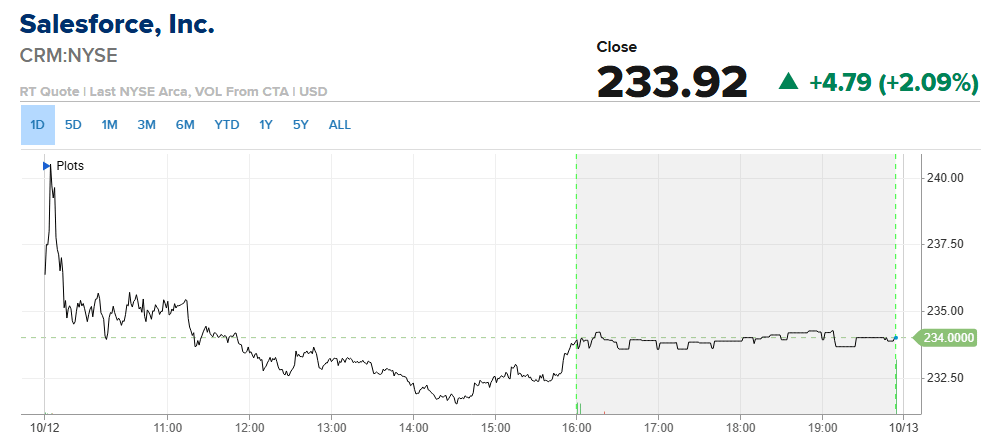
Analyst Tal Liani's argument is that AI should deepen big companies' dependence on platforms like Salesforce's, not replace them. Investors liked it. The stock finished up 2%.
Starbucks Closes the Door on Chipotle
Starbucks ended days of takeover chatter by saying it is not considering a bid for Chipotle Mexican Grill. "Starbucks is not buying Chipotle," a spokesperson told CNBC. The talk began last Thursday with a Financial Times report that the coffee chain had worked with advisers on a possible proposal, and a deal would have been the largest restaurant takeover on record.
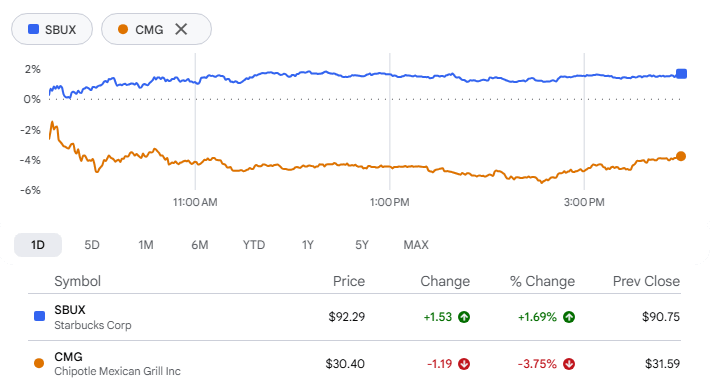
The two stocks parted ways on the denial. Starbucks closed up 1.7%, while Chipotle fell nearly 4%, handing back part of the jump it posted after the report.
Both companies are in the middle of turnarounds, and with the takeover story gone, their own results are the next thing to judge. Chipotle reports third-quarter earnings Oct. 28. Starbucks follows a day later.
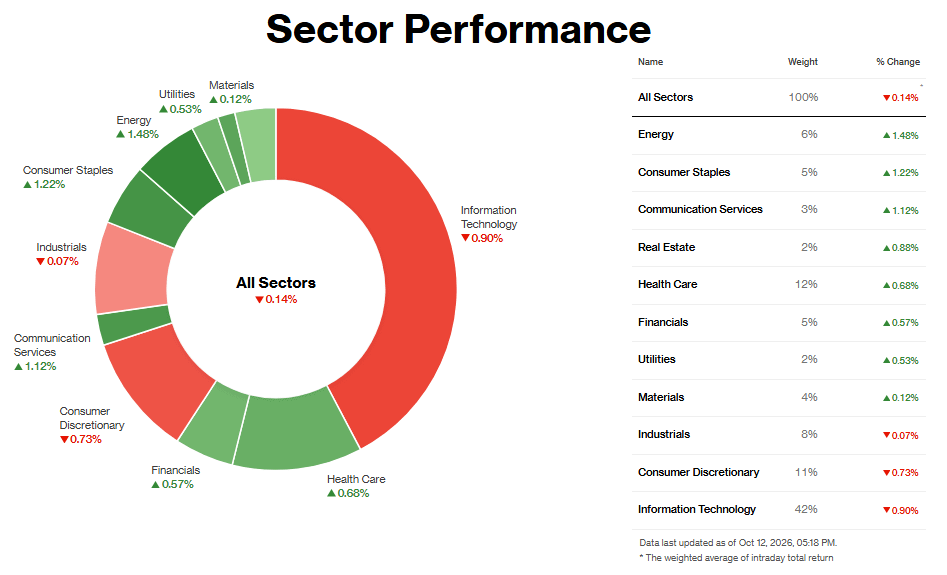
Sector Analysis:
Best-Performing Sectors
Energy led, up 1.48%, and oil did the work. Crude rose as attacks on Saudi airports outweighed the prospect of more Russian diesel exports and a Russia-Ukraine energy ceasefire, with Brent settling at $106.65. The sector ETF touched an intraday record, its first in more than a month, as Diamondback, Oneok, APA and ConocoPhillips each gained around 2%. The rally depends on the Middle East headlines, so it lasts only as long as the supply scare does.
Consumer Staples added 1.22% and looks like a continuing trend. It follows the group’s second-best week since 2022 and leaves it up about 5% in October. Investors are leaning defensive, and Wednesday’s CPI, with headline inflation expected to re-accelerate to 3.6%, gives them a reason to stay there. I found no single company-level catalyst for Monday itself.
Communication Services rose 1.12%, with Meta in front. Meta shares climbed after it launched Muse Wonder, its latest AI model, and wireless carriers staged a partial rebound. That mix of an AI story and defensive carriers made it the one growth-oriented group near the top.
Worst-Performing Sectors
Tech fell 0.90%, and the damage was in chips. The Philadelphia Semiconductor Index lost 2.7% for a fourth straight decline, after a report that China’s CXMT is moving into next-generation memory chips. Sandisk dropped more than 6% on memory competition worries, and Lumentum fell almost 10%, while Salesforce gained on an upgrade. The weakness is concentrated in hardware, and with tech carrying roughly 42% of the index, it capped everything else.
Consumer Discretionary slid 0.73%, largely on Amazon. The stock fell more than 1% on a Wall Street Journal report that it is in talks to buy AI startup Decart for about $7 billion. eBay rose 4.12% on a Morgan Stanley price-target increase, but it couldn’t offset the heavyweight.
Industrials slipped just 0.07%, and there was no single dominant driver. Citi upgraded Allison Transmission, saying machinery stocks have cooled from their summer highs but demand has held up.