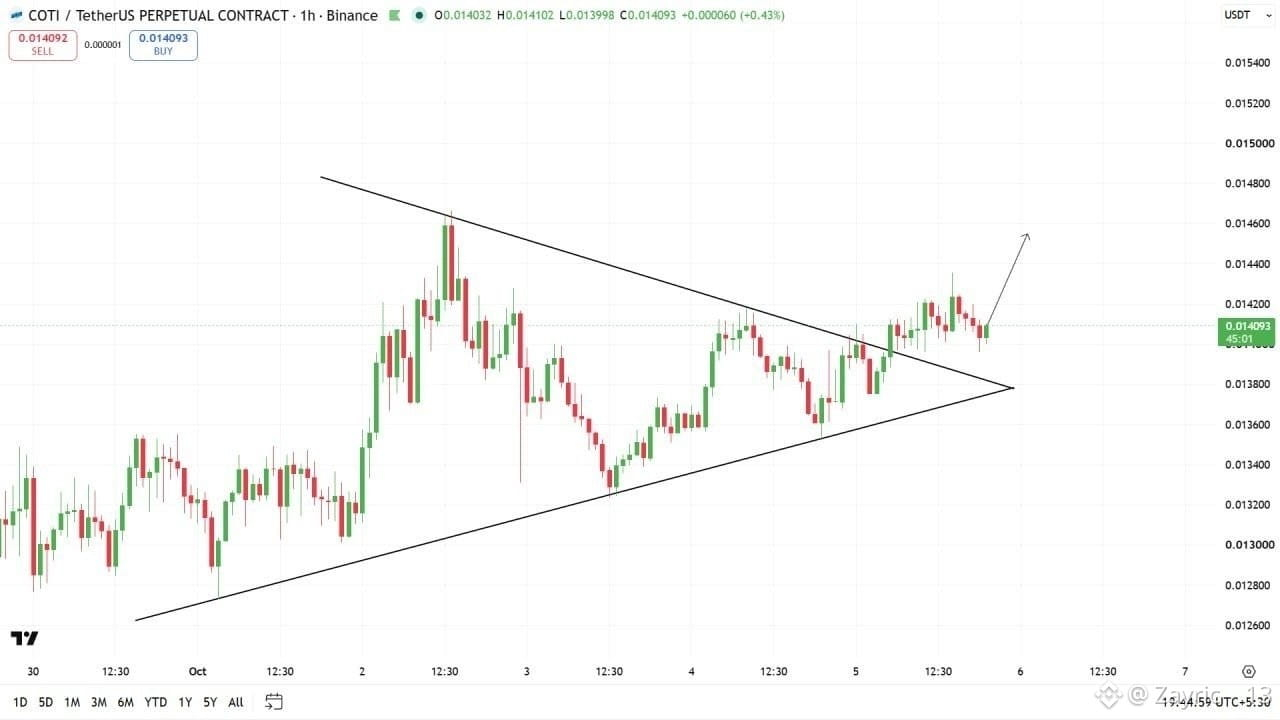

$COTI ’s Ethereum holder base currently sits around 25,244 addresses, while the top 10 wallets control roughly 68.8% of the reported 4.55B-token supply, according to current holder data. That’s a surprisingly concentrated distribution for a token whose pitch is infrastructure, privacy, and broader network utility.
Here’s the part that matters if you’ve ever looked at a “holder count” number and assumed it represented organic adoption: 25,244 only describes the Ethereum snapshot from that particular tracker. COTI also has its own mainnet and has historically existed across multiple token environments, so address counts from one chain cannot be treated as the complete holder base. Different providers already show different totals — another current source reports about 25,542 Ethereum holding addresses.
And the distribution makes the number even less straightforward. A small number of large addresses hold a substantial portion of the supply, while the remaining addresses can include exchange wallets, contracts, operational wallets, residual balances and other infrastructure-related addresses. Some addresses can appear or disappear from holder lists because of transfers, consolidation or exchange wallet management rather than because thousands of individual users suddenly entered or exited COTI. I can’t confirm the reason for any individual address change from aggregate holder data alone.
For COTI, circulating supply, actual network usage and meaningful transaction activity are much more informative than raw address counts. When the top wallets control such a large share of supply, what does “holder growth” really tell you about organic demand?
Here’s the part that matters if you’ve ever looked at a “holder count” number and assumed it represented organic adoption: 25,244 only describes the Ethereum snapshot from that particular tracker. COTI also has its own mainnet and has historically existed across multiple token environments, so address counts from one chain cannot be treated as the complete holder base. Different providers already show different totals — another current source reports about 25,542 Ethereum holding addresses.
And the distribution makes the number even less straightforward. A small number of large addresses hold a substantial portion of the supply, while the remaining addresses can include exchange wallets, contracts, operational wallets, residual balances and other infrastructure-related addresses. Some addresses can appear or disappear from holder lists because of transfers, consolidation or exchange wallet management rather than because thousands of individual users suddenly entered or exited COTI. I can’t confirm the reason for any individual address change from aggregate holder data alone.
For COTI, circulating supply, actual network usage and meaningful transaction activity are much more informative than raw address counts. When the top wallets control such a large share of supply, what does “holder growth” really tell you about organic demand?