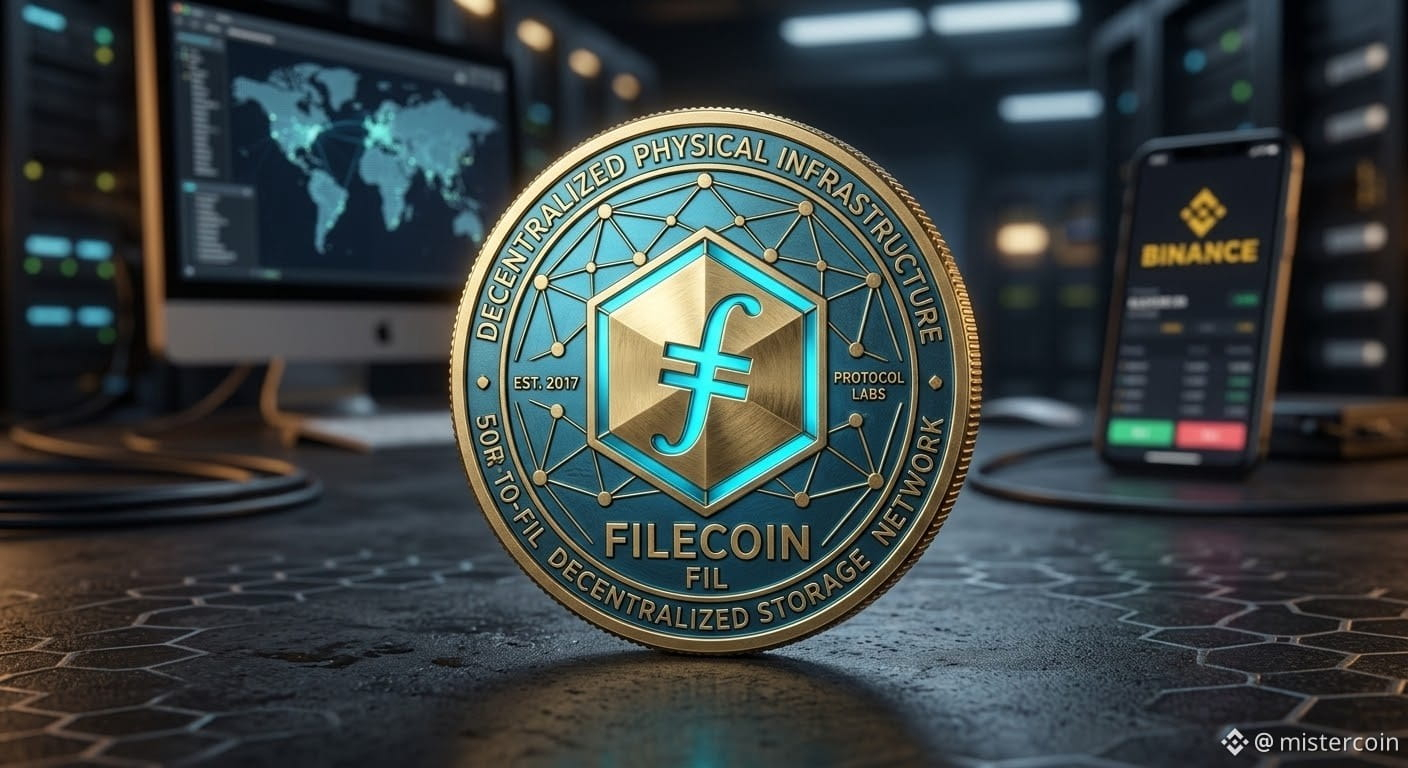
What is Filecoin and How Does It Work?
In simple terms, Filecoin acts as the "Airbnb for Data Storage":
P2P Network and IPFS: Developed by Protocol Labs, it is built on top of the IPFS (InterPlanetary File System) protocol.
Open Market: Any individual or company with spare storage capacity (servers, data centers) can become a Storage Provider.
Token Payments: Users needing to store files pay providers using the native FIL token.
Cryptographic Validation: The protocol uses storage proofs (Proof of Replication and Proof of Spacetime) to ensure via smart contracts that the provider is keeping the data intact and accessible.
Main Strengths and Project Narratives
Infrastructure for Artificial Intelligence (AI): AI models and autonomous agents generate and consume terabytes of data daily. Filecoin is focused on positioning itself as the primary layer for cheap and verifiable storage for AI datasets.
Filecoin Virtual Machine (FVM): The introduction of programmable smart contracts enabled the creation of DApps, data marketplaces, staking, and storage derivatives directly on the Filecoin blockchain.
Real World Assets (RWA) Integration: Institutional use cases are emerging, such as recording deeds, contracts, and real-world assets on-chain, anchored by Filecoin's immutable storage.
Shift in Supply Dynamics (Vesting): The 6-year linear unlock schedule for early investors and the team ends around mid-October 2026. This significantly reduces daily token emissions and selling pressure in the market.
Risks and Key Considerations
Competition: Faces fierce competition both within Web3 (Arweave, Storj, Sia) and from centralized Web2 giants (AWS, Google Cloud, Microsoft Azure).
Paid Demand vs. Supply: The network has accumulated massive installed capacity. The ecosystem's main challenge is converting this capacity into actual paid storage contracts at an enterprise scale.
Price History: Following its all-time high in 2021 (~US$ 236), the token experienced a severe devaluation in subsequent years due to high initial token inflation and market dilution.
In simple terms, Filecoin acts as the "Airbnb for Data Storage":
P2P Network and IPFS: Developed by Protocol Labs, it is built on top of the IPFS (InterPlanetary File System) protocol.
Open Market: Any individual or company with spare storage capacity (servers, data centers) can become a Storage Provider.
Token Payments: Users needing to store files pay providers using the native FIL token.
Cryptographic Validation: The protocol uses storage proofs (Proof of Replication and Proof of Spacetime) to ensure via smart contracts that the provider is keeping the data intact and accessible.
Main Strengths and Project Narratives
Infrastructure for Artificial Intelligence (AI): AI models and autonomous agents generate and consume terabytes of data daily. Filecoin is focused on positioning itself as the primary layer for cheap and verifiable storage for AI datasets.
Filecoin Virtual Machine (FVM): The introduction of programmable smart contracts enabled the creation of DApps, data marketplaces, staking, and storage derivatives directly on the Filecoin blockchain.
Real World Assets (RWA) Integration: Institutional use cases are emerging, such as recording deeds, contracts, and real-world assets on-chain, anchored by Filecoin's immutable storage.
Shift in Supply Dynamics (Vesting): The 6-year linear unlock schedule for early investors and the team ends around mid-October 2026. This significantly reduces daily token emissions and selling pressure in the market.
Risks and Key Considerations
Competition: Faces fierce competition both within Web3 (Arweave, Storj, Sia) and from centralized Web2 giants (AWS, Google Cloud, Microsoft Azure).
Paid Demand vs. Supply: The network has accumulated massive installed capacity. The ecosystem's main challenge is converting this capacity into actual paid storage contracts at an enterprise scale.
Price History: Following its all-time high in 2021 (~US$ 236), the token experienced a severe devaluation in subsequent years due to high initial token inflation and market dilution.