



The cost of feeding the world is climbing at an alarming pace. While financial headlines stay obsessed with stock market records and tech valuations, the commodities that power everyday life are quietly breaking out. The latest market data shows that global agriculture prices just logged their steepest quarterly increase in years, signaling that food inflation pressures are far from over.
❍ The Q3 Agriculture Spike
The benchmark index tracking raw food and crop materials has experienced a sharp and sudden acceleration.
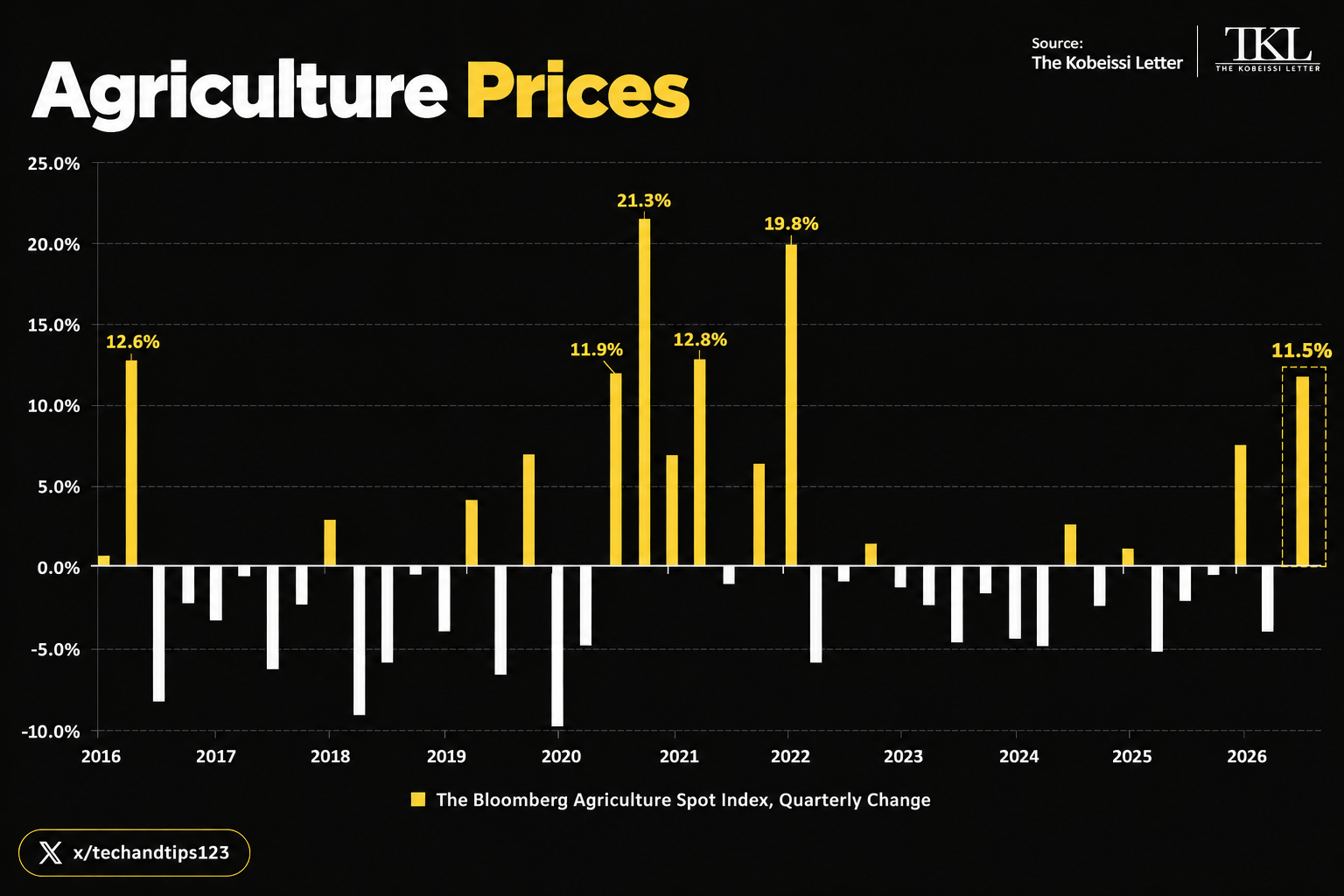
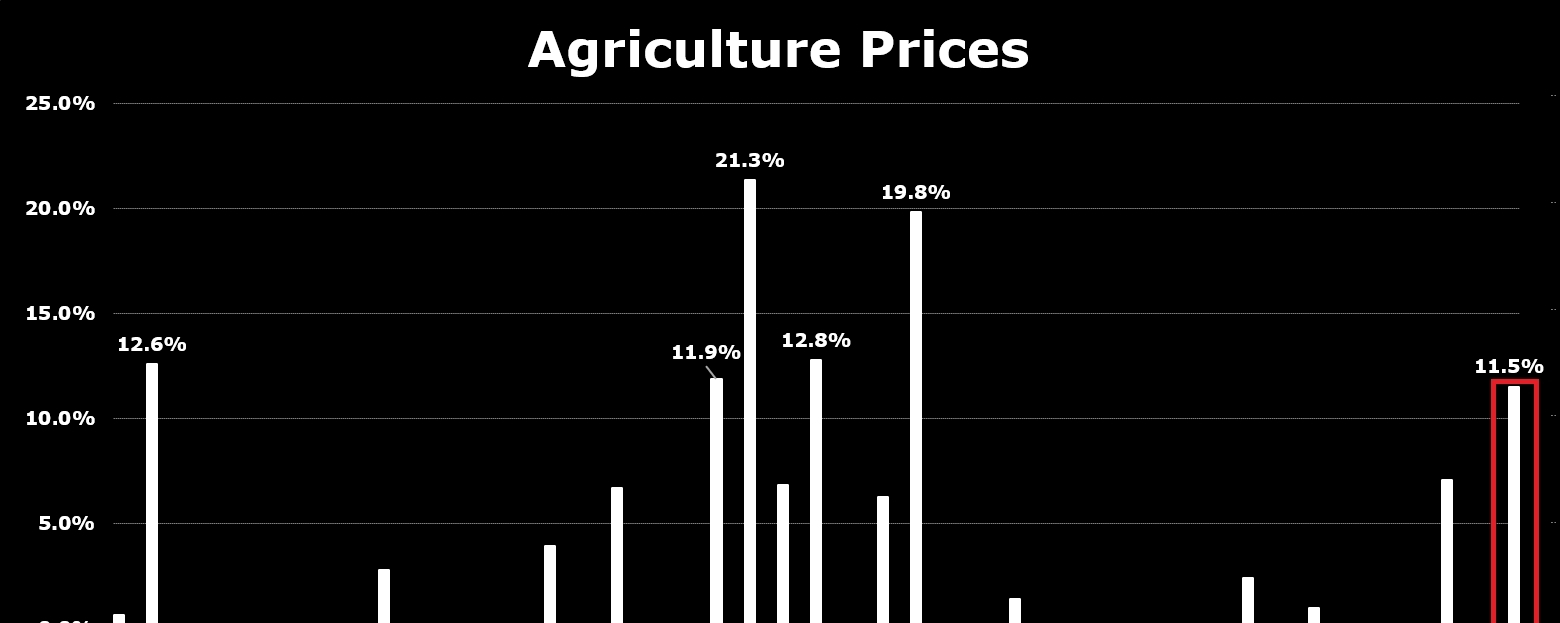
The Bloomberg Agriculture Spot Index surged by 11.5 percent in the third quarter of 2026.
This marks the largest quarterly increase for the index since the first quarter of 2022 and the fourth largest jump seen in a decade.
The index tracks ten key agricultural commodities across the board, including essential staples like grains, sugar, dairy, meat, and vegetable oils.
❍ Grains and Soybeans Lead the Rally
The upward pressure is heavily concentrated in core commodity markets where supply constraints are hitting hardest.
Corn and wheat prices traded in Chicago both surged by 15.0 percent during the period.
Soybeans followed close behind, posting a strong gain of 13.0 percent.
Over the past twelve months alone, agricultural prices have climbed by a total of 20.0 percent, driving up input costs for food producers worldwide.
Some Random Thoughts 💬
Central banks love to talk about how inflation is cooling down, but they rarely look closely at the grocery aisle. When agricultural spots jump by double digits in a single quarter, that raw cost inevitably filters down to everyday consumers within a few months. In both traditional finance and the crypto ecosystem, food inflation acts as the ultimate reality check for fiat purchasing power.
When basic sustenance becomes more expensive, consumer discretionary spending drops across every other sector. Smart macro investors watch crop yields and agricultural indices long before consumer price index reports hit the wire because food costs dictate the true baseline of economic health.