🚨 BREAKING : Chainlink and Swift Just Proved Tokenized Stock Dividends Can Work Across Four Blockchains $SAND
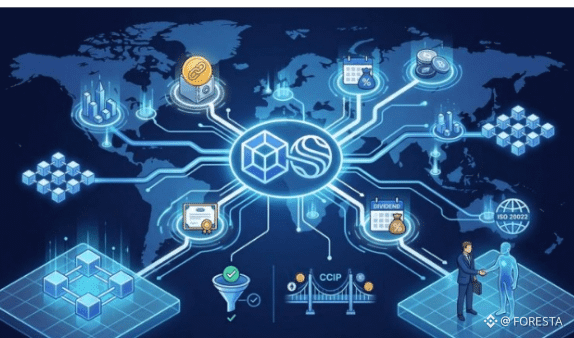
Chainlink unveiled an automated dividend system for tokenized stocks at the 2026 Swift Hackathon, winning runner-up. The solution tackles a real problem: when the same stock token trades on multiple blockchains, traditional dividend processing breaks down.
How it works: $NIGHT $ENJ
· Uses Chainlink CRE to orchestrate the entire process while keeping Swift's ISO 20022 messaging intact
· Merges holdings across all blockchains into one canonical ownership record to avoid double-counting
· Runs compliance checks via ACE and adjusts prices using Chainlink Data Feeds
· Distributes dividends in stablecoins or tokenized deposits, using CCIP for cross-chain payouts
Why it matters:
· Extendable to interest payments, redemptions, stock splits, and proxy voting
· Settlement assets can include stablecoins, tokenized deposits, or CBDCs
The catch: It's a hackathon demo, not a live product — but it validates that multi-chain corporate actions can work using existing banking standards.
Chainlink unveiled an automated dividend system for tokenized stocks at the 2026 Swift Hackathon, winning runner-up. The solution tackles a real problem: when the same stock token trades on multiple blockchains, traditional dividend processing breaks down.
How it works: $NIGHT $ENJ
· Uses Chainlink CRE to orchestrate the entire process while keeping Swift's ISO 20022 messaging intact
· Merges holdings across all blockchains into one canonical ownership record to avoid double-counting
· Runs compliance checks via ACE and adjusts prices using Chainlink Data Feeds
· Distributes dividends in stablecoins or tokenized deposits, using CCIP for cross-chain payouts
Why it matters:
· Extendable to interest payments, redemptions, stock splits, and proxy voting
· Settlement assets can include stablecoins, tokenized deposits, or CBDCs
The catch: It's a hackathon demo, not a live product — but it validates that multi-chain corporate actions can work using existing banking standards.