𝗛𝗼𝘄 𝗱𝗼𝗲𝘀 𝗮𝗻 𝗶𝗺𝗯𝗮𝗹𝗮𝗻𝗰𝗲𝗱 𝗹𝗶𝗾𝘂𝗶𝗱𝗶𝘁𝘆 𝗽𝗼𝗼𝗹 𝗮𝗳𝗳𝗲𝗰𝘁 𝘆𝗼𝘂𝗿 𝘀𝘄𝗮𝗽?
A liquidity pool isn't just about how much TVL it has. The ratio between its token reserves also matters.
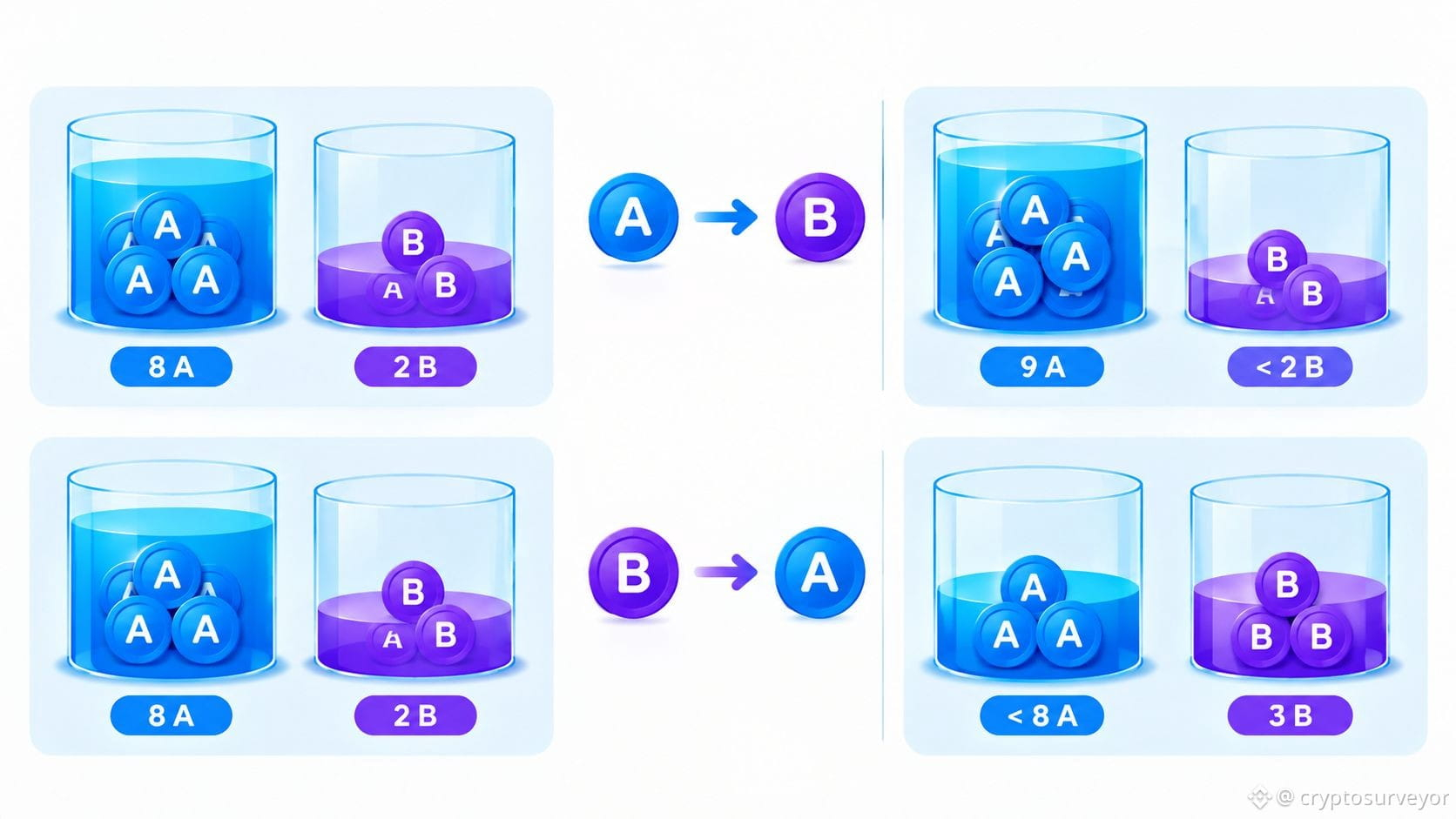
Imagine a pool with:
8 Token A
2 Token B
That's a 4:1 ratio.
Now:
A → B
adds more A and removes B, pushing the imbalance further.
But:
B → A
removes A and adds B, moving the reserves back toward a less extreme ratio.
Since AMM pricing responds to pool reserves, the direction and size of your trade can affect the rate you actually get.
That's why before swapping on STON.fi, check:
→ Pool reserves
→ TVL
→ Swap rate
→ Price Impact
→ Minimum received
→ Slippage tolerance
Don't just ask:
“What's the token price?”
Ask:
“What rate can this pool actually give me for my trade size?”
@ston_fi
A liquidity pool isn't just about how much TVL it has. The ratio between its token reserves also matters.
Imagine a pool with:
8 Token A
2 Token B
That's a 4:1 ratio.
Now:
A → B
adds more A and removes B, pushing the imbalance further.
But:
B → A
removes A and adds B, moving the reserves back toward a less extreme ratio.
Since AMM pricing responds to pool reserves, the direction and size of your trade can affect the rate you actually get.
That's why before swapping on STON.fi, check:
→ Pool reserves
→ TVL
→ Swap rate
→ Price Impact
→ Minimum received
→ Slippage tolerance
Don't just ask:
“What's the token price?”
Ask:
“What rate can this pool actually give me for my trade size?”
@ston_fi