The Engineering Trade-Offs of Immutable AMM Pools
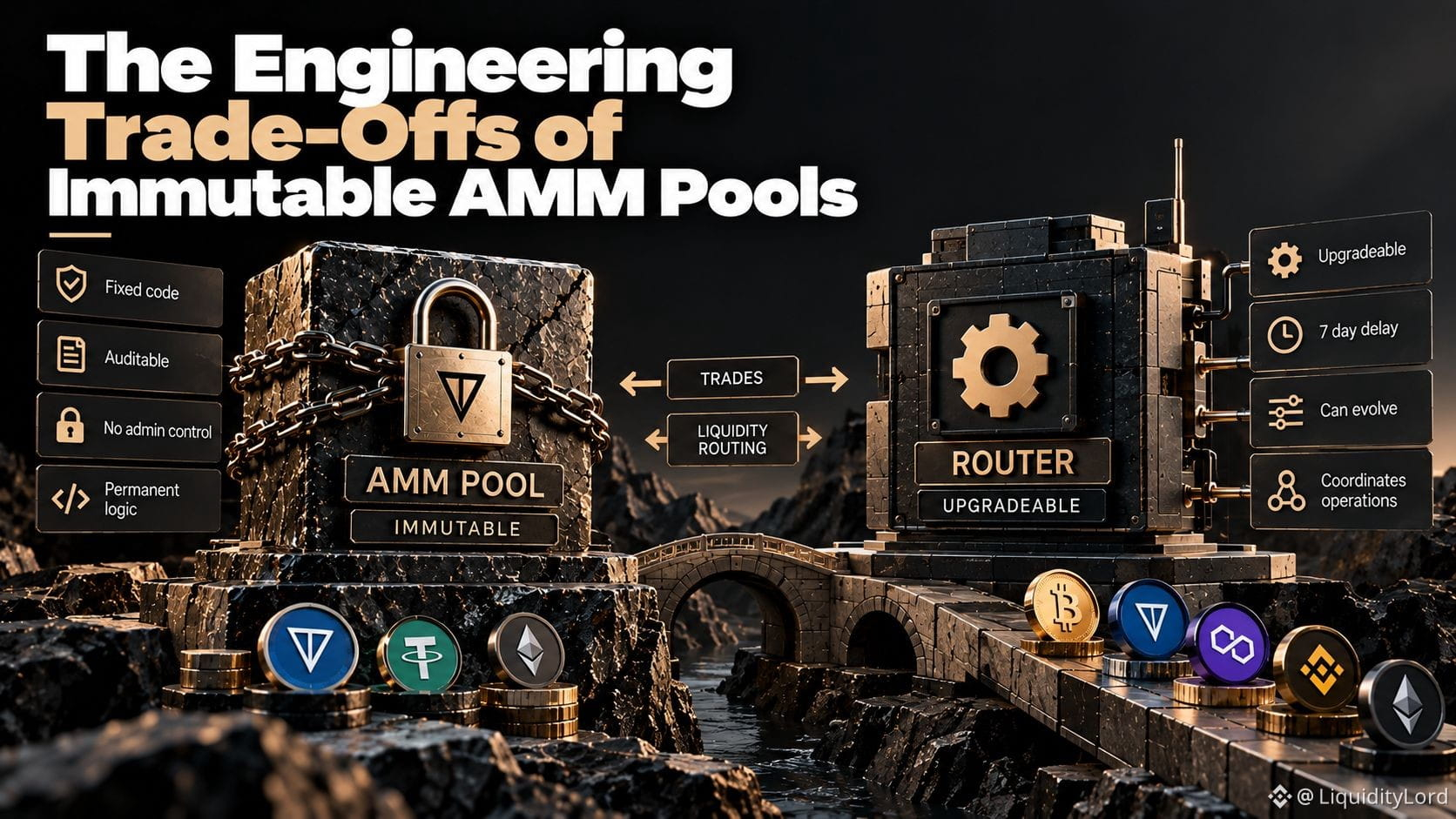
Immutability is an engineering trade: an immutable AMM pool removes the ability to replace deployed code, but also removes the ability to patch a bug inside that pool. STONfi uses this split: Pool contracts are immutable, while a separate Router remains upgradeable.
🔒 WHAT IMMUTABILITY REMOVES
An upgradeable contract can redirect execution to new implementation code. That flexibility helps teams fix bugs, but creates upgrade-authority risk.
With an immutable pool, deployed bytecode stays fixed. There is no implementation pointer to replace and no admin who can rewrite the pool's core logic.
The benefit is a fixed attack surface:
- AMM logic can be audited against one permanent artifact.
-A future implementation cannot silently replace that code.
⚠ THE COST DOES NOT DISAPPEAR
If immutable code contains a bug, the team cannot patch that exact pool. A new pool must be deployed, while the old one remains on-chain. Liquidity and trading activity then have to migrate voluntarily.
Immutability reduces future upgrade risk, but makes discovered bugs harder to repair.
STONfi separates responsibilities: the Pool keeps AMM logic and reserves under fixed code, while the Router coordinates operations and can evolve.
⏱ FLEXIBILITY WITH BOUNDARIES
Some parameters can remain configurable without making the entire contract upgradeable. The article uses fees as the example: the original pool code can allow a bounded fee change without changing its logic.
Router upgrades are delayed by seven days. This does not make a malicious upgrade impossible; it creates time to react.
The key question is not “immutable or upgradeable?” It is which component has the largest blast radius, what needs to change, and what protections surround that change?
Not investment advice - research on your own! 🚀
$GRAM
Immutability is an engineering trade: an immutable AMM pool removes the ability to replace deployed code, but also removes the ability to patch a bug inside that pool. STONfi uses this split: Pool contracts are immutable, while a separate Router remains upgradeable.
🔒 WHAT IMMUTABILITY REMOVES
An upgradeable contract can redirect execution to new implementation code. That flexibility helps teams fix bugs, but creates upgrade-authority risk.
With an immutable pool, deployed bytecode stays fixed. There is no implementation pointer to replace and no admin who can rewrite the pool's core logic.
The benefit is a fixed attack surface:
- AMM logic can be audited against one permanent artifact.
-A future implementation cannot silently replace that code.
⚠ THE COST DOES NOT DISAPPEAR
If immutable code contains a bug, the team cannot patch that exact pool. A new pool must be deployed, while the old one remains on-chain. Liquidity and trading activity then have to migrate voluntarily.
Immutability reduces future upgrade risk, but makes discovered bugs harder to repair.
STONfi separates responsibilities: the Pool keeps AMM logic and reserves under fixed code, while the Router coordinates operations and can evolve.
⏱ FLEXIBILITY WITH BOUNDARIES
Some parameters can remain configurable without making the entire contract upgradeable. The article uses fees as the example: the original pool code can allow a bounded fee change without changing its logic.
Router upgrades are delayed by seven days. This does not make a malicious upgrade impossible; it creates time to react.
The key question is not “immutable or upgradeable?” It is which component has the largest blast radius, what needs to change, and what protections surround that change?
Not investment advice - research on your own! 🚀
$GRAM