🏦 Chainlink CCIP 2.0 Just Changed What a Cross-Chain Transaction Can Prove...
CCIP 2.0 is now live — but the real game-changer isn't just moving assets between blockchains. It’s who gets to approve the move.
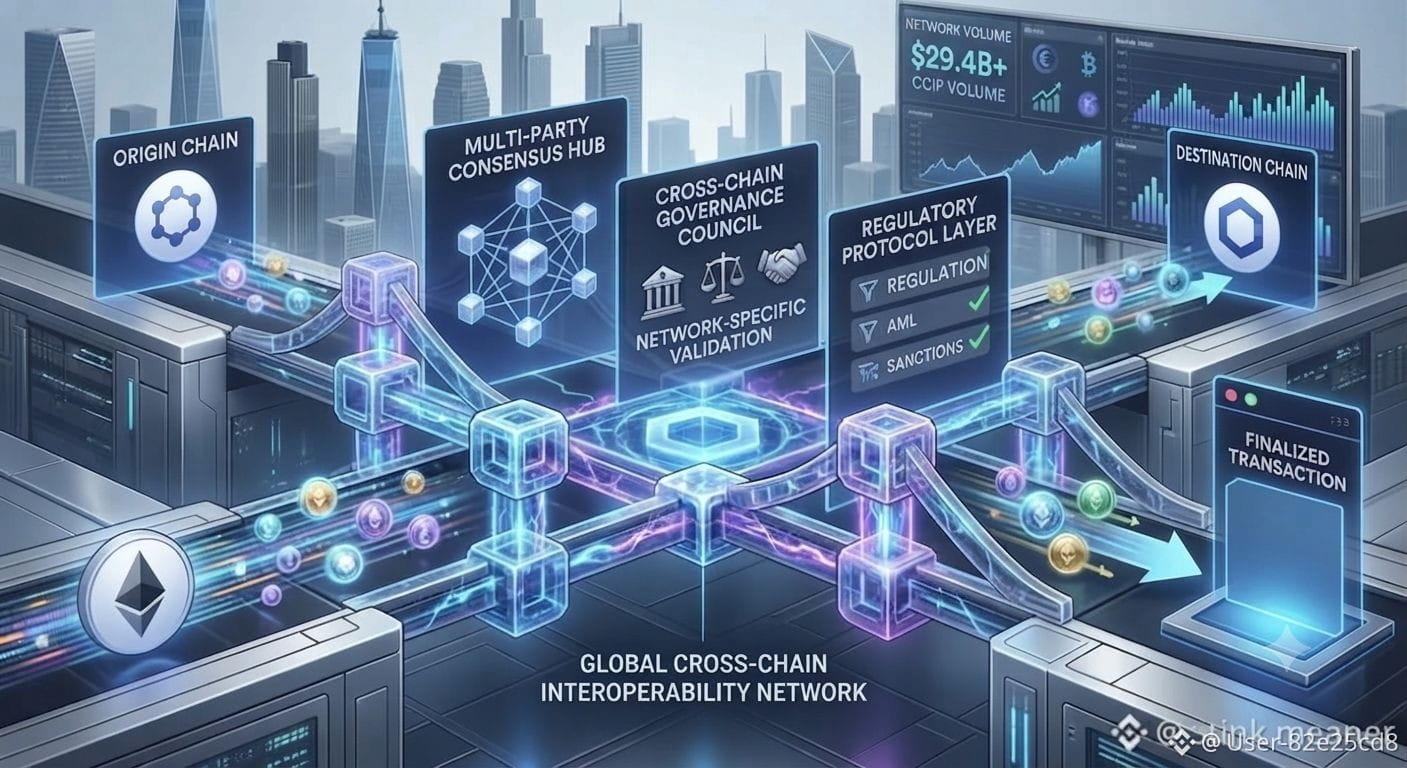
CCIP's default security layer relies on a 16-node committee. Now, institutions and asset issuers can add their own Cross-Chain Verifiers (CCVs) or trusted third-party verifiers, ensuring transactions get the required attestations before execution.
💡 Key Upgrades:
Rule-Based Transactions: You can impose rules like: "Anything above $1M requires an additional approval."
Programmable Compliance (ACE): Through Chainlink's ACE, KYC, AML, sanctions screening, allowlists, and transaction limits can follow an asset seamlessly across chains.
🔄 The Shift in Models:
❌ Old Model: Move the asset.
✅ New Model: Move the asset only when its rules are satisfied.
📈 The Big Picture:
With tokenized securities entering production workflows (like DTCC processing real trades) and CCIP already surpassing $24.1B+ in cumulative transfer volume, the big question for $LINK isn't just whether institutions are using Chainlink—it's whether that usage translates into meaningful token economics.#EarningsSeason #BitMineETHHoldingsTop6Million #OpenAIDelaysGPT6.1OverSafetyIssues #HackersDrainOver12.4MXRPFromDCENTWallets #BitgetHackerFailsToMoveStolenFunds
CCIP 2.0 is now live — but the real game-changer isn't just moving assets between blockchains. It’s who gets to approve the move.
CCIP's default security layer relies on a 16-node committee. Now, institutions and asset issuers can add their own Cross-Chain Verifiers (CCVs) or trusted third-party verifiers, ensuring transactions get the required attestations before execution.
💡 Key Upgrades:
Rule-Based Transactions: You can impose rules like: "Anything above $1M requires an additional approval."
Programmable Compliance (ACE): Through Chainlink's ACE, KYC, AML, sanctions screening, allowlists, and transaction limits can follow an asset seamlessly across chains.
🔄 The Shift in Models:
❌ Old Model: Move the asset.
✅ New Model: Move the asset only when its rules are satisfied.
📈 The Big Picture:
With tokenized securities entering production workflows (like DTCC processing real trades) and CCIP already surpassing $24.1B+ in cumulative transfer volume, the big question for $LINK isn't just whether institutions are using Chainlink—it's whether that usage translates into meaningful token economics.#EarningsSeason #BitMineETHHoldingsTop6Million #OpenAIDelaysGPT6.1OverSafetyIssues #HackersDrainOver12.4MXRPFromDCENTWallets #BitgetHackerFailsToMoveStolenFunds