𝐖𝐡𝐞𝐫𝐞 𝐝𝐨𝐞𝐬 𝐚 𝐃𝐄𝐗 𝐠𝐞𝐭 𝐢𝐭𝐬 𝐩𝐫𝐢𝐜𝐞 𝐢𝐟 𝐭𝐡𝐞𝐫𝐞'𝐬 𝐧𝐨 𝐨𝐫𝐝𝐞𝐫 𝐛𝐨𝐨𝐤?
This is where DeFi starts to get interesting.
On a traditional exchange, buyers and sellers create the market by placing orders. A trade happens when those orders match.
A DEX like @ston_fi can take a completely different approach.
Instead of waiting for another trader to take the opposite side, the system uses liquidity pools and an Automated Market Maker (AMM) to facilitate swaps.
𝐇𝐞𝐫𝐞'𝐬 𝐰𝐡𝐚𝐭 𝐡𝐚𝐩𝐩𝐞𝐧𝐬:
➤ Liquidity providers deposit token pairs into a pool.
➤ Traders swap against that pool rather than directly against another trader.
➤ The pool's token balances change with every swap.
➤ The pricing mechanism uses those changing balances to determine the rate available for the next trade.
So when you see a price on a DEX, it's not simply someone saying:
"I'll sell at this price."
It's the result of liquidity, pool balances, and the protocol's pricing mechanism working together.
And this is why liquidity matters.
More available liquidity can generally help reduce the price impact of larger trades and improve execution.
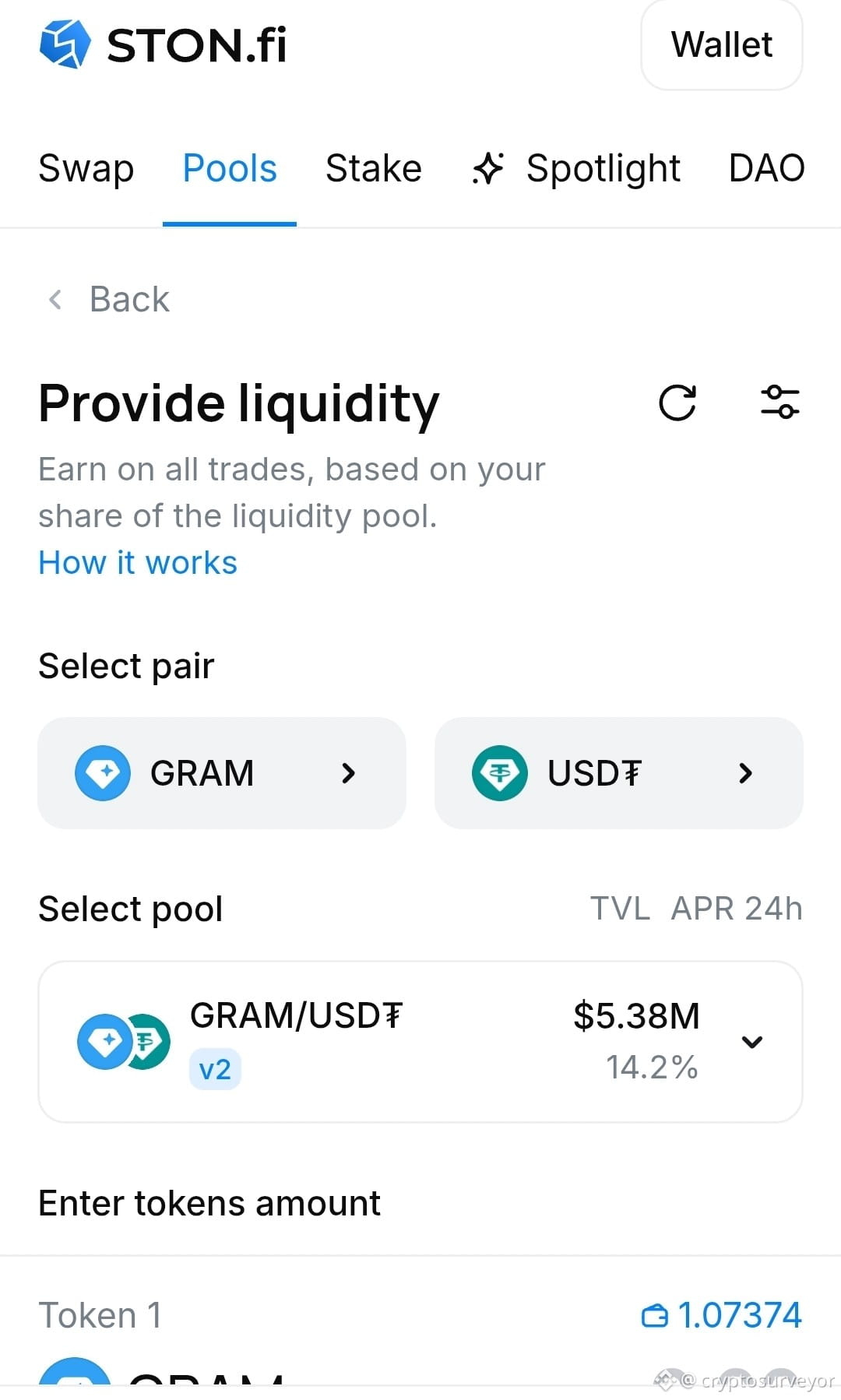
That's also why the screenshot above matters: the GRAM/USD₮ pool isn't just a place where assets sit. It's part of the infrastructure that makes decentralized trading possible.
𝐂𝐞𝐧𝐭𝐫𝐚𝐥𝐢𝐳𝐞𝐝 𝐞𝐱𝐜𝐡𝐚𝐧𝐠𝐞𝐬 𝐦𝐚𝐭𝐜𝐡 𝐨𝐫𝐝𝐞𝐫𝐬.
𝐃𝐄𝐗𝐬 𝐜𝐚𝐧 𝐮𝐬𝐞 𝐩𝐫𝐨𝐠𝐫𝐚𝐦𝐦𝐚𝐛𝐥𝐞 𝐥𝐢𝐪𝐮𝐢𝐝𝐢𝐭𝐲 𝐭𝐨 𝐦𝐚𝐤𝐞 𝐦𝐚𝐫𝐤𝐞𝐭𝐬 𝐰𝐨𝐫𝐤.
That's one of the fundamental ideas behind DeFi.
#DeFi #TON #STONfi #Blockchain #Web3
This is where DeFi starts to get interesting.
On a traditional exchange, buyers and sellers create the market by placing orders. A trade happens when those orders match.
A DEX like @ston_fi can take a completely different approach.
Instead of waiting for another trader to take the opposite side, the system uses liquidity pools and an Automated Market Maker (AMM) to facilitate swaps.
𝐇𝐞𝐫𝐞'𝐬 𝐰𝐡𝐚𝐭 𝐡𝐚𝐩𝐩𝐞𝐧𝐬:
➤ Liquidity providers deposit token pairs into a pool.
➤ Traders swap against that pool rather than directly against another trader.
➤ The pool's token balances change with every swap.
➤ The pricing mechanism uses those changing balances to determine the rate available for the next trade.
So when you see a price on a DEX, it's not simply someone saying:
"I'll sell at this price."
It's the result of liquidity, pool balances, and the protocol's pricing mechanism working together.
And this is why liquidity matters.
More available liquidity can generally help reduce the price impact of larger trades and improve execution.
That's also why the screenshot above matters: the GRAM/USD₮ pool isn't just a place where assets sit. It's part of the infrastructure that makes decentralized trading possible.
𝐂𝐞𝐧𝐭𝐫𝐚𝐥𝐢𝐳𝐞𝐝 𝐞𝐱𝐜𝐡𝐚𝐧𝐠𝐞𝐬 𝐦𝐚𝐭𝐜𝐡 𝐨𝐫𝐝𝐞𝐫𝐬.
𝐃𝐄𝐗𝐬 𝐜𝐚𝐧 𝐮𝐬𝐞 𝐩𝐫𝐨𝐠𝐫𝐚𝐦𝐦𝐚𝐛𝐥𝐞 𝐥𝐢𝐪𝐮𝐢𝐝𝐢𝐭𝐲 𝐭𝐨 𝐦𝐚𝐤𝐞 𝐦𝐚𝐫𝐤𝐞𝐭𝐬 𝐰𝐨𝐫𝐤.
That's one of the fundamental ideas behind DeFi.
#DeFi #TON #STONfi #Blockchain #Web3