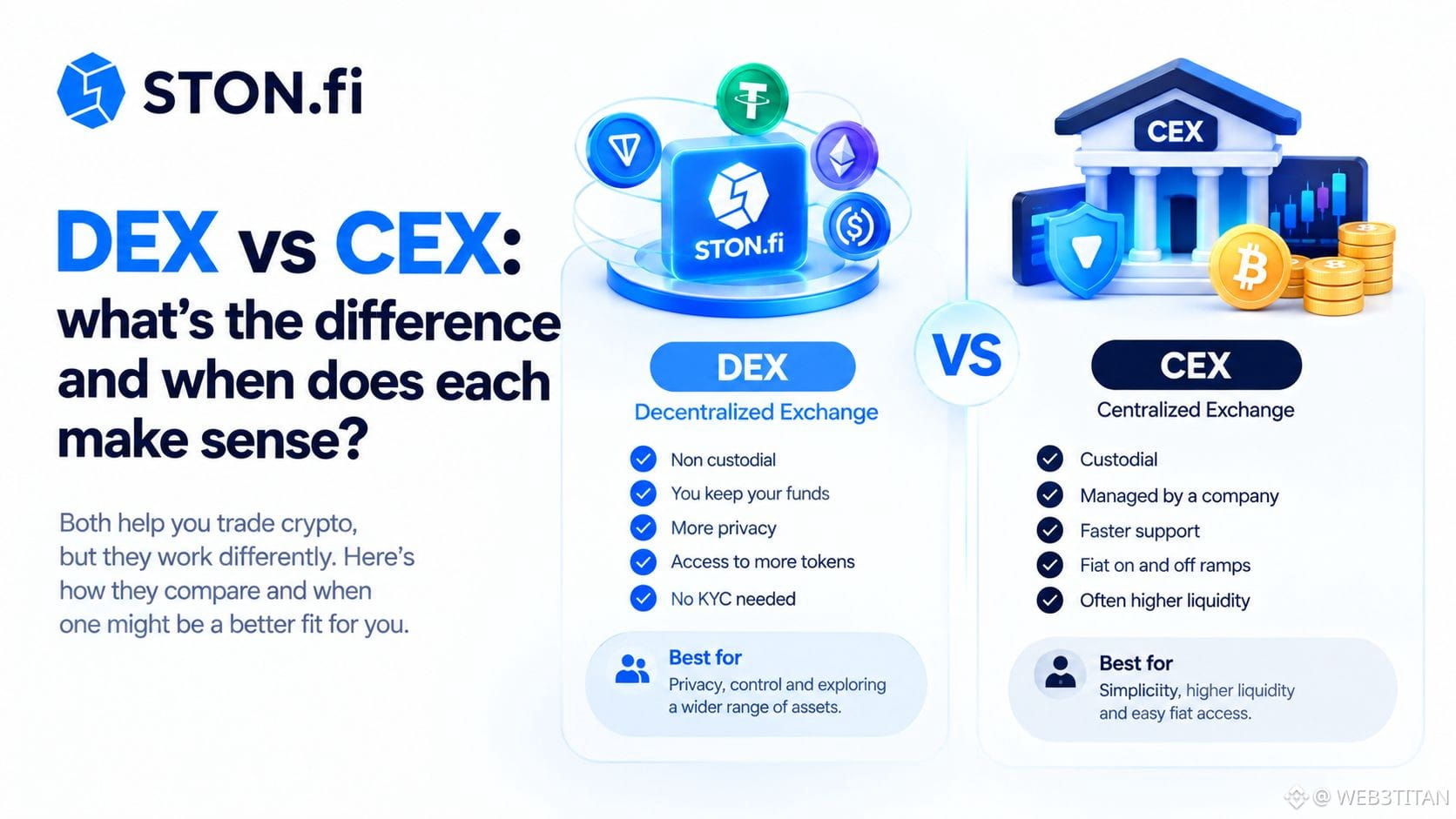
DEX vs CEX: What’s the Difference and When Does Each Make Sense?
When trading crypto, you'll usually use either a DEX or CEX. Both let you buy and sell digital assets, but they work differently.
WHAT IS A CEX?
A centralized exchange (CEX) is operated by a company that manages the platform, accounts, and trading infrastructure.
Users create accounts and may need to complete KYC, depending on the platform and jurisdiction.
The exchange can also custody your assets.
WHAT IS A DEX?
A decentralized exchange (DEX) lets you connect your own wallet and trade through on-chain liquidity.
You generally don't need a traditional exchange account, and the DEX doesn't take custody of your assets.
Transactions are executed through smart contracts.
KEY DIFFERENCES
CEX: Centralized trading, account-based services, and often access to deeper markets.
DEX: Self custody, on-chain execution, and decentralized liquidity.
CEXs involve exchange custody and infrastructure risk. DEXs involve wallet management, smart contract risk, blockchain fees, and transaction execution.
WHEN DOES EACH MAKE SENSE?
A CEX can make sense for a familiar interface, account-based services, or specific centralized markets.
A DEX can make sense when you want to trade directly from your wallet without giving custody to a centralized platform.
HOW A DEX SWAP WORKS
With STONfi:
Connect wallet → choose tokens → review quote → confirm swap → receive tokens.
The transaction is processed on-chain.
MY TAKE
Neither model is automatically better.
The key trade-offs are custody, access, execution, liquidity, fees, and risk.
Understanding them helps you choose what fits your needs.
$PUMP $GRAM
#PolymarketBankFailureBetsDrawFDICConcern
When trading crypto, you'll usually use either a DEX or CEX. Both let you buy and sell digital assets, but they work differently.
WHAT IS A CEX?
A centralized exchange (CEX) is operated by a company that manages the platform, accounts, and trading infrastructure.
Users create accounts and may need to complete KYC, depending on the platform and jurisdiction.
The exchange can also custody your assets.
WHAT IS A DEX?
A decentralized exchange (DEX) lets you connect your own wallet and trade through on-chain liquidity.
You generally don't need a traditional exchange account, and the DEX doesn't take custody of your assets.
Transactions are executed through smart contracts.
KEY DIFFERENCES
CEX: Centralized trading, account-based services, and often access to deeper markets.
DEX: Self custody, on-chain execution, and decentralized liquidity.
CEXs involve exchange custody and infrastructure risk. DEXs involve wallet management, smart contract risk, blockchain fees, and transaction execution.
WHEN DOES EACH MAKE SENSE?
A CEX can make sense for a familiar interface, account-based services, or specific centralized markets.
A DEX can make sense when you want to trade directly from your wallet without giving custody to a centralized platform.
HOW A DEX SWAP WORKS
With STONfi:
Connect wallet → choose tokens → review quote → confirm swap → receive tokens.
The transaction is processed on-chain.
MY TAKE
Neither model is automatically better.
The key trade-offs are custody, access, execution, liquidity, fees, and risk.
Understanding them helps you choose what fits your needs.
$PUMP $GRAM
#PolymarketBankFailureBetsDrawFDICConcern