
The Iran-linked regional risk has intensified even as oil is temporarily falling on truce hopes.
Saudi Arabia, Turkey and Pakistan are coordinating at the military level as Saudi Arabia faces further attacks, while Houthi forces have stepped up strikes. That raises the risk that the conflict broadens beyond shipping disruption into direct threats to regional energy infrastructure.
The immediate market reaction is mixed: Brent is down more than 1% today as traders price a higher chance of a U.S.–Iran truce and possible Hormuz reopening, but oil remains elevated after this week’s sharp move.
The bond market remains the bigger macro pressure point. The latest available move had the 10Y near 5.20% and the 30Y near 5.48%, both at multi-year highs, after stronger U.S. price data and higher oil pushed markets toward another Fed hike; futures were pricing roughly 71% odds of a hike next month.
Transmission:
If truce hopes hold: oil ↓ → inflation expectations ↓ → yields ↓ → DXY ↓ → relief for BTC and gold.
If attacks broaden or talks fail: oil ↑ → inflation/Fed-hike expectations ↑ → yields and DXY ↑ → pressure on BTC; gold may get safe-haven demand, but elevated real yields can cap the upside.
Crypto-specific: U.S. spot Bitcoin ETFs have returned to net inflows, with a reported $5.8B year-to-date outflow hole erased and the year turning to roughly $800M net inflows, which is a constructive underlying demand signal if macro pressure eases.
Bottom line: the new risk is the regional-security escalation, not a confirmed Hormuz breakthrough. Oil’s decline is currently a diplomacy trade, while yields remain high enough that I would still treat BTC and gold rallies as needing confirmation from a sustained fall in the 10Y.
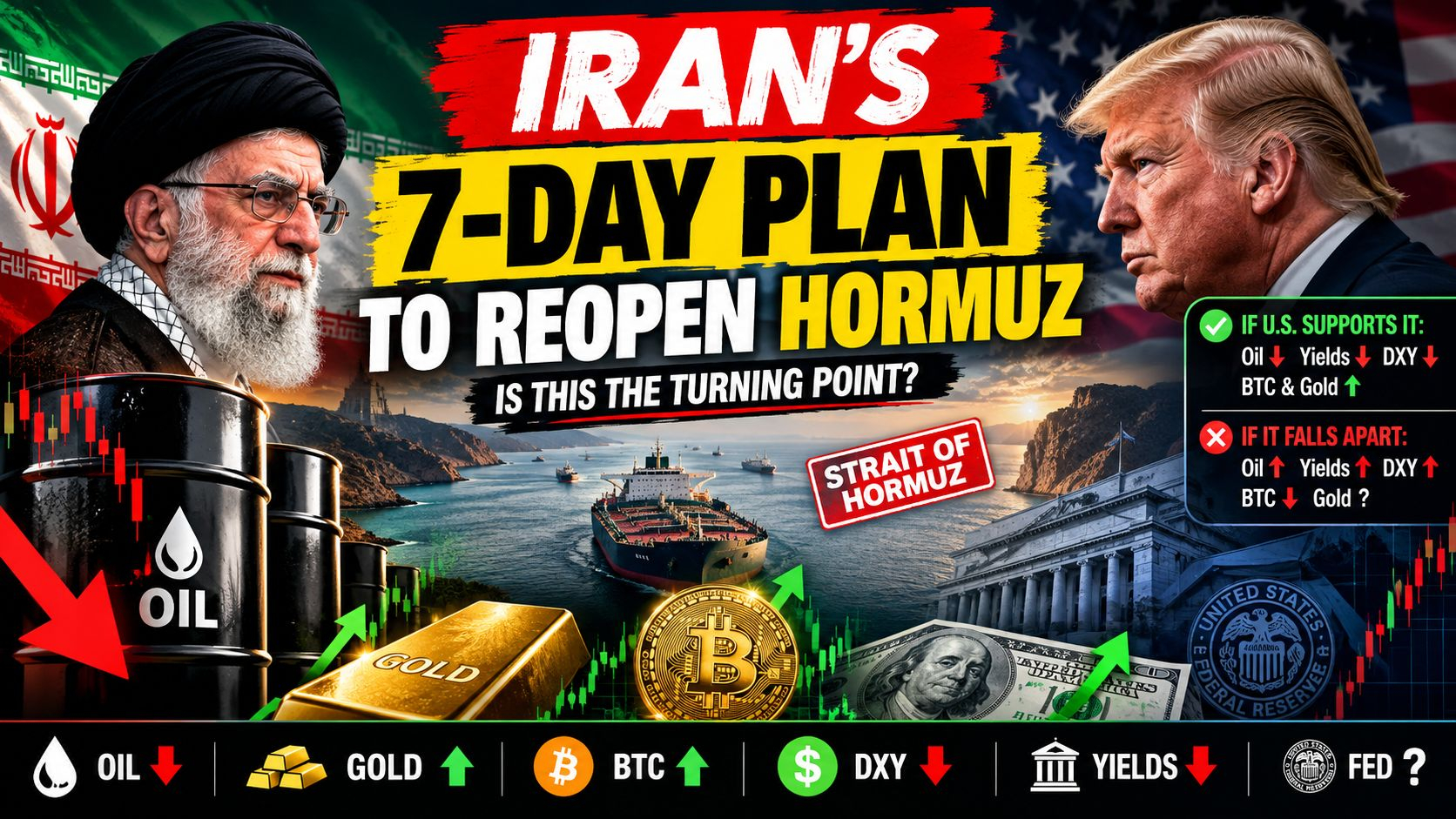
🚨 New development: Iran has now formally put forward a seven-day plan to reopen the Strait of Hormuz, conditional on Washington easing its military pressure and lifting the blockade, with nuclear talks to resume afterward. This is more concrete than the earlier, open-ended phased-talks framework, but it is still only a proposal—there is no U.S. acceptance or confirmed reopening yet.
The market is treating it as a conditional relief signal: Brent has eased toward roughly $105–106, while the prior shock pushed the 10-year Treasury yield near 5.20% and the 30-year toward 5.5%, with markets pricing roughly a 70% chance of another Fed hike in October. The dollar is near multi-month highs as higher yields and rate expectations support it.
Transmission:
If the plan gains U.S. backing: Hormuz reopening risk premium unwinds → oil ↓, inflation expectations and Treasury yields ↓, DXY ↓, and conditions improve for BTC and gold.
If Washington rejects it or attacks continue: oil can rebound sharply, reinforcing Fed-hike/yield/DXY pressure; BTC would remain vulnerable, while gold could receive safe-haven demand but still face resistance from high real yields.
Current read: this is a tradable headline, not confirmation. The clean bullish confirmation would be official U.S. acceptance, sustained tanker traffic through Hormuz, Brent breaking lower, and the 10Y losing 5.15%. #Market_Update