
The bond market is sending a warning that Bitcoin and U.S. stocks haven't reacted to yet.
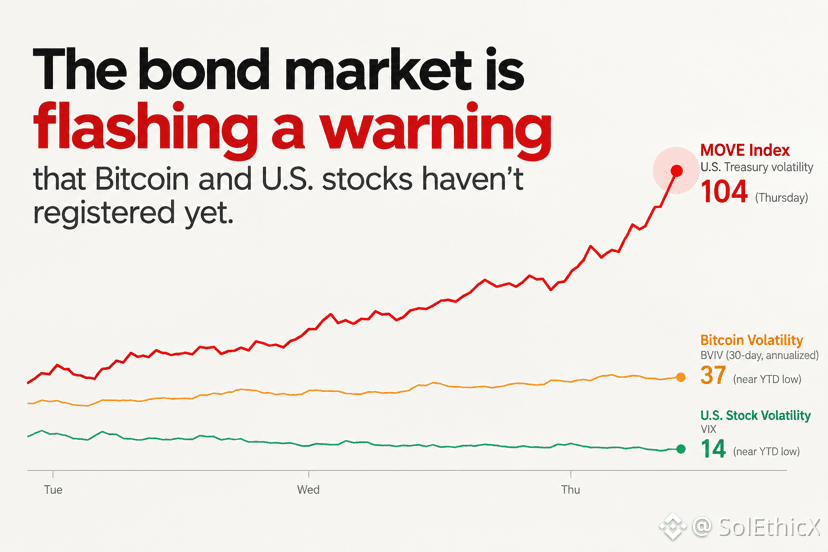
The MOVE Index, which tracks expected volatility in U.S. Treasuries, surged from around 80 on Tuesday to 104 on Thursday — its highest level since March.
Meanwhile, volatility expectations elsewhere remain unusually calm. Bitcoin's 30-day implied volatility (BVIV) sits near 37, close to its YTD low of 35, while the VIX is hovering around 14, also near its yearly low.
That creates a notable divergence:
Treasury volatility rising sharply → Bitcoin & stock volatility staying low.
For now, the resilience in BTC and equities suggests underlying strength. But elevated Treasury volatility matters because government bonds sit at the heart of global credit and liquidity. If bond-market stress persists, tighter financial conditions could eventually put pressure on risk assets.
The bond market may be moving first. The question is whether Bitcoin and stocks eventually follow.
$BTC
The MOVE Index, which tracks expected volatility in U.S. Treasuries, surged from around 80 on Tuesday to 104 on Thursday — its highest level since March.
Meanwhile, volatility expectations elsewhere remain unusually calm. Bitcoin's 30-day implied volatility (BVIV) sits near 37, close to its YTD low of 35, while the VIX is hovering around 14, also near its yearly low.
That creates a notable divergence:
Treasury volatility rising sharply → Bitcoin & stock volatility staying low.
For now, the resilience in BTC and equities suggests underlying strength. But elevated Treasury volatility matters because government bonds sit at the heart of global credit and liquidity. If bond-market stress persists, tighter financial conditions could eventually put pressure on risk assets.
The bond market may be moving first. The question is whether Bitcoin and stocks eventually follow.
$BTC