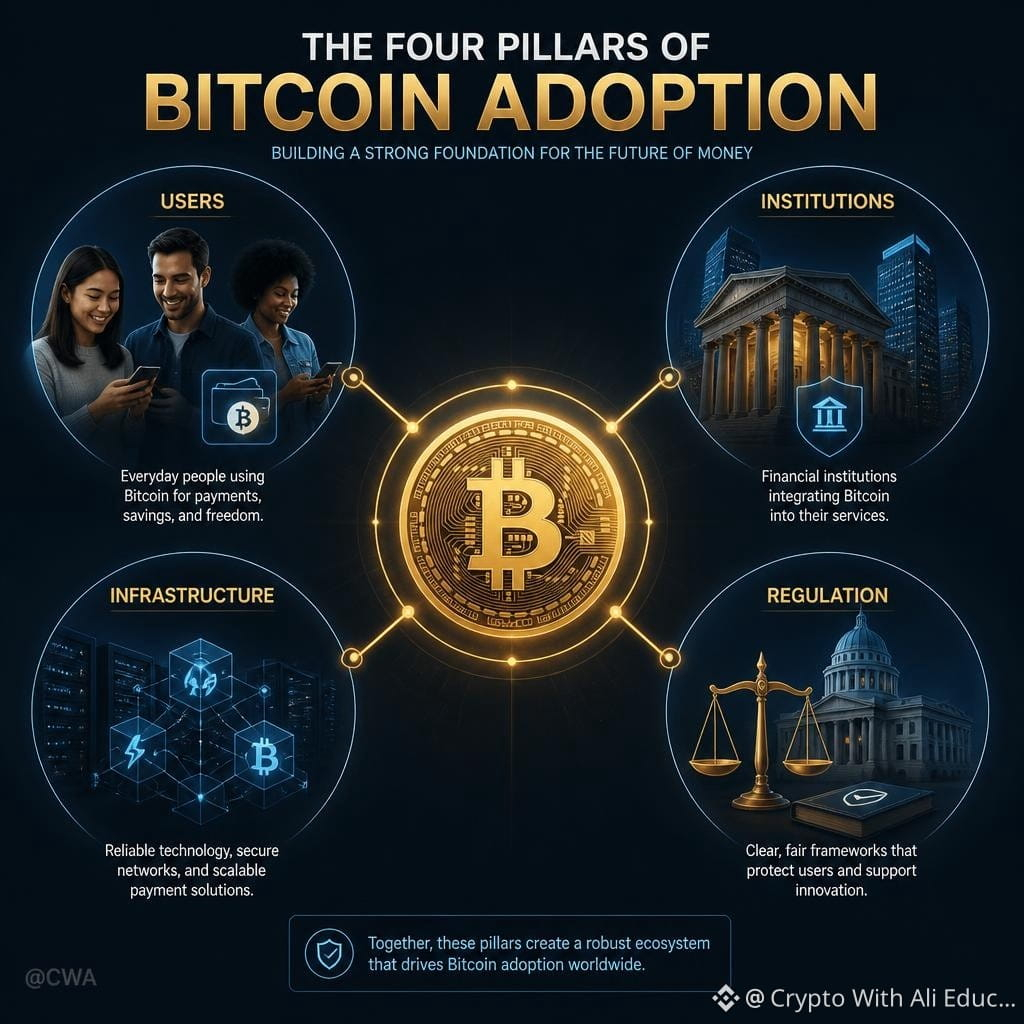
Bitcoin Adoption: What Actually Matters Beyond the Headlines?
Bitcoin adoption is often discussed through headlines:
“More institutions are entering.”
“More users are adopting Bitcoin.”
“Regulation is changing.”
But adoption is bigger than any single headline.
🔹 1. Users
At the most basic level, adoption means people actually use Bitcoin.
That can include holding it, sending it, receiving it, or using Bitcoin-based payment infrastructure where available.
More users can create broader network activity—but user growth alone doesn't tell the whole story.
🔹 2. Institutions
Institutional participation can connect Bitcoin with traditional financial infrastructure.
But “institutional interest” is not the same as widespread everyday adoption.
It's important to distinguish between investment exposure, financial products & actual use of the network.
🔹 3. Infrastructure
Adoption needs infrastructure.
Wallets, exchanges, payment systems, custody solutions, developer tools & reliable network access all affect how easily people can interact with Bitcoin.
A technology can have strong interest, but adoption becomes harder if the surrounding infrastructure is difficult to use.
🔹 4. Regulation
Regulation can influence how businesses & financial institutions interact with crypto.
Clear rules may provide a framework for participation, while different jurisdictions can create different conditions for adoption. Recent international work continues to focus on regulatory implementation, risk management & cross-border cooperation.
🧠 The Bigger Picture
Bitcoin adoption isn't just about price.
A better framework is:
Users + Institutions + Infrastructure + Regulation
Each represents a different part of the adoption story.
And one important distinction remains:
Interest is not the same as usage.
💬 Which factor do you think matters most for Bitcoin adoption: Institutions, Users, Infrastructure, or Regulation?
Educational content only — not financial advice.
#BTC
Bitcoin adoption is often discussed through headlines:
“More institutions are entering.”
“More users are adopting Bitcoin.”
“Regulation is changing.”
But adoption is bigger than any single headline.
🔹 1. Users
At the most basic level, adoption means people actually use Bitcoin.
That can include holding it, sending it, receiving it, or using Bitcoin-based payment infrastructure where available.
More users can create broader network activity—but user growth alone doesn't tell the whole story.
🔹 2. Institutions
Institutional participation can connect Bitcoin with traditional financial infrastructure.
But “institutional interest” is not the same as widespread everyday adoption.
It's important to distinguish between investment exposure, financial products & actual use of the network.
🔹 3. Infrastructure
Adoption needs infrastructure.
Wallets, exchanges, payment systems, custody solutions, developer tools & reliable network access all affect how easily people can interact with Bitcoin.
A technology can have strong interest, but adoption becomes harder if the surrounding infrastructure is difficult to use.
🔹 4. Regulation
Regulation can influence how businesses & financial institutions interact with crypto.
Clear rules may provide a framework for participation, while different jurisdictions can create different conditions for adoption. Recent international work continues to focus on regulatory implementation, risk management & cross-border cooperation.
🧠 The Bigger Picture
Bitcoin adoption isn't just about price.
A better framework is:
Users + Institutions + Infrastructure + Regulation
Each represents a different part of the adoption story.
And one important distinction remains:
Interest is not the same as usage.
💬 Which factor do you think matters most for Bitcoin adoption: Institutions, Users, Infrastructure, or Regulation?
Educational content only — not financial advice.
#BTC