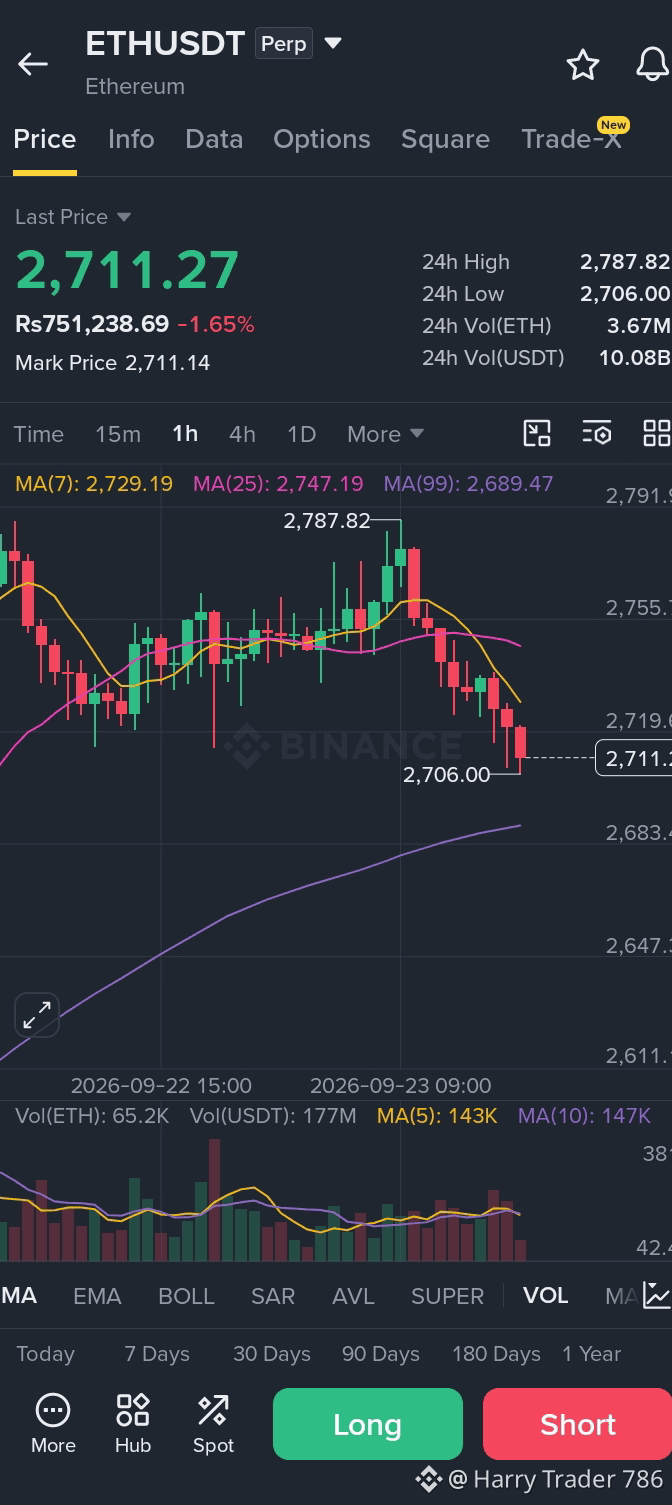
Capitalizing on a short trade or riding a downward wave requires careful risk management, as market conditions can shift rapidly—especially with Ethereum currently hovering near dynamic support around $2,650–$2,700 while institutional momentum tests major overhead resistance near $2,800–$3,000.
Since the optimal choice depends heavily on your risk tolerance, account size, and trading horizon, here are three practical ways to secure profits without completely exiting if momentum continues:
Trailing Stop-Loss: Lock in secured gains by raising (or lowering, if shorting) your stop-loss order behind key resistance or support levels.
Partial Profit-Taking (Scale Out): Take 30% to 50% of your position off the table to register concrete gains while letting a runner ride with a break-even stop.
Structured Profit Targets: Map out primary support zones (such as $2,500–$2,550) as tiered take-profit targets instead of waiting for a single reversal signal.
Actionable Next Steps
To refine this strategy to your exact setup, choose a direction or provide additional context:
Define Support Levels: Focus on charting key support/resistance zones based on current technical indicators (EMAs, RSI, order flow).
Develop a Scaling Model: Build a position-sizing plan for scaling out in tranches to balance risk and profit retention.
What are your entry price, stop-loss level, and current timeframe? Providing these details will help outline exact price levels for scaling out.
$ETH
$BTC
$ZEC
#AIStocksWhatNext
#21SharesLaunchesEuropesFirstZcashETP
Since the optimal choice depends heavily on your risk tolerance, account size, and trading horizon, here are three practical ways to secure profits without completely exiting if momentum continues:
Trailing Stop-Loss: Lock in secured gains by raising (or lowering, if shorting) your stop-loss order behind key resistance or support levels.
Partial Profit-Taking (Scale Out): Take 30% to 50% of your position off the table to register concrete gains while letting a runner ride with a break-even stop.
Structured Profit Targets: Map out primary support zones (such as $2,500–$2,550) as tiered take-profit targets instead of waiting for a single reversal signal.
Actionable Next Steps
To refine this strategy to your exact setup, choose a direction or provide additional context:
Define Support Levels: Focus on charting key support/resistance zones based on current technical indicators (EMAs, RSI, order flow).
Develop a Scaling Model: Build a position-sizing plan for scaling out in tranches to balance risk and profit retention.
What are your entry price, stop-loss level, and current timeframe? Providing these details will help outline exact price levels for scaling out.
$ETH
$BTC
$ZEC
#AIStocksWhatNext
#21SharesLaunchesEuropesFirstZcashETP