


On Friday, the Bank of Japan lifted its policy rate a quarter point to 1.25%, and the yen fell anyway. Nikkei then reported that the bank had sounded out market participants on where the dollar stood. Traders call that a rate check, and they often treat it as a forerunner of official currency buying. The dollar promptly dropped by more than one yen, touching the upper 156 range.
The hike held no surprise; investors had built it into prices well beforehand. The reaction was another story. At its weakest, the yen was down as much as 1.3%, which put the dollar in the 158 range, before the rate-check report dragged it back. Late in the New York Session, the pair sat near 156.80. Monday brought a firmer dollar again, with USD/JPY up 0.2% at 157.23.
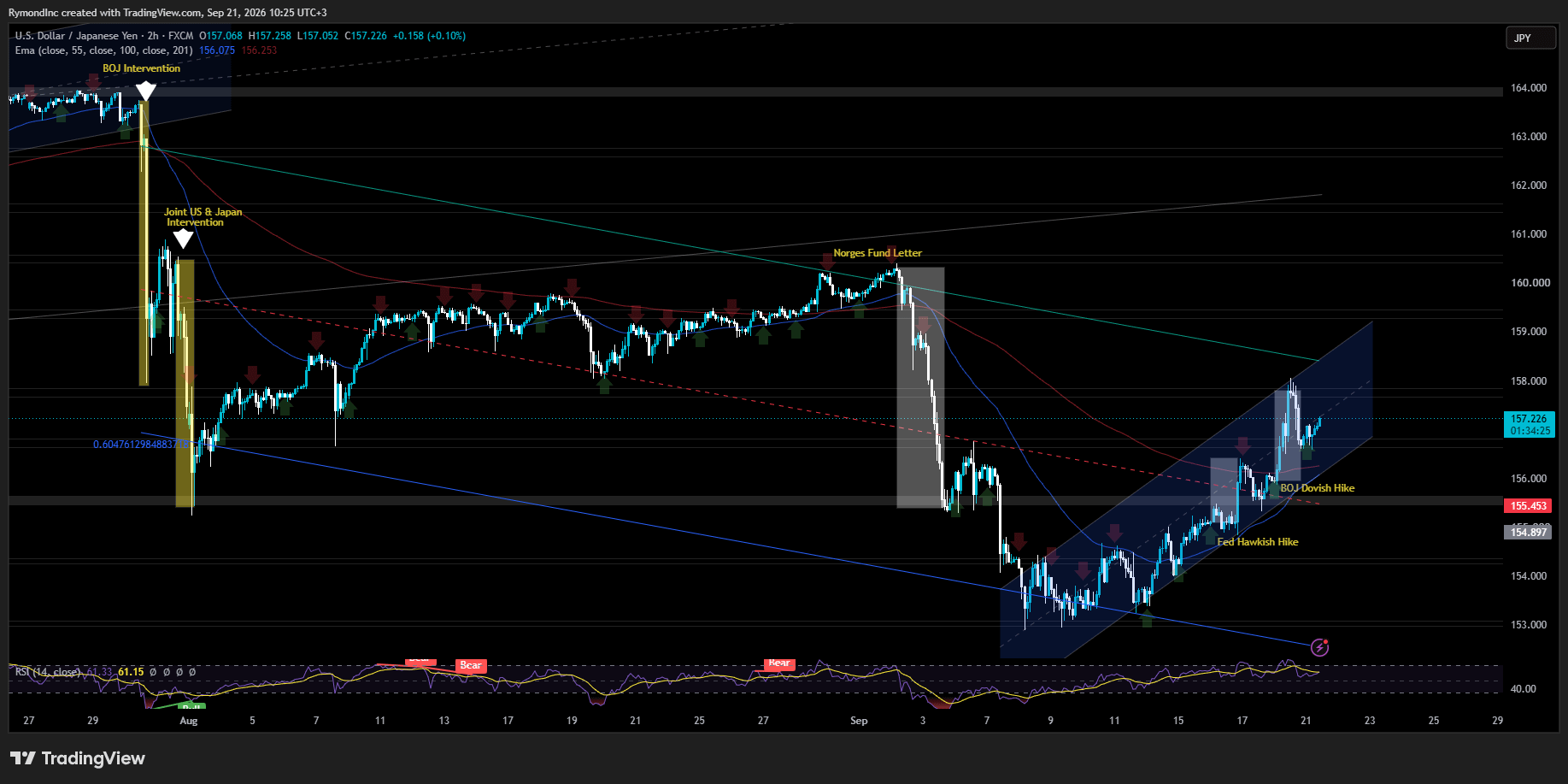
What, then, unsettled the market? Mostly the vote. The nine-member board split 7-2, with Toichiro Asada and Ayano Sato preferring to leave rates unchanged. Prime Minister Sanae Takaichi appointed both, and Asada had also opposed June's increase. Two objectors make it easier to doubt that Governor Kazuo Ueda can keep raising rates as quickly as some traders wanted.
Tone mattered too. Fed Chair Kevin Warsh had spoken firmly on inflation ahead of the Federal Reserve's unanimous quarter-point rise on 16 September, to a range of 3.75% to 4%, its first since 2023, and investors looked for something comparable in Tokyo. They didn't get it.
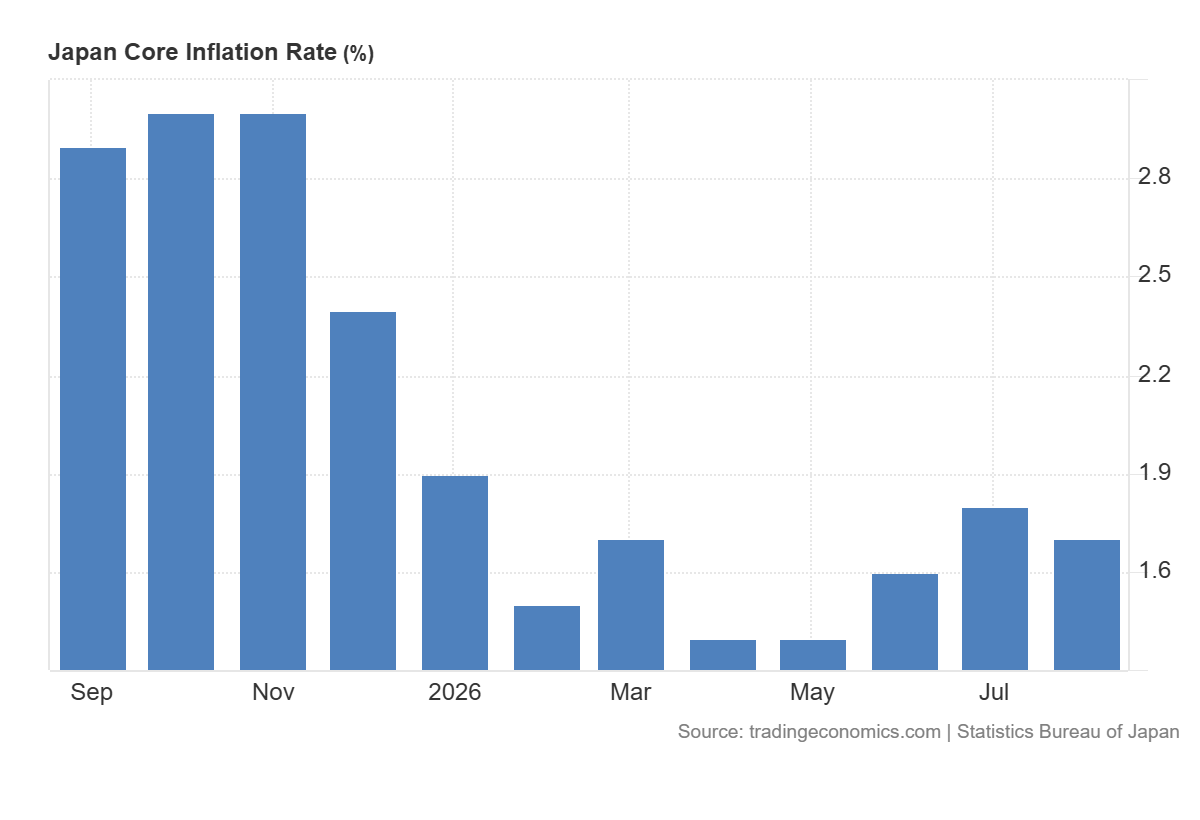
Ueda said back-to-back or oversized hikes would need very high inflation risk or a marked overshoot of the 2% goal, and prices are running below that: core consumer inflation was 1.7% in August, government data showed.
HSBC's Fred Neumann said the Fed's hawkish signal has made the BOJ's communication job harder, and he warned that investors may probe the bank's resolve again in the coming weeks and months.
None of this means the BOJ is standing still. At 1.25%, borrowing costs are the highest in 31 years, and with only three months between June's move and this one, the tightening tempo is the quickest since 1990. Swap-market pricing for the path ahead didn't budge after the meeting. Bloomberg reported that swaps see less than a 20% chance of a move in October and close to 90% for December.
Ueda described financial conditions as accommodative but firming with each increase. In remarks translated by Reuters, he said it was "important to avoid financial conditions from tightening too much", and he cautioned that overly fast hikes could jolt asset prices.
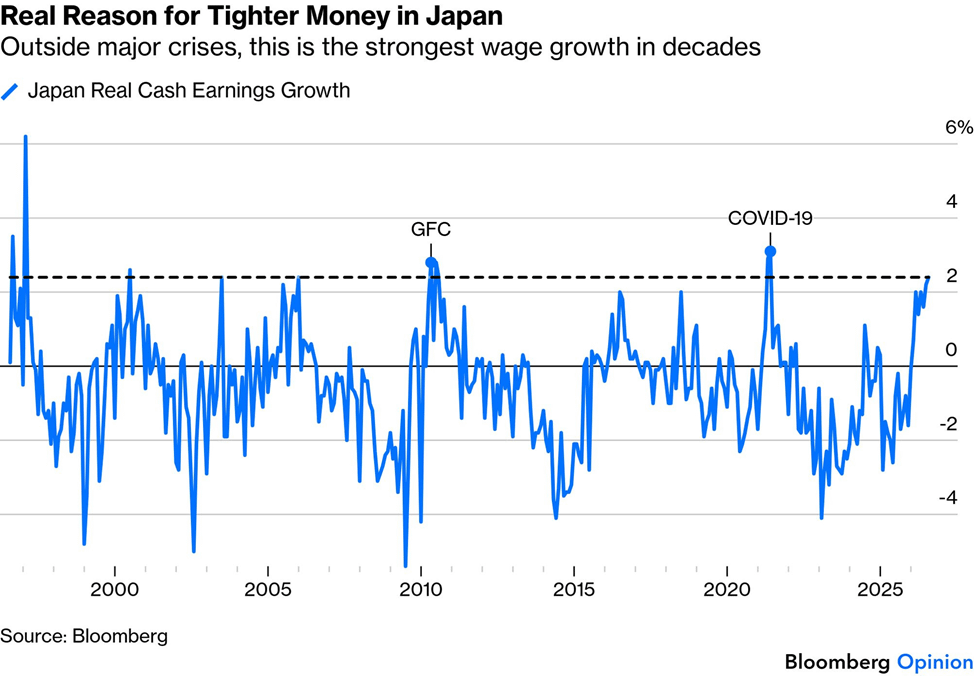
Wage growth supplies the bank's main argument for continuing. Labour ministry figures show real pay rose 2.4% in July, the strongest reading since May 2021 and a seventh straight monthly gain, while nominal pay climbed 4.7%, the biggest rise since 1997. The BOJ wants that run to continue and would rather not stifle it with a badly timed hike.
A currency that sinks after a rate hike, the reverse of the textbook reaction, probably alarmed officials who fear disorderly swings. The BOJ carries out rate checks for the Finance Ministry, which sets currency policy.
Japan’s yen-intervention playbook typically escalates through four stages:
Verbal warnings over excessive moves; closer market monitoring
A “rate check” and threats of determined action
Actual intervention—MOF directing the BOJ to buy yen and sell dollars.
Traders weren't expecting one so soon. One currency-market source said the check arrived "without waiting for the yen to hit the 160 threshold" against the dollar, while a hedge-fund source said unease about genuine action by the BOJ and the government was building for the duration of the holiday.
The calendar raises the stakes. Silver Week began on Saturday, closing Japanese markets through Wednesday, and yen trading generally thins out over such breaks. Testing the waters beforehand was probably meant to discourage sellers. At points on Monday, the dollar slipped below 157.00 yen as traders worried that the BOJ might use the thin liquidity to step in.
Officials have followed through before. Tokyo and Washington bought yen together on 31 July, the first coordinated operation of its kind since 1998, after the currency had sunk to around 164 per dollar, its weakest in about four decades. The Finance Ministry says Japan spent a record ¥15.4 trillion between 30 July and 26 August.
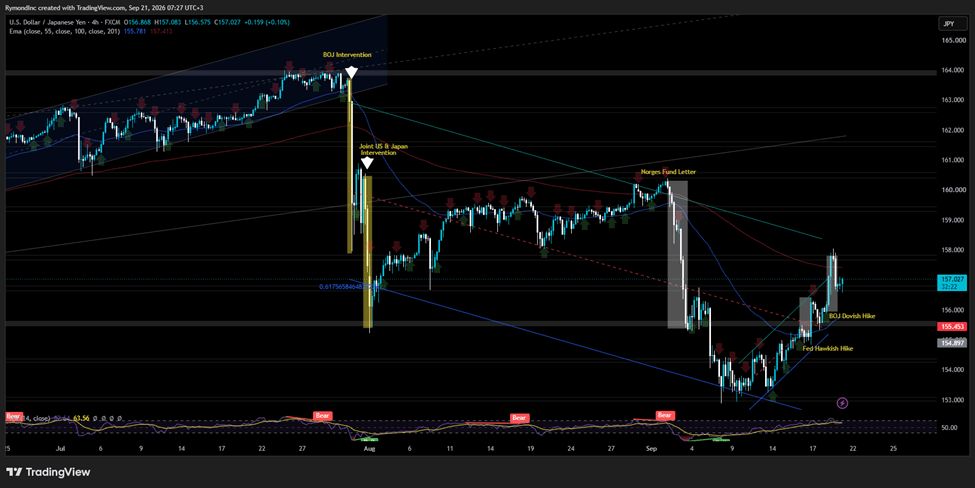
The month's opening weeks set the scene. The yen began September oversold, with speculators heavily short and the currency ready to jump. Norway's sovereign wealth fund then provided a spark. Its proposal to rebuild its bond benchmark would lift the yen's weighting to about 8% from roughly 5% while shrinking US Treasuries, and the yen rose to its strongest level in seven months. The two central-bank meetings wiped out a large share of that advance. The yen lost roughly 2% over the week, and the dollar posted its biggest weekly gain in three months.
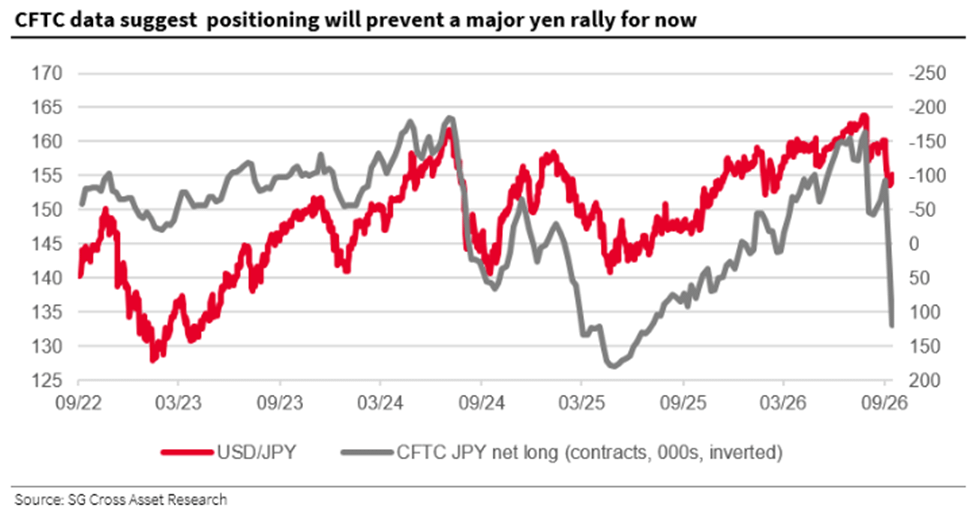
Positioning may now work against the yen, argues Societe Generale's Kit Juckes. Speculators have swung from short to long since the summer, he says, and that leaves the yen vulnerable if the dollar's advance accelerates.
CFTC data for last Tuesday revealed a net long position almost as large as the one held during the pair's dive to 140 in 2025. Juckes sees room for further liquidation, particularly among investors who doubt that US Treasury Secretary Scott Bessent's preferences alone can lift the currency.
Bloomberg's compilation of the CFTC figures shows the turn in detail. Hedge funds have turned bullish on the yen, something they hadn't done since July 2025, and only weeks after the joint intervention. During the week to 15 September, leveraged funds cleared out their yen shorts and began building longs worth about ¥251 billion ($1.6 billion).
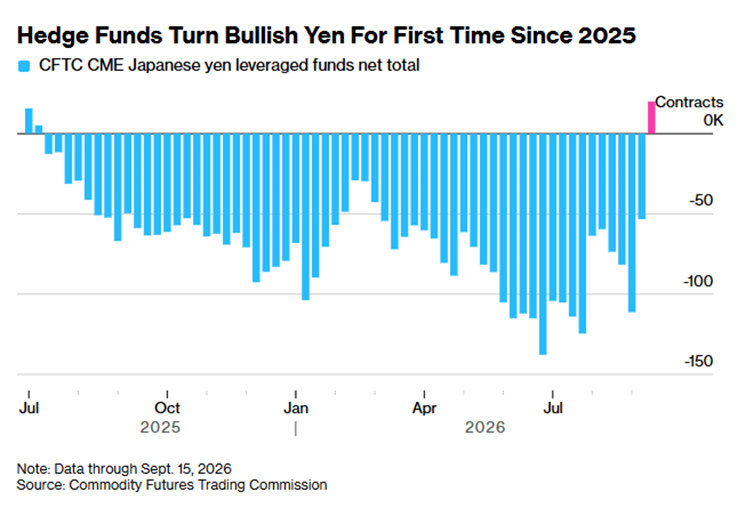
In contracts, that was a move from 53,255 net short to 20,069 net long, while asset managers added 54,179 to reach 54,821 net long. The shift landed just ahead of both central-bank meetings, and it leaves those funds exposed after the BOJ disappointed anyone hoping for a firmer promise of more hikes.
Other majors shifted as well. In the euro, leveraged funds hold a 51,355-contract net short after adding 4,974. Their sterling long fell by 21,663 to 18,698, while their Australian dollar long rose by 10,920 to 59,299, according to Bloomberg.
Asset managers trimmed their euro long by 906 to 275,565 and their sterling short by 17,119 to 88,959, with smaller changes in the New Zealand dollar, Canadian dollar, Swiss franc and Mexican peso.
Across speculative accounts, exposure to a stronger dollar fell as of 15 September to its lowest level since March. The figures matter because they capture sentiment in a market that trades about $9.6 trillion a day, according to the Bank for International Settlements.
Looking further ahead, the yen still looks set to appreciate gradually, though not smoothly, and that makes the officials' job harder. For the wider market, the threat of an abrupt end to cheap yen borrowing, the funding side of the carry trade, looks smaller than it did last week.
Attention now turns to the calendar. Tokyo reopens on Thursday, and with normal liquidity, the rate check faces its first real test. US Treasury Sec. Scott Bessent said he has “asymmetric information” on Japan’s plans to support the yen, giving him insight into what the BOJ and Japanese policymakers will do. “I am the house now,” he said, daring traders: “You can bet against me if you want.”
Well, the market is testing the “house,“ and is threatening to erase the intervention gains. The rate check was meant to scare speculative trades, and we expect the market will continue to test the new line in the sand and officials' resolve. The rate differential isn't helping either, as both the Federal Reserve and the Bank of Japan are on a hiking cycle.