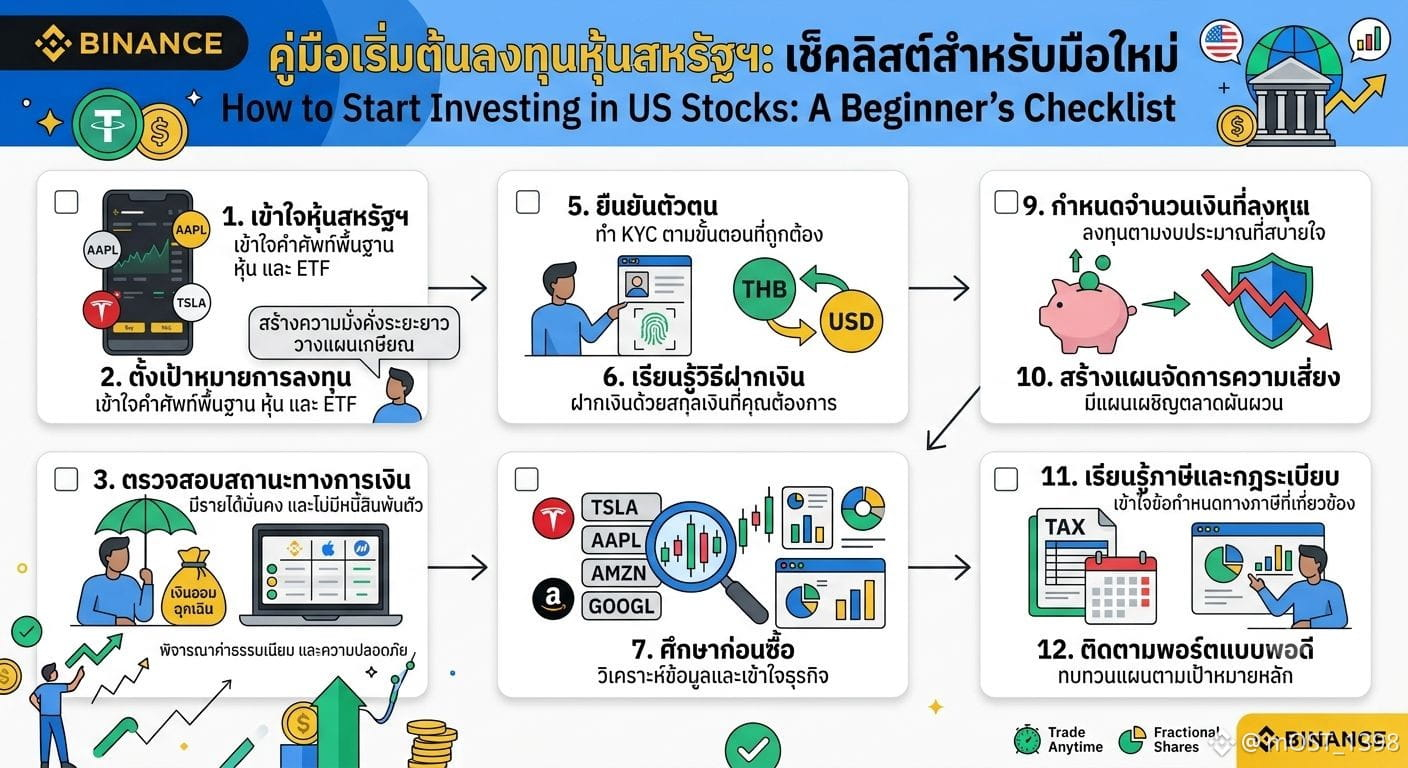

How to Start Investing in US Stocks: A Beginner’s Checklist
Investing in US stocks can be an interesting way to participate in the global economy and build long-term wealth. The US stock market includes many well-known companies across technology, healthcare, finance, consumer goods, energy, and other industries.
However, getting started should not be about simply buying a popular stock. Beginners should first understand how the market works, choose a suitable investment platform, manage risk, and create a clear investment plan.
This beginner’s checklist will walk you through the essential steps before making your first US stock investment.
1. Understand What US Stocks Are
US stocks represent ownership in companies listed on US stock exchanges, such as the New York Stock Exchange (NYSE) and Nasdaq.
When you buy shares of a company, you become a shareholder. Your investment may increase or decrease in value depending on the company’s performance, market conditions, investor expectations, and other factors.
US stocks include individual companies as well as Exchange-Traded Funds (ETFs), which hold a collection of different investments.
Before investing, learn some basic terms:
Stock: A share of ownership in a company.
ETF: A fund that holds a basket of assets and trades like a stock.
Ticker symbol: A short symbol used to identify a stock.
Market price: The current price at which a stock trades.
Dividend: A payment that some companies make to shareholders.
Capital gain: The profit that may occur when an investment is sold for more than its purchase price.
Understanding these terms will make the investment process much easier.
2. Set Your Investment Goal
Before opening a brokerage account, ask yourself why you want to invest.
Your goal might be:
Building long-term wealth
Saving for retirement
Creating an additional source of potential income
Learning about financial markets
Building a diversified investment portfolio
Your investment goal can influence how much risk you are willing and able to take.
For example, someone investing for a long-term goal may have a different approach from someone who needs the money within a few months.
A clear goal can also help prevent emotional decisions when the market becomes volatile.
3. Check Your Financial Situation
Investing should generally come after taking care of essential financial needs.
Before investing, consider whether you have:
A stable source of income
Emergency savings
Manageable debt
Money available for long-term investment
A budget that allows you to invest consistently
Never invest money that you may urgently need for rent, food, medical expenses, or other essential costs.
The stock market can rise and fall, and there is no guarantee that you will receive your original investment back.
4. Choose a Suitable Investment Platform
To buy US stocks, you normally need an investment platform or brokerage account that provides access to US markets.
When comparing platforms, check important factors such as:
Whether residents of your country are eligible
Available US stocks and ETFs
Trading fees and other charges
Currency conversion costs
Deposit and withdrawal methods
Account security
Identity verification requirements
Customer support
Tax documentation
Do not choose a platform simply because it has low trading fees. Consider the complete cost structure and whether the service is legally and practically available to you.
Always use the official website or application when opening an account and carefully verify the company before depositing money.
5. Complete Identity Verification
Most regulated financial platforms require identity verification before you can invest.
You may be asked to provide information such as:
Full name
Date of birth
Residential address
Government-issued identification
Tax information
Source-of-funds information
Make sure the information you provide is accurate and consistent with your official documents.
Never share your password, authentication codes, or private security information with another person.
6. Learn How to Fund Your Account
After your account is approved, you need to deposit money before purchasing investments.
Depending on your location and platform, funding may involve your local currency or US dollars.
Pay attention to:
Deposit fees
Currency exchange rates
Bank transfer fees
Minimum deposit requirements
Processing times
Withdrawal fees
Currency movements can also affect your investment results. If your income is in a currency other than USD, changes in the exchange rate may increase or reduce your overall return when measured in your home currency.
7. Research Before Buying
One of the most important rules for beginners is simple: understand what you are buying.
Before purchasing an individual stock, research the company and consider factors such as:
What products or services does the company provide?
How does the company make money?
Is revenue growing?
Is the company profitable?
How much debt does it have?
What are its major risks?
Who are its competitors?
Is the current valuation reasonable relative to your expectations?
Do not invest simply because a stock is trending on social media or because someone says that its price will definitely rise.
There are no guaranteed returns in the stock market.
8. Understand Diversification
Putting all your money into one company can expose you to significant company-specific risk.
Diversification means spreading investments across different companies, industries, or assets.
For beginners, diversified ETFs can be one way to gain exposure to a broad group of companies rather than relying entirely on the performance of a single stock.
However, diversification does not eliminate risk. Broad markets can still decline during periods of economic or financial stress.
9. Decide How Much to Invest
You do not need a large amount of money to begin learning about investing, depending on the platform and available investment products.
Consider starting with an amount that fits comfortably within your budget.
Some investors use a regular investment approach, putting a fixed amount into investments at regular intervals. This can help create consistency and reduce the temptation to make decisions based entirely on short-term market movements.
The important point is to choose an amount and frequency that you can maintain without putting your essential finances under pressure.
10. Create a Risk Management Plan
Risk management is an essential part of investing.
Before buying an investment, understand how much you could potentially lose.
Avoid using borrowed money to invest unless you fully understand the risks and costs involved. Leveraged products can magnify both gains and losses.
Also be careful with emotional decisions. When prices fall sharply, beginners may panic and sell. When prices rise rapidly, they may feel pressure to buy because of fear of missing out.
Having a written investment plan can help you stay focused on your long-term objectives.
11. Learn About Taxes and Regulations
Investing internationally can involve tax and regulatory considerations.
Depending on your country of residence and the type of investment, you may need to understand:
Tax on investment profits
Dividend withholding tax
Reporting requirements
Currency-related considerations
US tax forms or documentation
Local investment regulations
Tax rules can be complicated and may change. If you are unsure about your responsibilities, consider consulting a qualified tax professional or financial adviser familiar with cross-border investments.
12. Monitor Your Portfolio — But Don’t Obsess Over It
After making your first investment, continue learning.
Review your portfolio periodically and check whether your investments still match your goals and risk tolerance.
You do not necessarily need to watch stock prices every minute.
A long-term investor may benefit more from understanding company fundamentals, economic developments, portfolio allocation, and personal financial goals than from reacting to every short-term price movement.
Beginner’s Final Checklist
Before making your first US stock investment, make sure you can answer “yes” to these questions:
☐ I understand the basic principles of stock investing.
☐ I have a clear investment goal.
☐ I have considered my financial situation and emergency savings.
☐ I have selected a suitable and legitimate investment platform.
☐ I understand the platform’s fees.
☐ I have completed the required identity verification.
☐ I understand how deposits, withdrawals, and currency conversion work.
☐ I have researched the investment before buying it.
☐ I understand the risks of losing money.
☐ I have considered diversification.
☐ I understand the relevant tax and regulatory requirements.
☐ I have a plan for how much and how often I will invest.
Conclusion
Starting to invest in US stocks does not require knowing everything about the market on day one. The most important first step is building a strong foundation.
Learn the basics, understand your financial situation, choose an appropriate investment platform, research before buying, diversify when appropriate, and manage risk carefully.
Most importantly, remember that investing is different from gambling or trying to predict the market every day. A disciplined approach focuses on understanding investments and making decisions that fit your own financial goals, time horizon, and risk tolerance.
Use this checklist as a starting point for your investment journey, and continue learning as your experience grows.