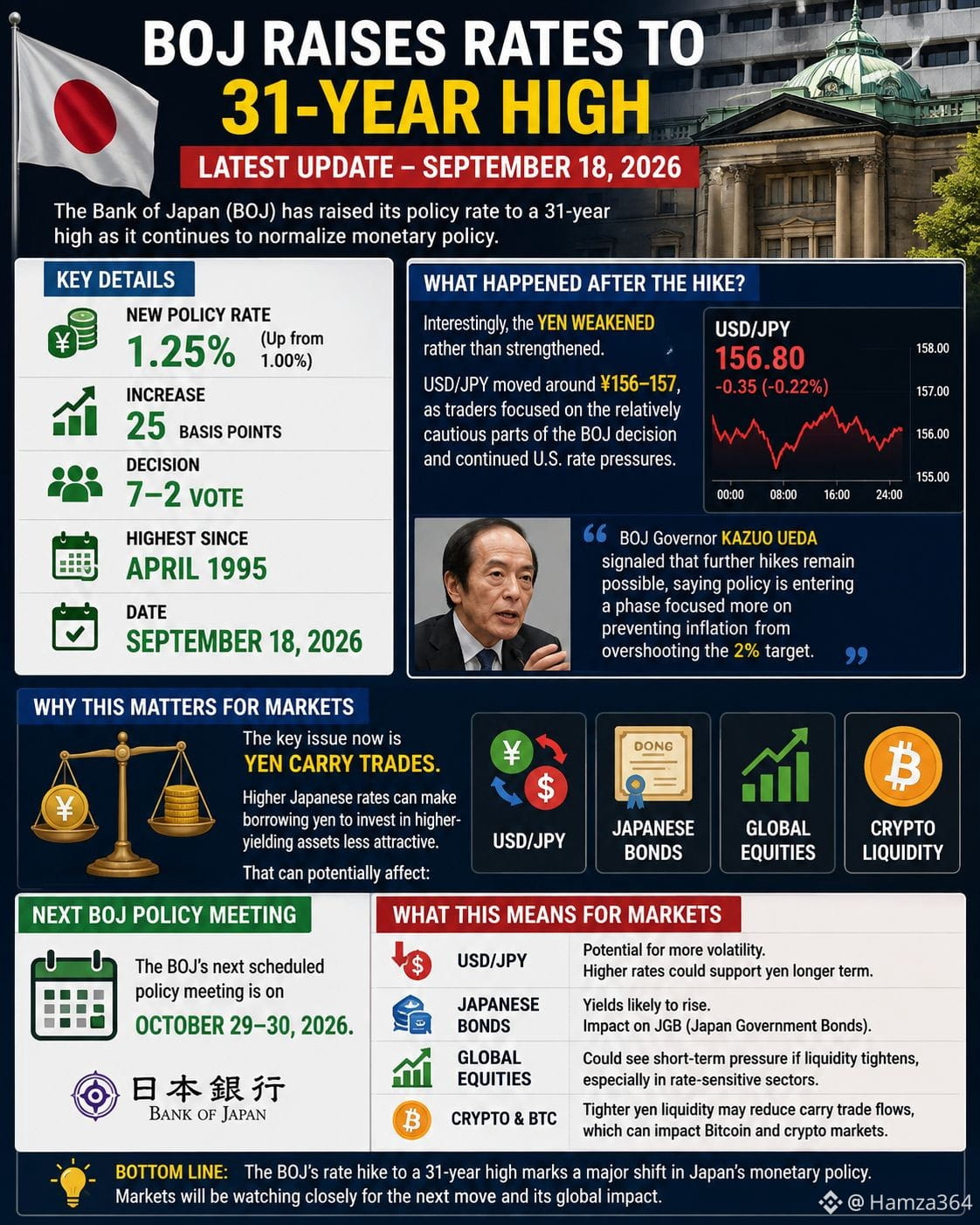
the Bank of Japan (BOJ) has just raised its policy rate to a 31-year high.
New rate: 1.25%, up from 1.00%
Increase: 25 basis points
Decision: 7–2 vote
Highest since: April 1995
Date: September 18, 2026
What happened after the hike?
Interestingly, the yen weakened rather than strengthened. USD/JPY moved around ¥156–157, as traders focused on the relatively cautious parts of the BOJ decision and continued U.S. rate pressures.
BOJ Governor Kazuo Ueda signaled that further hikes remain possible, saying policy is entering a phase focused more on preventing inflation from overshooting the 2% target.
Why this matters for markets
The key issue now is yen carry trades. Higher Japanese rates can make borrowing yen to invest in higher-yielding assets less attractive. That can potentially affect USD/JPY, Japanese bonds, global equities and crypto liquidity.
The BOJ's next scheduled policy meeting is October 29–30, 2026.
New rate: 1.25%, up from 1.00%
Increase: 25 basis points
Decision: 7–2 vote
Highest since: April 1995
Date: September 18, 2026
What happened after the hike?
Interestingly, the yen weakened rather than strengthened. USD/JPY moved around ¥156–157, as traders focused on the relatively cautious parts of the BOJ decision and continued U.S. rate pressures.
BOJ Governor Kazuo Ueda signaled that further hikes remain possible, saying policy is entering a phase focused more on preventing inflation from overshooting the 2% target.
Why this matters for markets
The key issue now is yen carry trades. Higher Japanese rates can make borrowing yen to invest in higher-yielding assets less attractive. That can potentially affect USD/JPY, Japanese bonds, global equities and crypto liquidity.
The BOJ's next scheduled policy meeting is October 29–30, 2026.