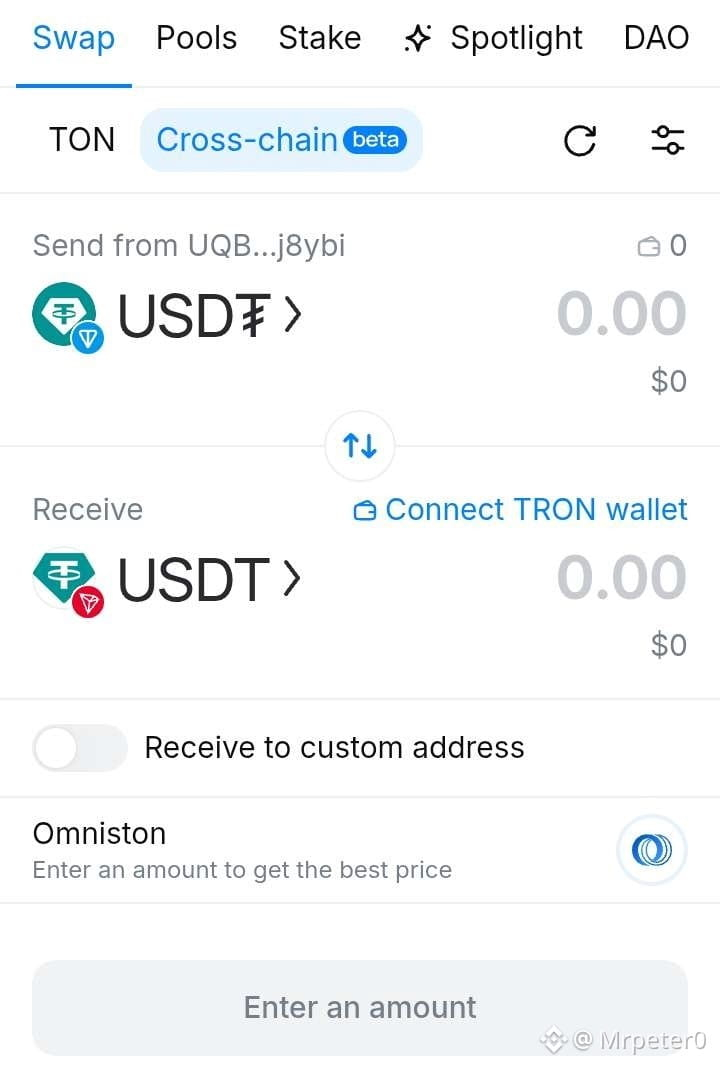
𝗪𝗛𝗘𝗡 𝗨𝗦𝗗𝗧 𝗖𝗔𝗡 𝗠𝗢𝗩𝗘 𝗕𝗘𝗧𝗪𝗘𝗘𝗡 𝗧𝗥𝗢𝗡 𝗔𝗡𝗗 𝗧𝗢𝗡, 𝗧𝗛𝗘 𝗘𝗫𝗣𝗘𝗥𝗜𝗘𝗡𝗖𝗘 𝗦𝗧𝗔𝗥𝗧𝗦 𝗧𝗢 𝗠𝗔𝗧𝗧𝗘𝗥
One thing I find interesting about cross chain DeFi is that users usually don’t care about the complexity happening underneath.
They just want to swap USDT, get the right asset, and move on.
That’s where Omniston comes into the picture.
By connecting liquidity and settlement across different ecosystems, Omniston is designed to make swaps between networks like TRON and TON feel less fragmented.
Instead of treating each chain like a completely separate market, the idea is to make liquidity more accessible across ecosystems.
For USDT users, that can mean a smoother path between TRON and TON without having to think about every piece of infrastructure working behind the scenes.
The important part isn’t just moving an asset from one chain to another.
It’s making that movement useful.
Better liquidity access can create more opportunities for traders, more efficient routes for applications, and stronger connections between ecosystems that would otherwise remain separated.
And this is where I think cross chain infrastructure becomes really important.
The future of DeFi won’t be defined only by how many chains exist. It will also depend on how easily those chains can communicate, exchange value, and share liquidity.
TRON has its own liquidity.
TON has its own liquidity.
Infrastructure like Omniston can help create the connection between them.
That’s how separate ecosystems start feeling like part of a much bigger on-chain economy.
@TRON DAO
@justinsuntron
#TRONEcoStar
One thing I find interesting about cross chain DeFi is that users usually don’t care about the complexity happening underneath.
They just want to swap USDT, get the right asset, and move on.
That’s where Omniston comes into the picture.
By connecting liquidity and settlement across different ecosystems, Omniston is designed to make swaps between networks like TRON and TON feel less fragmented.
Instead of treating each chain like a completely separate market, the idea is to make liquidity more accessible across ecosystems.
For USDT users, that can mean a smoother path between TRON and TON without having to think about every piece of infrastructure working behind the scenes.
The important part isn’t just moving an asset from one chain to another.
It’s making that movement useful.
Better liquidity access can create more opportunities for traders, more efficient routes for applications, and stronger connections between ecosystems that would otherwise remain separated.
And this is where I think cross chain infrastructure becomes really important.
The future of DeFi won’t be defined only by how many chains exist. It will also depend on how easily those chains can communicate, exchange value, and share liquidity.
TRON has its own liquidity.
TON has its own liquidity.
Infrastructure like Omniston can help create the connection between them.
That’s how separate ecosystems start feeling like part of a much bigger on-chain economy.
@TRON DAO
@justinsuntron
#TRONEcoStar