
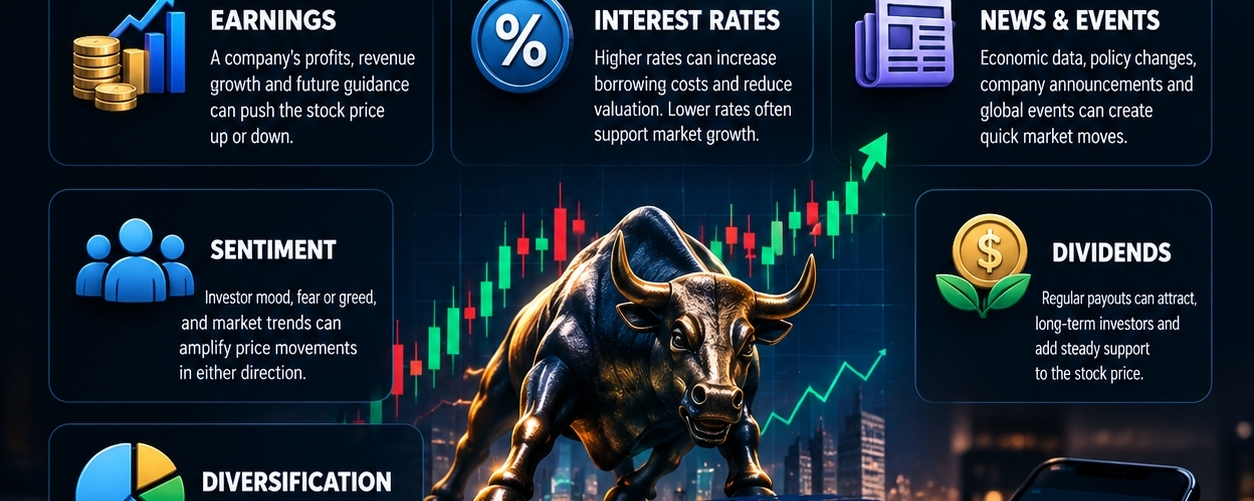

When people first enter the stock market, the first thing they usually look at is the price chart. Green candles feel exciting, red candles feel scary, and a sudden move can make everyone ask the same question: “Why did the price move so much?”
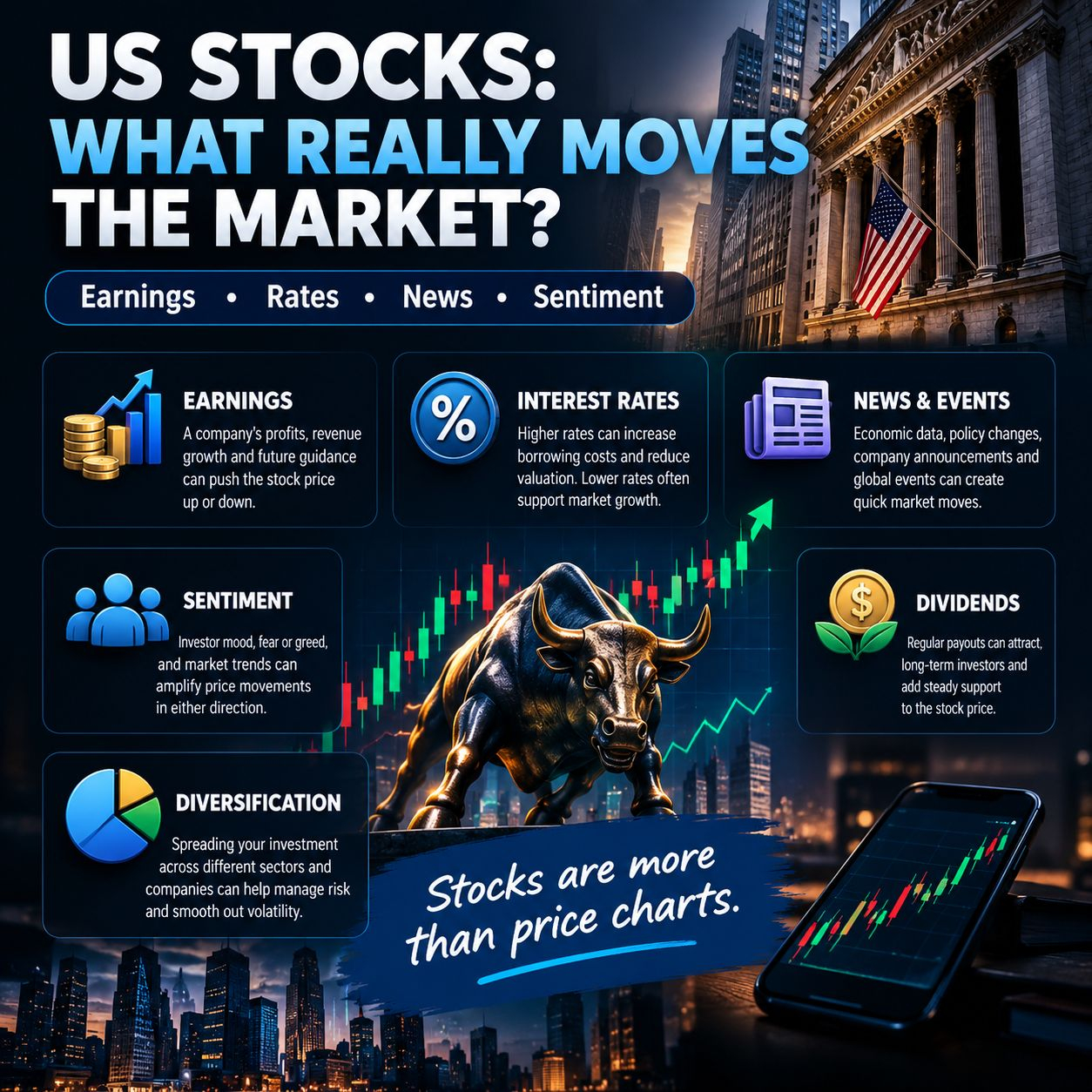
But a stock price is influenced by much more than a simple chart.
A company’s earnings, interest rates, economic data, market sentiment, company news, future expectations, and even global events can all influence how investors value a stock. That is why understanding the reasons behind price movements can be more useful than simply watching whether the chart is going up or down.
For beginners, this is also where the idea of BStocks becomes interesting.
1. Earnings are one of the biggest drivers
A company’s financial performance matters because investors are constantly trying to estimate what the business may be worth in the future.
Revenue growth, profits, margins, guidance, and expectations can all influence sentiment. Sometimes a company reports strong results but the stock still falls because investors were expecting something even better. On the other hand, a company can report results that look ordinary but the stock may rise if the market expected something worse.
So the important question is not only:
“Did the company make money?”
It is also:
“Did the company perform better or worse than the market expected?”
That difference between expectations and reality can create major price movements.
2. Interest rates matter
Interest rates are another major factor.
When borrowing costs rise, companies may face higher financing costs and investors may also change how they value future earnings. When rates move lower, risk assets can sometimes become more attractive.
This does not mean every stock will automatically rise when rates fall or fall when rates rise. Different companies and sectors can react differently.
That is why understanding the bigger economic picture is important before making conclusions from a single candle.
3. News can change the market quickly
A company announcement, economic report, regulatory decision, product launch, merger, geopolitical event, or unexpected headline can suddenly change investor expectations.
This is why two stocks in the same market can sometimes behave completely differently on the same day.
One company may receive positive news while another faces negative expectations.
For anyone exploring stocks through @Binance, learning to connect market news with price action can be a useful skill. Instead of simply asking “Is this stock going up?”, I think a better question is:
“What information is causing investors to change their expectations?”
4. Market sentiment is powerful
Markets are not driven by numbers alone.
Investor psychology matters too.
When confidence is high, investors may be willing to accept higher valuations. When fear spreads, even strong companies can experience selling pressure.
This is why market sentiment can sometimes create moves that look much bigger than the original news itself.
Fear can accelerate selling.
Optimism can accelerate buying.
And when both happen at the same time, volatility can increase quickly.
5. Diversification is worth understanding
Another important lesson for beginners is diversification.
Putting everything into one company means your portfolio can become heavily dependent on the performance of that single company. Spreading exposure across different companies or sectors can help reduce the impact of one individual position moving against you.
Diversification does not eliminate risk, but it can help manage concentration risk.
Why I think BStocks are interesting
What makes BStocks interesting to me is the possibility of bringing stock-related market exposure into an environment that many crypto users are already familiar with.
For someone who already follows financial markets, this creates an opportunity to learn about another major asset class instead of focusing only on crypto.
But I think the most important point is education.
Whether you are interested in technology companies, financial companies, consumer brands, energy, healthcare, or other sectors, the first step should be understanding what actually drives the asset you are looking at.
A chart can tell you what price has done.
Fundamental information can help explain why it may be moving.
And market sentiment can help explain how strongly investors are reacting.
That combination is much more interesting than simply looking at a green or red candle.
💬 Now I want to hear your opinion
If you had $100 to start learning about US stocks today, which type of company would you choose?
A. Technology
B. AI / Semiconductors
C. Financials
D. Healthcare
E. Consumer brands
And most importantly:
What is the ONE reason you would choose it?
Drop your choice and your reason in the comments. 👇
There is no “perfect” answer here. I’m more interested in seeing how different investors think about the same market.
Stocks are more than price charts. The real game is understanding what moves them.