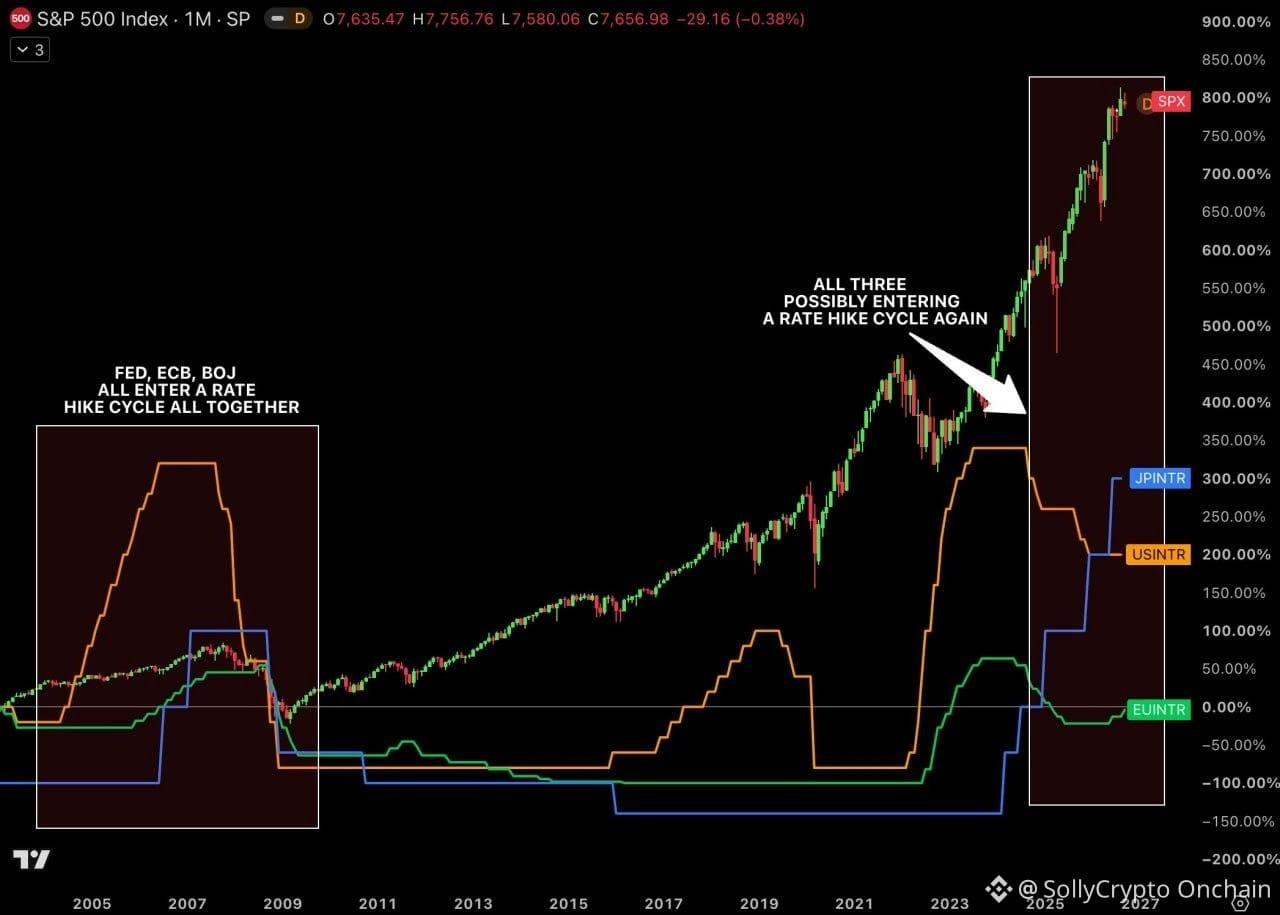
For the first time since 2006, the Fed, the ECB, and the Bank of Japan may raise interest rates simultaneously. The ECB already hiked on September 10, the Fed is 86% likely to follow suit on September 16, and the Bank of Japan is set to do the same on September 18.
⚠️ The driver behind this hawkish monetary policy is accelerating inflation, fueled by oil sitting above $100 and surging demand for AI chips and memory.
Japan is the largest holder of US Treasuries ($1.1T) and a prime provider of global market liquidity thanks to its ultra-low rates. However, Japan's era of negative rates is definitively over; more capital is staying onshore rather than flowing into global markets.
It’s premature to call this a rerun of the 2008 crisis, a true collapse requires a catalyst, and markets today are far better equipped to handle shocks than they were two decades ago.
💬 The primary risk remains protracted global inflation, which could force the Fed, the ECB, and the BoJ to kick off a fresh cycle of coordinated rate hikes. If that happens, the bull market will likely have to be put on hold until at least 2027.#FedSEPProjects2026RateAt4.1%
⚠️ The driver behind this hawkish monetary policy is accelerating inflation, fueled by oil sitting above $100 and surging demand for AI chips and memory.
Japan is the largest holder of US Treasuries ($1.1T) and a prime provider of global market liquidity thanks to its ultra-low rates. However, Japan's era of negative rates is definitively over; more capital is staying onshore rather than flowing into global markets.
It’s premature to call this a rerun of the 2008 crisis, a true collapse requires a catalyst, and markets today are far better equipped to handle shocks than they were two decades ago.
💬 The primary risk remains protracted global inflation, which could force the Fed, the ECB, and the BoJ to kick off a fresh cycle of coordinated rate hikes. If that happens, the bull market will likely have to be put on hold until at least 2027.#FedSEPProjects2026RateAt4.1%