
The Federal Reserve went three years without raising interest rates, and after Wednesday, the wait for the next one may not be nearly as long. The move lifted the federal funds rate to a range of 3.75% to 4%. Every policymaker on the committee backed it, a 12-0 vote, and Fed Chairman Kevin Warsh left no doubt about why, saying inflation "is too high and has been for too long."
Markets didn't take it well. Stocks slid on the news and Treasury yields moved higher, with all four major U.S. indexes closing the day lower. The benchmark 10-year yield pushed back above 5%, amid fears that maybe the Fed was still behind the curve on inflation even after Wednesday’s hike.
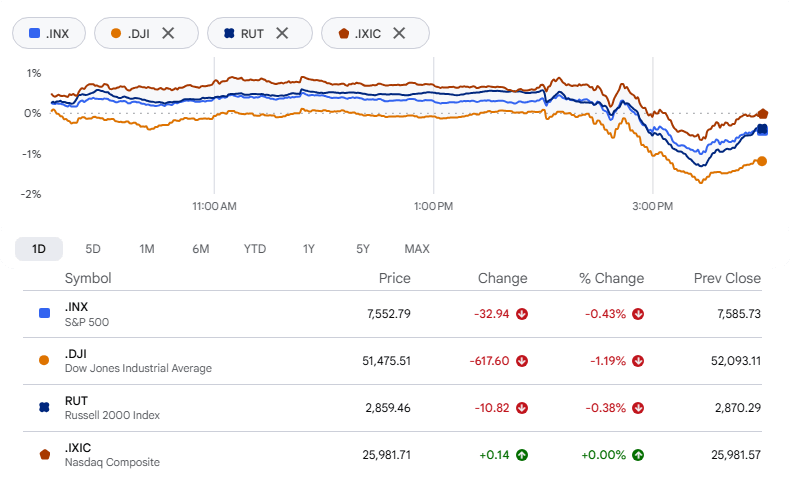
The Dow took the brunt of it, sinking 631.21 points, or 1.21%, as bank stocks dragged the blue-chip average down to 51,461.90. The S&P 500 slipped 0.45% to 7,551.81. The Nasdaq Composite finished essentially flat, at 25,978.42. Small caps didn't do much better, with the Russell 2000 closing at 2,859.46, off 0.4%. For a while, it looked like it could be a green day across the board. All four indexes were higher at some point in the session, before Warsh took the podium and sentiment turned.
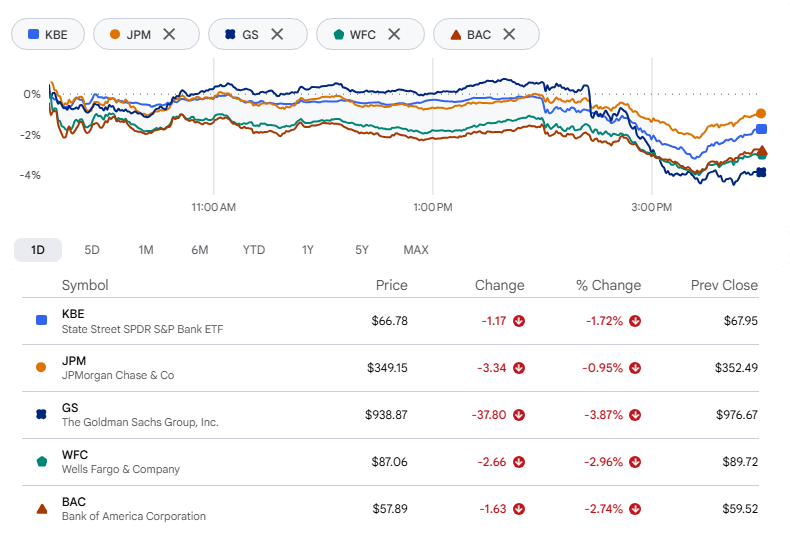
Financials had it worse. Big bank stocks logged their worst day since February, on fears that Wednesday's increase won't be the last one this year. The State Street SPDR S&P Bank ETF (KBE) shed 1.72%, its worst session since Feb. 27, when it dropped nearly 5%. JPMorgan Chase fell 1%. Goldman Sachs, Wells Fargo, Bank of America and Citigroup fared worse still, each down more than 3%.
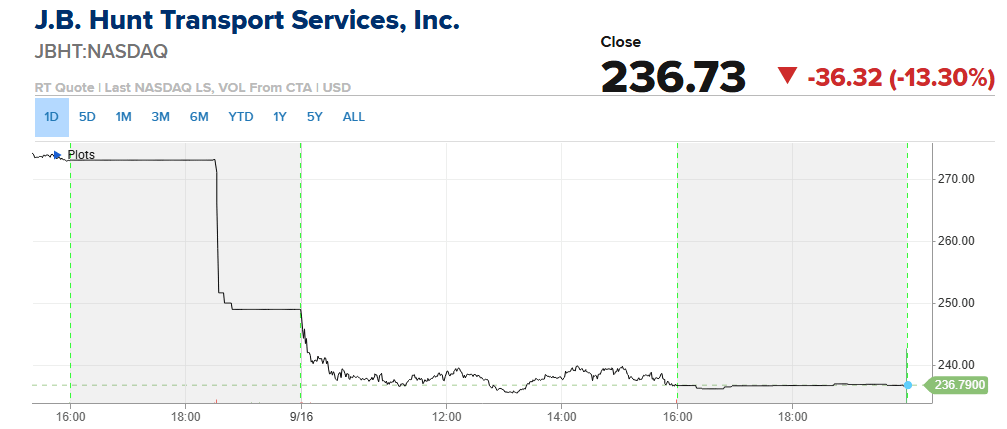
J.B. Hunt Transport Services (JBHT) delivered a warning investors didn't want to hear, and the stock fell more than 10% on it. J.B. Hunt management now says it expects third-quarter earnings to come in 5% to 10% lower than the prior quarter, as higher driver, fuel, and transport costs eat into results. CFO Brad Delco put it plainly: the company has seen "some of the most radical and abnormal swings in fuel prices we've ever seen." Diesel has been setting records at the pump too, averaging as much as $6.31 a gallon in recent days, according to AAA.
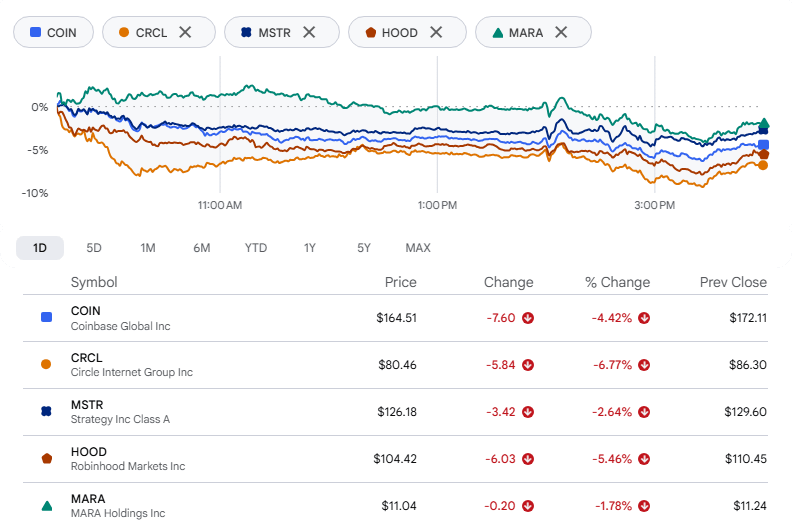
Bitcoin sold off too. Investors had been counting on the Senate to advance the Clarity Act, legislation meant to give the crypto industry clearer legal footing, and when that didn't happen, the disappointment showed up fast. Crypto-linked stocks all moved lower: Circle (CRCL) fell 6.77%, Robinhood (HOOD) 5.46%, Coinbase (COIN) 4.42%, Strategy (MSTR) 2.64% and MARA Holdings (MARA) 1.78%. It's a tough spot for the group: a hoped-for pillar of support gave way right as retail interest cools and higher rates squeeze liquidity across the market.
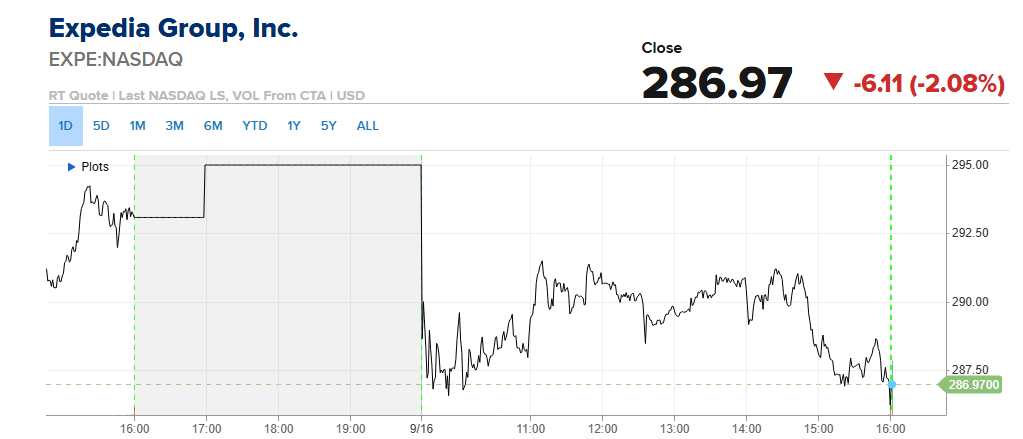
Expedia added to the day's losers, falling more than 2.5% after Morgan Stanley downgraded the online travel company to underweight. The bank's analysts pointed to a weak risk/reward profile, citing the company's exposure to a consumer that may be running out of steam.
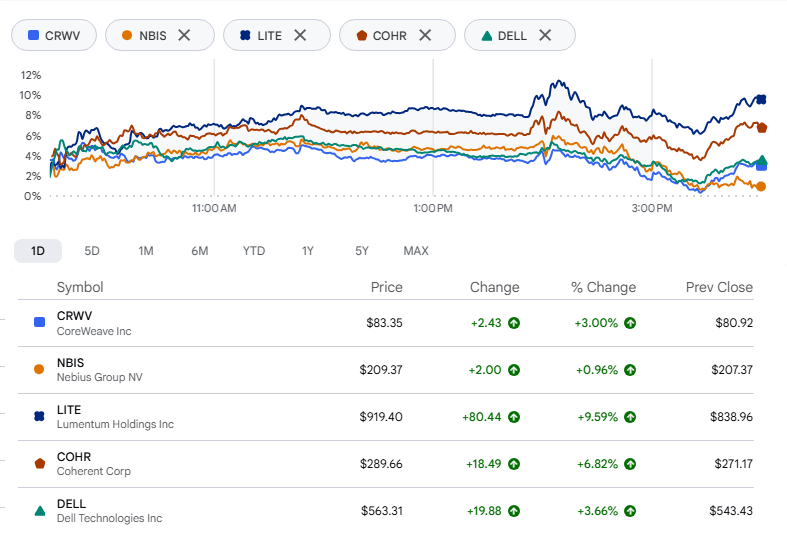
There was a bright spot, though. Shares tied to the AI infrastructure buildout jumped after several rough sessions in a row. CoreWeave climbed more than 3%, and Nebius added nearly 1%, both snapping five-day losing streaks. Photonics names Lumentum and Coherent rose 9% and 6%, respectively, and Dell advanced nearly 4%.
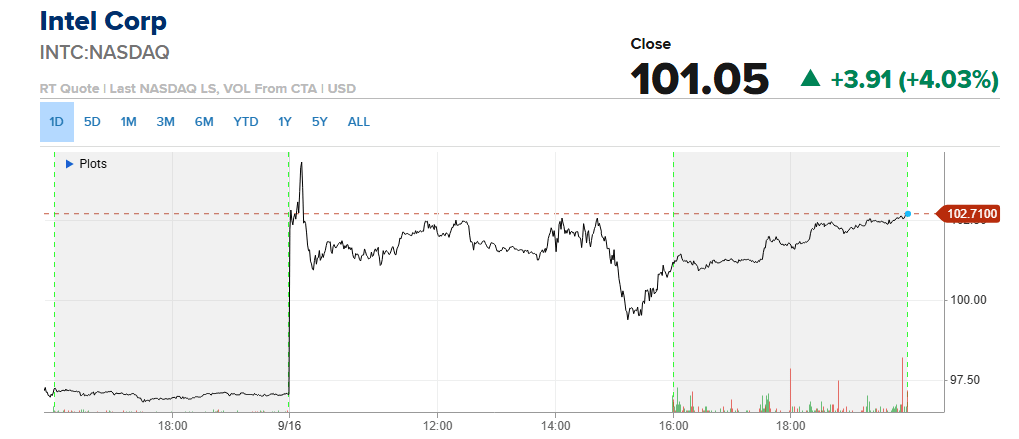
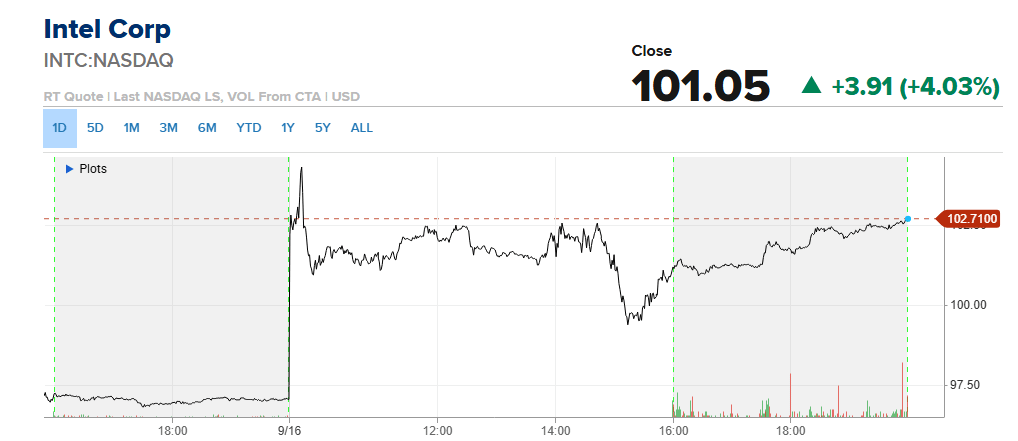
Intel shares gained 4%, helping keep the Nasdaq's losses in check, after a report surfaced that the company was in talks with South Korean memory giant SK Hynix about building semiconductors on U.S. soil.
Elon Musk's SpaceX had a good day too, up 5%. The company announced the next test flight of its Starship rocket, scheduled for Sept. 22, and said the mission will also include deploying Starlink V3 satellites.
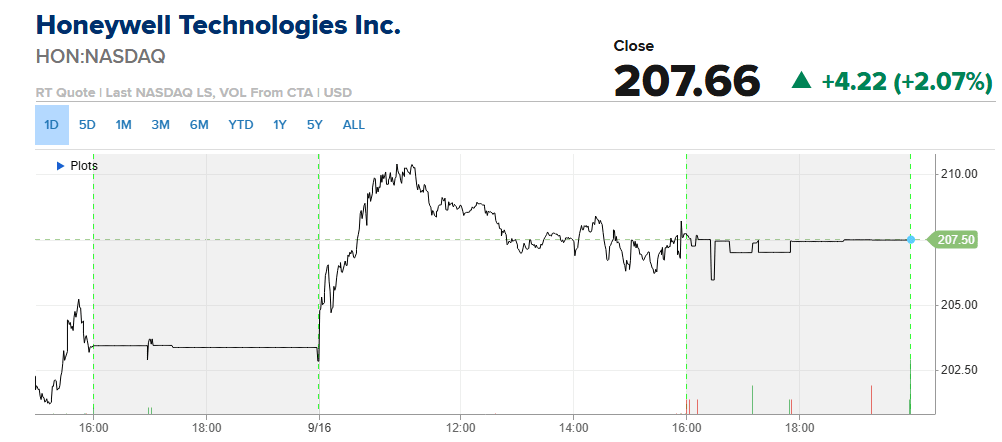
Honeywell International jumped almost 3% after leadership, speaking at Morgan Stanley's Laguna Industrials Conference, pointed to strong second-quarter orders and a solid start to the third quarter as reasons for optimism heading into year-end and into 2027.
Sector Analysis:
Best-Performing Sectors
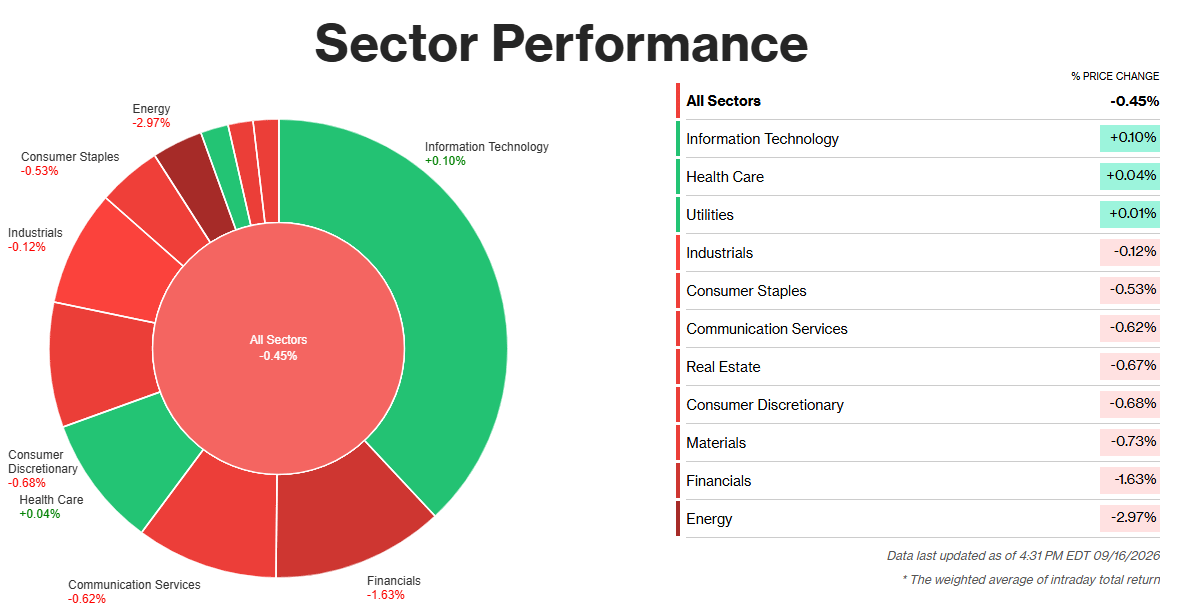
Information Technology led the market with a 0.10% gain, trailed by Health Care at 0.04% and Utilities, barely above the flatline, at 0.01%. This wasn't strength so much as survival. As selling pressure built through the afternoon, money rotated into sectors that don't live or die by borrowing costs, and that shift was enough to keep these three above water while everything else bled red.
Materials, Communications, and Consumer Discretionary stayed weak while the defensive sectors rallied late to turn positive. Tech's edge owed more to index composition than conviction — a handful of megacap names held their ground even as the broader tone soured, cushioning the sector just enough to finish in the black. Health Care and Utilities did what defensives typically do on a day like this: gave investors somewhere to hide. None of it points to a trend so much as a pause button hit right at the close.
Worst-Performing Sectors
Energy took the hardest hit, down 2.97% as crude gave back its recent run-up. WTI futures shed 3.2% to settle at $102.43 a barrel, while Brent lost 2.7% to close at $105.83, following a rally of more than 16% this month tied to escalating fighting in the Persian Gulf. U.S. Energy Secretary Chris Wright told CNBC the outage on Saudi Arabia's damaged East-West pipeline would be resolved within days, even as independent analysts pointed to satellite imagery suggesting repairs could take longer. That reassurance was enough to deflate the geopolitical risk premium baked into oil, and energy stocks fell right alongside it.
Financials dropped 1.63% for a different reason: cautious comments from bank executives, Goldman Sachs among them, at the Barclays Financial Conference weighed on shares, layering onto pressure from a rate path that now looks set to climb further before it levels off.
Materials rounded out the laggards, down 0.73%, caught in the same cyclical downdraft as a firmer dollar and rising borrowing costs pressured globally exposed, rate-sensitive names.