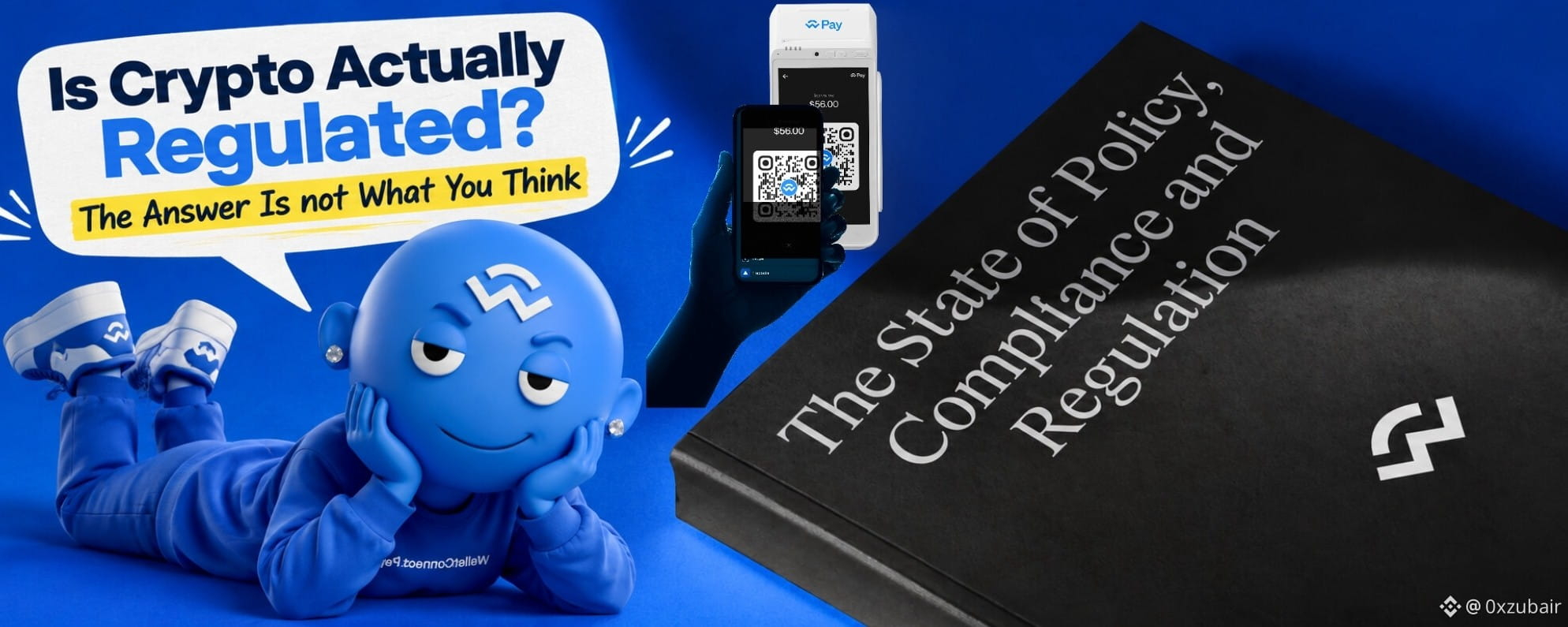

People keep asking some versions of the same question. Is crypto regulated now or not. And every time we hear it I have to stop myself from answering too fast because the honest answer depends entirely on which jurisdiction which asset and which date you are standing on when you ask.
That question mostly comes from people who have only ever encountered crypto regulation through headlines. A headline says a bill passed and the reader assumes the thing is now law in force enforceable tomorrow morning. Anyone who has actually sat with a regulatory filing knows that gap between passed and in effect is where most of the real information lives. You do not get that distinction from a headline. You get it from reading the primary source checking the effective date and sitting with the fact that enacted and operative are two different words for a reason and this is what WalletConnectr did it for you.
That is the gap WalletConnect's new policy report is built around and it is the part worth actually sitting with rather than skimming past.
Here is the pattern once you read it closely. The GENIUS Act is law in the United States. It was signed. It exists on the books. But it does not take effect until January 18, 2027, or 120 days after federal regulators issue final implementing rules whichever lands first. As of the report's cutoff the OCC and Treasury had issued proposals not a completed rule set. So when someone tells you America has regulated stablecoins the accurate version is that America has enacted a framework that is not yet fully operative. Those are not the same sentence even though they get treated as interchangeable in most coverage.
Move to the EU and the picture flips. MiCA has been fully applicable since December 2024 and the last national grandfathering window the one that let pre existing service providers keep operating under old national law closed on July 1, 2026. Reportedly more than a thousand pre-MiCA firms did not obtain authorization before that date. That is not a proposal anymore. That is enforcement live with consequences already landing.
Hong Kong sits somewhere in between. The Stablecoins Ordinance took effect in August 2025 and the first two issuer licenses were granted in April 2026 out of thirty six applicants. Two approvals out of thirty six is not a detail you get from a press release. It tells you the bar was set high on purpose and that licensing scarcity itself is now a market signal, separate from whether the underlying law exists.
Singapore is the clearest example of why the enacted versus effective distinction matters. MAS finalized the policy design for its stablecoin framework back in 2023. The framework has a name a shape reserve and redemption requirements sketched out. But the implementing legislation remains pending. Policy final legislation pending is the report's own phrasing and it is doing real work in that sentence. A finalized policy design is not a law. Anyone building a business around when that Singapore framework becomes enforceable needs the second date not the first one.
I bring all this up because it changes how you should read every other claim in the space not just the regulatory ones. Once you get used to checking whether something is enacted or effective proposed or final policy position or binding rule you start applying that same scrutiny everywhere. A company says its product is live. Live where. Live for whom. Live since when. The habit of checking dates is not really about regulation specifically. It is about refusing to round information up to whatever version sounds most impressive.
The report also names something structural that I think gets missed in most crypto commentary because most commentary is still arguing about whether self-custody should be allowed to exist at all. That argument is mostly over. What the report shows across the US, EU, UK, Hong Kong, Japan, Korea, Brazil, and the Gulf states is that regulators converged on a different question entirely. Not whether people can hold their own keys but where the obligation attaches when self-custodial activity touches the regulated system. The report calls this regulated-touchpoint accountability. The idea is simple once you see it. The individual holding their own wallet is not the one carrying the compliance burden. The regulated firm on the other side of that interaction the exchange the payment provider the issuer is the one who remains accountable for screening monitoring and reporting. Self-custody does not remove oversight. It relocates where the oversight has to happen.
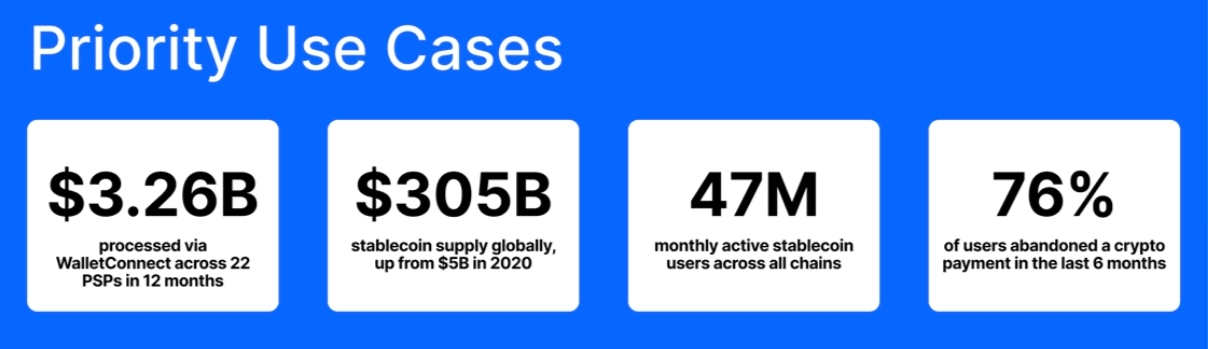
That is a genuinely useful mental model and it is also not coincidentally exactly the layer where infrastructure like WalletConnect Pay operates. Not as a compliance product but yeah and I want to be precise about that distinction because it matters. WalletConnect Pay is payment infrastructure. It lets a merchant accept stablecoin and crypto payments through a single integration settling in stablecoin or fiat with the customer able to pay using any asset from any of the wallets in the network while the merchant receives the asset they actually want. Sanctions and IP screening along with Travel Rule data capture run on every payment as part of that flow without the merchant needing to stand up separate compliance tooling. That is infrastructure sitting at the interface layer the report describes not a compliance department and not a substitute for a regulated firm's own legal obligations.

I think that distinction between infrastructure and compliance product is worth dwelling on because it is the same discipline the report applies to jurisdictions. WalletConnect Pay does not claim to make a merchant compliant. It provides the technical layer where screening and data capture already happen inside the transaction flow at lower cost than traditional payment methods with settlement landing faster than the multi day cycles most merchants are used to. What a regulated firm does with that infrastructure and what obligations still sit with them directly is a separate question the report is careful not to collapse into a single sentence.
There is a number buried in the report that stuck with me more than most of the jurisdictional detail. Roughly 1.3 billion adults still lack access to a financial account and about 900 million of them already carry a mobile phone. That statistic reframes the entire regulatory conversation for me. This is not an abstract debate about token classification. It is a question of whether the infrastructure being built right now ends up reaching the people who are currently locked out of a bank account entirely or whether it stays confined to markets that already had financial access to begin with. Self-custodial wallets connected to regulated payment methods through infrastructure that already has screening and reporting built into the flow are one of the more concrete paths toward closing that gap. Not the only path. But a real one with numbers behind it rather than a narrative.
None of this is legal advice and I want to say that plainly rather than let it sit as a disclaimer nobody reads. What I am describing is what a report maps not a recommendation for what any specific company should do. Regulatory frameworks vary by jurisdiction they are still moving and anyone building a business on top of this needs their own counsel checking the primary sources directly not a summary written by someone outside the room.
What I keep coming back to is this. The value of a report like this is not that it tells you crypto is regulated or unregulated. It tells you exactly where each jurisdiction stands with a date attached so you stop treating enacted and effective as the same word. That habit alone would improve most of the conversation happening around this space right now.
@WalletConnect report was verified against primary sources through August 17, 2026. Worth reading the actual document rather than someone else's summary of it mine included.