
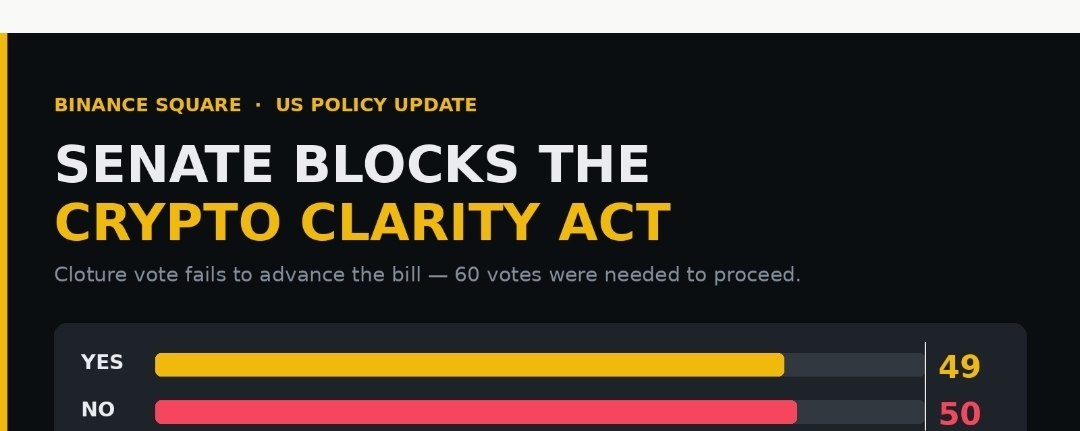

On the day the Senate recess ended, the Crypto Clarity Act — the bill meant to finally give the U.S. a legal rulebook for digital assets — hit a wall. The cloture vote needed 60 senators to move forward. It got 49 yes, 50 no. Not even a simple majority, let alone the supermajority required.
That's despite a full-court press from Washington's biggest names. Senate Majority Leader John Thune argued that "now is not the time for political games," pointing out that one in five American adults already own or have used crypto. Treasury Secretary Scott Bessent personally lobbied for the bill, arguing it would actually strengthen Treasury's ability to fight financial crime. Senate Republicans even brought out senators rarely seen in public to try to shore up votes.
It wasn't enough. According to former federal prosecutor and CFTC enforcement veteran Renato Mariotti, the bill died for one reason, repeated three times: "ethics, ethics, ethics." A handful of Republicans also broke ranks over stablecoin-related language, reportedly under pressure from the banking lobby. But the decisive opposition came from Democrats, who were told — in dramatic terms — that passing the bill would make it "easier for terrorist organizations, drug cartels, and rogue states to buy and sell weapons," and put the entire economy at risk of a "cryptofueled economic crash."
Here's the thing: the U.S. is now the outlier. Every other G20 nation has already passed pro-crypto legislation establishing clear regulatory frameworks. Today's failed vote keeps America without one.
It isn't fully dead yet, though the window is closing fast. The Senate could reschedule as early as Thursday, September 18th, but lawmakers are only in session through October 2nd if this is going to happen before the midterms — and every failed vote burns roughly two days of that runway. That leaves an estimated 5% chance or less that the Clarity Act passes in time. If it does move forward, Coinbase's chief policy officer laid out the mechanics: a cloture vote, then a series of additional votes, playing out over roughly 10 to 11 days.
If the bill stays dead, don't expect Washington to go quiet on crypto. Bessent made clear the administration will keep pushing its digital asset agenda — including the Strategic Bitcoin Reserve — regardless of what happens with Clarity. Without new legislation, expect the SEC and CFTC to lean harder into "regulation by innovation" rather than enforcement for the foreseeable future.
Meanwhile, the underlying trend nobody's voting on keeps moving. Real-world asset tokenization has grown 17.4x in three years to $46.4 billion — with no single issuer controlling more than 10% of that market. Ethereum's ecosystem application revenue just hit $42.3 million, with Layer 2 networks now accounting for more than half of it.
Congress may not have delivered clarity today. The market didn't wait for permission anyway.
Based on reporting and commentary covering the September 2025 Senate cloture vote on the Crypto Clarity Act